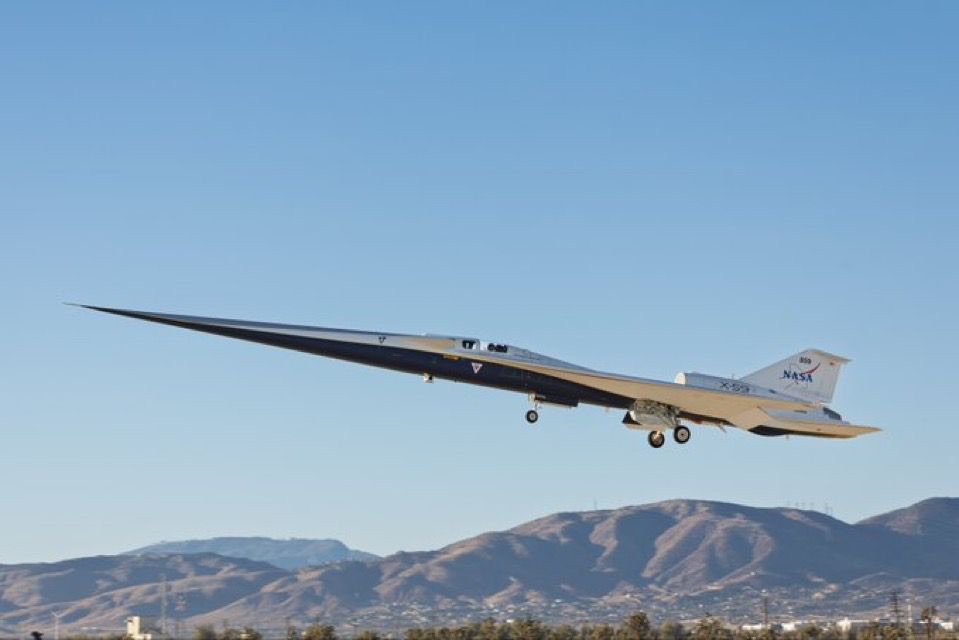

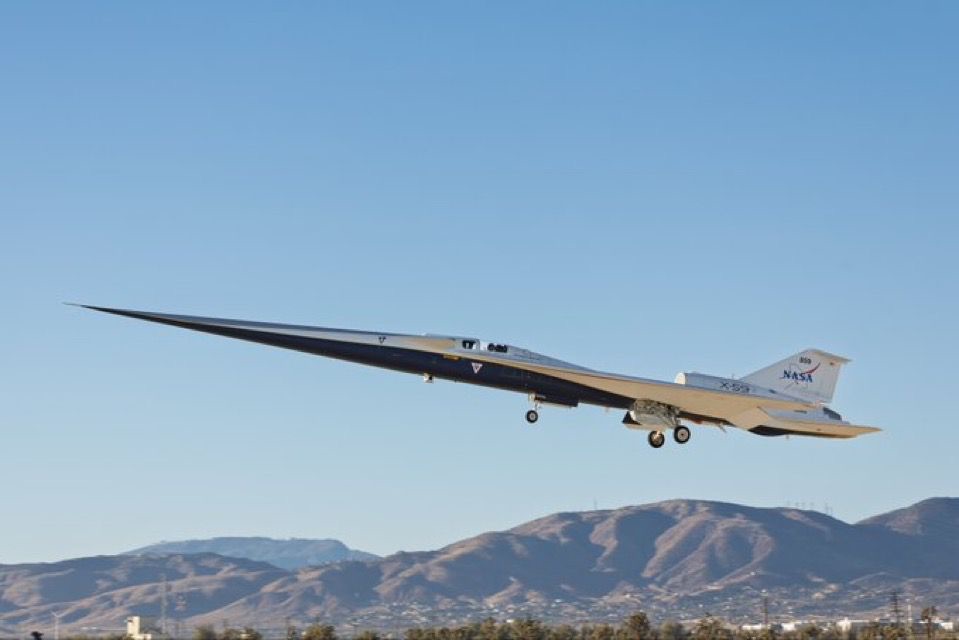
A new era in aviation began yesterday, October 28, 2025, as NASA’s X-59 QueSST (Quiet SuperSonic Technology) experimental aircraft successfully completed its historic first flight. The unique, needle-nosed jet took off from Lockheed Martin’s Skunk Works facility at U.S. Air Force Plant 42 in Palmdale, California, and landed safely at NASA’s Armstrong Flight Research Center in Edwards.
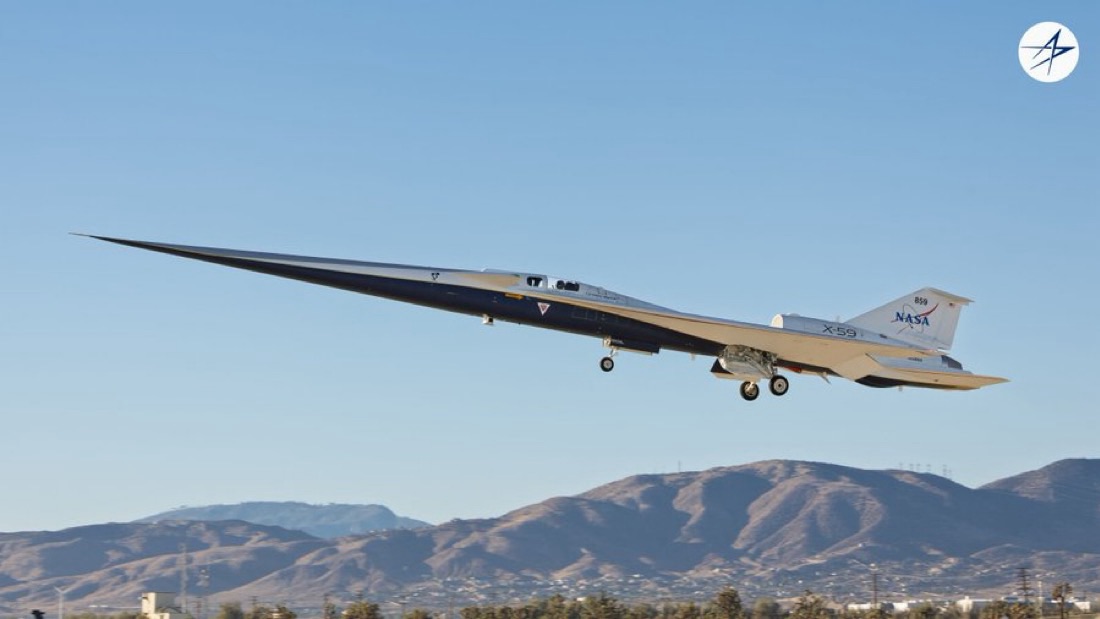
This maiden flight, which lasted just over an hour, marks a monumental milestone for NASA’s Quesst mission. The primary goal of the X-59 is to prove that a specially designed aircraft can fly faster than the speed of sound without producing the disruptive, window-shattering sonic boom that led to supersonic flight being banned over land in 1973.


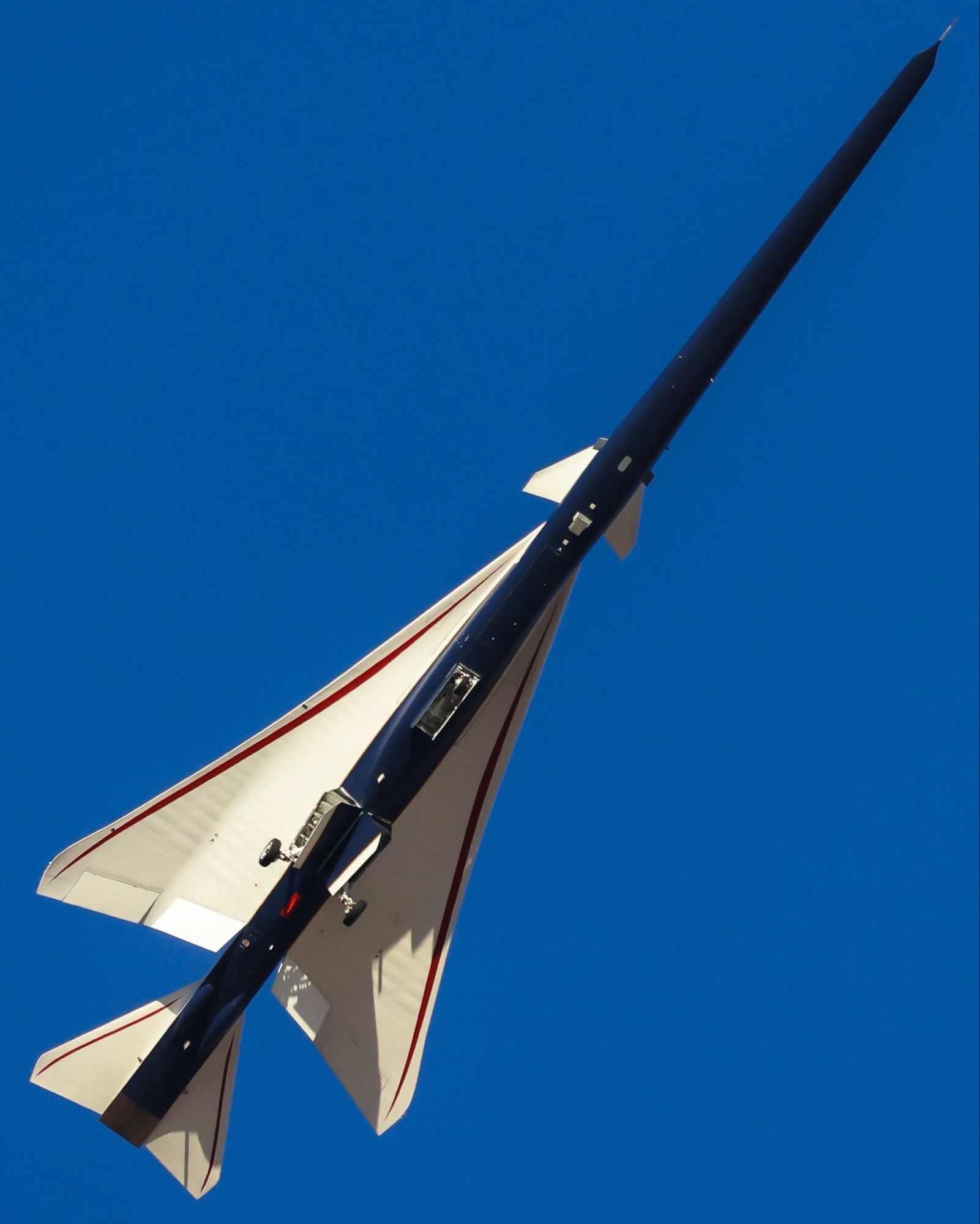


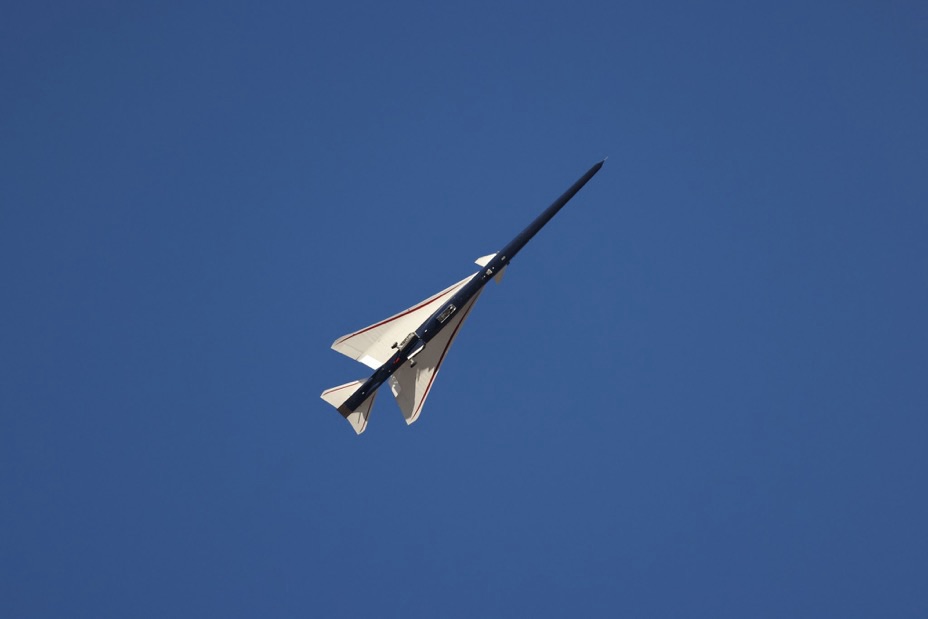
Instead of a loud “boom,” the X-59 is engineered to produce a quiet “sonic thump,” predicted to be no louder than a car door closing.
During this initial test, NASA test pilot Nils Larson kept the X-59 at subsonic speeds, reaching an altitude of 12,000 feet and a speed of 230 mph. The flight was designed to verify the aircraft’s handling, airworthiness, and basic systems. According to Lockheed Martin, the X-59 “performed exactly as planned.”
The aircraft’s radical design is the key to its mission. Its 100-foot-long, extremely thin fuselage and sharp nose are shaped to spread out shockwaves, preventing them from coalescing into a single, powerful boom. The cockpit is windowless, requiring the pilot to use an advanced eXternal Vision System (XVS) that combines cameras and sensors to see.
While the X-59 is a civilian NASA project aimed at revolutionizing commercial travel—potentially cutting cross-country flight times in half—some military analysts speculate on its dual-use potential. Military expert Alexey Leonkov has suggested the X-59’s technology could serve as a testbed for sixth-generation fighter concepts or hypersonic engine development, enabling rapid-response military aircraft.
With the first flight complete, the X-59 will now undergo a rigorous testing campaign at NASA Armstrong. This will involve gradually expanding the flight envelope to supersonic speeds (Mach 1.4) to validate its quiet boom technology.
Following these tests, NASA plans to fly the X-59 over several U.S. cities, beginning in 2026, to gather community response data. This data will be presented to regulators like the FAA and the International Civil Aviation Organization (ICAO) with the ultimate goal of lifting the ban on commercial supersonic flight over land.