The United States implemented a comprehensive naval blockade of all Iranian ports Sunday, layering American counter-pressure atop Iran’s month-long Hormuz closure and triggering immediate global energy market disruptions. The dual blockades have stranded approximately 230 fully loaded oil tankers inside the Gulf while removing nearly one-third of seaborne crude trade from circulation.
Brent crude reached $95 per barrel, up 31 percent since February 28, with American crude rising 44 percent before the blockade announcement. Columbia University energy analysts estimate daily shortages of 7 million barrels of crude and 4 million barrels of refined products failing to reach markets. QatarEnergy has declared force majeure on all LNG exports, warning that liquefaction facility restart requires weeks rather than days.
China, India, Japan, and South Korea—collectively representing the world’s four largest manufacturing economies—depend on the Gulf corridor for 75 percent of regional oil imports and 59 percent of LNG supply. The concentrated vulnerability ensures manufacturing cost inflation will transmit rapidly through global supply chains, affecting consumer prices for energy, groceries, and shipping regardless of geographic distance from conflict.
Iranian allies have openly threatened extending closure to Bab al-Mandeb, the Arabian Sea’s southern chokepoint. Simultaneous Hormuz and Bab al-Mandeb blockade would obstruct one-quarter of global energy supply, triggering unprecedented price spikes and potential rationing scenarios in import-dependent economies.
Infrastructure damage from six weeks of warfare ensures elevated prices persist “into the end of 2026” regardless of diplomatic resolution timing, as repair timelines extend months beyond ceasefire implementation. The second-phase American blockade transforms regional conflict into structured global supply shock with no near-term resolution pathway.
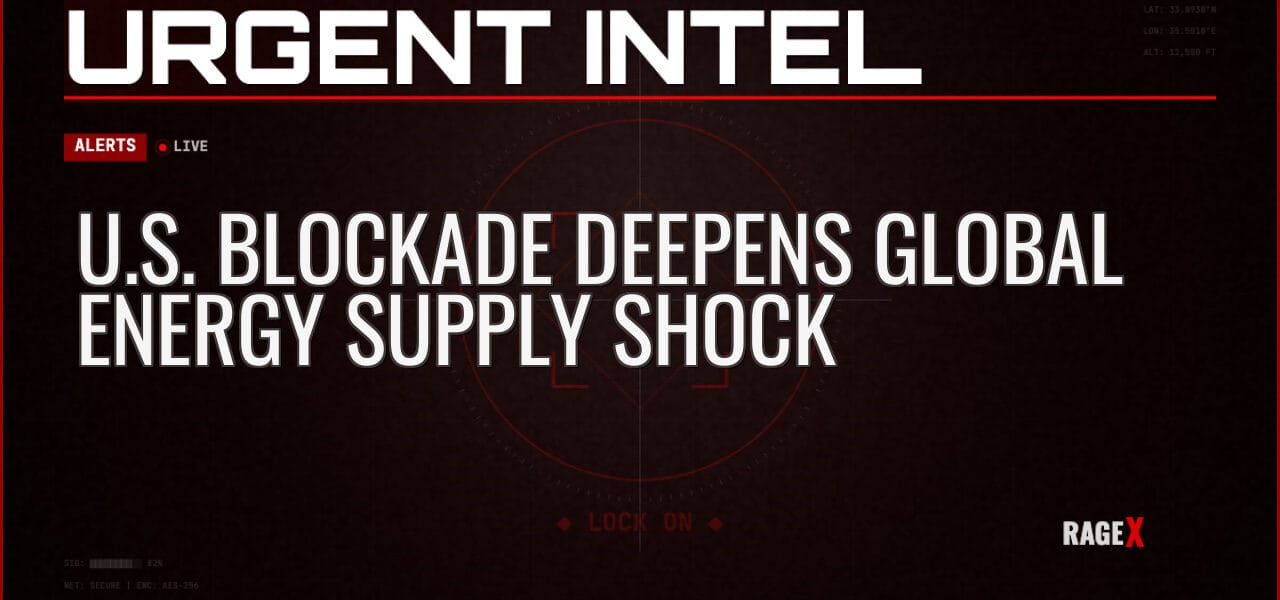
U.S. Blockade Deepens Global Energy Supply Shock
U.S. port blockade atop Hormuz closure strands 230 tankers, cuts 27% of seaborne crude trade, and forces QatarEnergy LNG force majeure. Global manufacturing economies face sustained price shocks through 2026 as dual blockades compound infrastructure damage.