
Military Technology: The Revolution Transforming Modern Warfare
Military technology stands at the precipice of revolutionary transformation in 2025, fundamentally reshaping how nations prepare for, deter, and wage war. There’s been a shift toward using sophisticated technologies like Artificial Intelligence (AI), advanced defense equipment, and the Internet of Military Things (IoMT), advancements that will redefine warfare strategies and improve operational efficiency.
From artificial intelligence directing autonomous weapons systems to quantum computers breaking encryption codes, from hypersonic missiles traveling five times the speed of sound to directed energy weapons that harness physics itself, the character of warfare is evolving more rapidly than at any point since the nuclear age. This comprehensive analysis examines the cutting-edge military technologies reshaping defense landscapes, their tactical and strategic implications, the ethical dilemmas they raise, and their potential to fundamentally alter the balance of global power.
Military Technology
Exploring the cutting-edge innovations reshaping modern warfare—from artificial intelligence and autonomous systems to hypersonic weapons and quantum computing
Artificial Intelligence
AI systems revolutionizing military operations, from autonomous decision-making to predictive intelligence analysis
Explore AI WarfareHypersonic Weapons
Missiles traveling at Mach 5+ speeds, redefining strike capabilities and defense challenges worldwide
Discover HypersonicsDirected Energy
Laser and microwave weapons providing speed-of-light engagement against drones, missiles, and aircraft
Learn About LasersAutonomous Systems
Unmanned platforms operating across air, land, sea, and space with minimal human intervention
View Autonomous TechQuantum Computing
Revolutionary computational power enabling code-breaking, optimization, and sensing breakthroughs
Explore Quantum TechCyber Warfare
Digital operations targeting networks, infrastructure, and information systems across global networks
Enter Cyber DomainArtificial Intelligence: The Brain of Modern Warfare
Artificial intelligence represents perhaps the most transformative military technology of the 21st century, with applications spanning every domain of warfare from strategic planning to tactical execution. In military and defense, AI adoption enhances computational reasoning for intelligence, surveillance, and reconnaissance missions, empowering autonomous weapon systems and ensuring equipment safety, thereby reducing soldier casualties.
The applications of AI in military contexts are extraordinarily diverse and rapidly expanding. Intelligence analysis has been transformed by AI’s ability to process vast quantities of data from multiple sources—satellite imagery, signals intelligence, human intelligence reports, social media monitoring, and countless other inputs—identifying patterns, connections, and threats that human analysts would miss or take far longer to detect. Machine learning algorithms can analyze years of intelligence data in hours, predict adversary behavior based on historical patterns, and provide commanders with decision support that dramatically enhances situational awareness.
Autonomous weapons systems represent AI’s most controversial military application. These range from relatively simple autonomous drones that can identify and engage targets without human intervention, to sophisticated systems that can plan and execute complex missions with minimal human oversight. The development of “loyal wingman” aircraft—autonomous fighter jets that operate alongside human-piloted aircraft, taking on dangerous missions while being directed by human pilots—exemplifies this technology’s potential. These systems promise to reduce casualties by keeping humans out of the most dangerous situations while multiplying combat effectiveness.
Logistics and supply chain management, often overlooked but absolutely critical to military success, benefit enormously from AI optimization. AI systems can predict maintenance needs before equipment fails, optimize supply routes and inventories, coordinate complex movements of personnel and materiel, and adapt to changing battlefield conditions in real-time. The ability to maintain combat effectiveness depends fundamentally on logistics, and AI provides capabilities that dramatically improve efficiency and responsiveness.
Cybersecurity applications of AI have become essential as militaries face sophisticated cyber threats. AI-powered defensive systems can detect anomalous network behavior indicating intrusion attempts, respond to attacks faster than human operators possibly could, and predict vulnerabilities before adversaries exploit them. Conversely, AI also enables more sophisticated offensive cyber operations, creating an arms race in cyber capabilities.
Target recognition and engagement has been revolutionized by computer vision and machine learning. Modern weapon systems can identify specific vehicle types, discriminate between combatants and civilians, track multiple targets simultaneously, and engage them with precision that was impossible with previous generations of weapons. This capability extends from infantry weapons with smart optics to intercontinental ballistic missile defense systems identifying warheads among decoys.
However, AI also introduces profound risks and challenges. The “black box” problem—the difficulty in understanding exactly how complex AI systems reach their decisions—creates accountability issues when life-and-death decisions are involved. AI systems can be fooled through adversarial inputs designed to cause misidentification. The speed of AI-enabled warfare may compress decision timelines to the point where human judgment cannot meaningfully intervene. Perhaps most concerningly, the race for AI military superiority may incentivize deploying immature technologies before their reliability and safety are adequately established.
The strategic implications of military AI are staggering. Nations that achieve decisive advantages in military AI may possess overwhelming superiority in future conflicts. This creates intense pressures for rapid development and deployment, potentially at the expense of careful consideration of risks and ethical implications. The possibility of AI-enabled autonomous weapons proliferating to non-state actors or rogue states presents nightmarish scenarios. International efforts to establish norms and regulations for military AI have made limited progress against national security imperatives driving rapid development.
Autonomous Systems: Robots on the Battlefield
Autonomous systems represent the physical embodiment of AI in military contexts, ranging from unmanned aerial vehicles (UAVs or drones) to ground robots, underwater vehicles, and even autonomous ships. These systems increasingly operate with minimal human control, making decisions and taking actions based on programmed parameters and real-time environmental assessment.
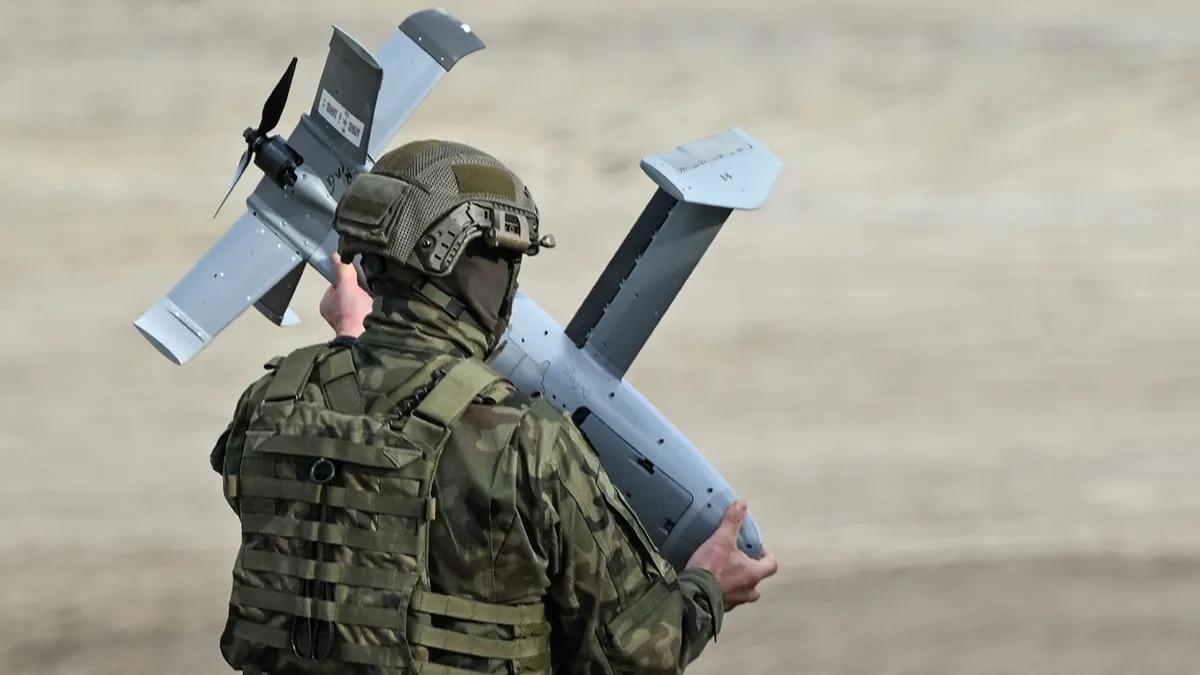
Unmanned aerial systems have evolved dramatically from the reconnaissance drones of the early 2000s. Modern military drones range from hand-launched tactical systems providing squad-level reconnaissance to high-altitude, long-endurance platforms conducting surveillance across entire regions. Armed drones have become primary tools for precision strikes, capable of loitering over target areas for extended periods before engaging with missiles or bombs. The proliferation of drone technology means even non-state actors possess sophisticated capabilities that previously required air forces.
Ground robots are increasingly deployed for dangerous tasks like explosive ordnance disposal, where robots disarm or detonate bombs that would otherwise require human personnel to risk their lives. Combat robots armed with weapons are being developed and in some cases deployed, though their use remains controversial. Logistics robots can transport supplies, evacuate wounded soldiers, and conduct other support missions without risking human personnel.
Unmanned underwater vehicles (UUVs) provide navies with capabilities for mine detection and disposal, submarine detection and tracking, seabed mapping, and potentially offensive operations against enemy vessels and infrastructure. These systems can operate in environments too dangerous or difficult for human divers, remaining underwater for extended periods without requiring surface support.
Autonomous surface vessels represent the newest frontier in unmanned military systems. Navies are developing and testing various autonomous ship designs from small patrol boats to larger vessels that could conduct anti-submarine warfare, mine countermeasures, or even surface combat. The potential to operate fleets of inexpensive autonomous vessels coordinated by AI could fundamentally change naval warfare economics and tactics.
Swarm technology—large numbers of autonomous systems coordinated to accomplish complex missions—represents a particularly transformative development. A swarm of hundreds or thousands of small drones, each relatively simple and inexpensive, could overwhelm defensive systems through sheer numbers while accomplishing surveillance, electronic warfare, or even direct attack missions. Swarm systems exhibit emergent behaviors where the collective capability exceeds the sum of individual platforms, presenting adversaries with unprecedented challenges.
The integration of autonomous systems with human forces creates “manned-unmanned teaming” concepts where humans and machines work together, each performing tasks suited to their capabilities. Human judgment, ethical reasoning, and adaptability complement machine speed, precision, and tirelessness. Getting this integration right represents both enormous opportunity and significant challenge.
Hypersonic Weapons: Speed as Revolution
Hypersonic weapons are able to travel at speeds exceeding Mach 5 and are redefining modern warfare. These weapons can strike targets with unparalleled speed and precision, making traditional missile defence systems nearly obsolete. The development and deployment of hypersonic weapons represents one of the most significant advances in military striking power since the development of intercontinental ballistic missiles.
Hypersonic weapons come in two primary categories: hypersonic glide vehicles (HGVs) and hypersonic cruise missiles. HGVs are launched atop ballistic missiles, then separate and glide through the atmosphere toward their targets at hypersonic speeds while maneuvering to evade defenses. Hypersonic cruise missiles use air-breathing scramjet engines to sustain hypersonic speeds throughout their flight, potentially offering even greater range and maneuverability.
The revolutionary aspect of hypersonic weapons lies not just in their speed but in their combination of speed and maneuverability. Traditional ballistic missiles follow predictable trajectories that allow defenders to calculate intercept points. Hypersonic weapons maneuver unpredictably while traveling at speeds that give defenders only minutes—or even seconds—of warning. This combination makes interception extraordinarily difficult with current defensive technologies.
The strategic implications are profound. Hypersonic weapons compress decision timelines for national leaders facing potential attack, increasing risks of miscalculation or premature response. The ability to strike anywhere on Earth within minutes undermines notions of strategic depth and sanctuary that previously protected high-value targets. Nuclear-armed hypersonic weapons present particularly destabilizing scenarios, as their speed and penetration capabilities could enable successful first strikes that previously seemed impossible.
Multiple nations are actively developing hypersonic weapons. The United States, Russia, and China have all conducted successful tests and are moving toward operational deployment. Russia has claimed to deploy several hypersonic systems already, including the Avangard HGV and Kinzhal air-launched hypersonic missile. China has demonstrated sophisticated hypersonic capabilities including fractional orbital bombardment systems that could attack from unexpected directions. The United States has multiple programs in development across military services.
Defending against hypersonic weapons presents enormous technical challenges. Detection requires extensive sensor networks capable of tracking extremely fast, maneuvering targets. Interception requires defensive missiles with extraordinary speed and agility. The physics of hypersonic flight—extreme heat, plasma formation, and G-forces—create difficult engineering problems. Quantum computing accelerates optimization and material discovery for ultra-low RCS designs, while AI enhances decision-making, swarm coordination, and adaptive countermeasures in efforts to counter these weapons.
The proliferation of hypersonic technology raises concerns about arms races and strategic stability. As more nations acquire these capabilities, the already compressed timelines for decision-making during crises become even shorter. The possibility of hypersonic weapons falling into the hands of rogue states or terrorist organizations, while currently remote, presents nightmare scenarios for the future.
Directed Energy Weapons: Harnessing Physics for Combat
Directed energy weapons—including high-energy lasers, high-power microwave weapons, and particle beam technologies—represent fundamentally different approaches to inflicting damage on targets. Rather than delivering kinetic energy through projectiles or explosive energy through warheads, these systems use electromagnetic energy or particle beams traveling at or near the speed of light.
High-energy laser weapons have progressed from science fiction to operational reality. Modern laser weapons can engage drones, rockets, artillery shells, and even small boats, destroying them by focusing intense energy that melts, burns, or otherwise damages critical components. The advantages are compelling: lasers travel at light speed, meaning no lead time is required for moving targets; ammunition costs are negligible, essentially the cost of electricity; and precision allows engagement without collateral damage concerns from missed shots.
Current laser weapons operate primarily in defensive roles, particularly against smaller threats like drones or rockets. Systems deployed on ships, ground vehicles, and even aircraft shoot down incoming threats at a fraction of the cost of traditional missiles. As laser power increases and beam control improves, larger targets including aircraft and missiles become vulnerable. Future developments may enable strategic applications like anti-satellite weapons or missile defense.
High-power microwave weapons use electromagnetic pulses to disable or destroy electronics without necessarily causing physical damage. These weapons can affect multiple targets simultaneously within their coverage area, making them particularly effective against swarms of drones or large numbers of missiles. They can disable vehicles, communications systems, and computers without creating explosions or fragments that might endanger civilians.
The development of directed energy weapons faces significant technical challenges. Atmospheric conditions including humidity, dust, and turbulence degrade laser effectiveness, limiting range and requiring increased power. Power generation and thermal management for sustained firing remain difficult engineering problems. Beam control and targeting systems must maintain extraordinary precision while engaging fast-moving targets. Despite these challenges, steady progress continues making directed energy weapons increasingly practical.
The strategic implications of directed energy weapons could be transformative. The essentially unlimited magazine depth—limited only by power generation rather than physical ammunition—could shift defensive economics dramatically in favor of defenders. Aircraft and missiles that cost millions of dollars could be engaged by laser shots costing mere dollars. This might make some traditional offensive systems obsolete, forcing fundamental rethinking of tactics and weapons procurement.
Quantum Technologies: The Next Frontier
Cutting-edge technologies like quantum computing are not only enhancing military capabilities but also introducing new nuclear weapon policy questions. Quantum technologies—including quantum computing, quantum sensing, and quantum communications—harness counterintuitive properties of quantum mechanics to achieve capabilities impossible with classical systems.
Quantum computing promises to revolutionize military applications requiring enormous computational power. Code-breaking represents perhaps the most strategically significant application—sufficiently powerful quantum computers could break virtually all current encryption standards, potentially allowing adversaries to read classified communications, access sensitive databases, and compromise critical systems. This threat has spurred urgent development of quantum-resistant encryption methods.
Quantum computers could also accelerate weapons design, optimize logistics and operational planning, enhance artificial intelligence capabilities, and enable modeling and simulation of complex scenarios impossible with classical computers. Materials science applications could accelerate development of advanced armor, stealth coatings, and propulsion systems. The nation that achieves practical quantum computing first may gain decisive intelligence and operational advantages.
Quantum sensing exploits quantum phenomena to achieve measurement sensitivities impossible with conventional sensors. Quantum magnetometers can detect submarines through minute magnetic field disturbances. Quantum gravimeters can map underground facilities or detect tunneling. Quantum radar may overcome stealth technologies by detecting subtle disturbances conventional radar misses. These applications could dramatically enhance surveillance and reconnaissance capabilities while potentially neutralizing adversary investments in stealth.
Quantum communications promise theoretically unbreakable security through quantum key distribution, where any attempt to intercept communications necessarily disturbs the quantum states being transmitted, revealing the interception. Military forces could communicate with absolute confidence their messages cannot be intercepted or decoded. However, implementing quantum communications requires entirely new infrastructure and faces significant practical challenges.
The development of quantum technologies remains in relatively early stages, with many applications still experimental or far from practical deployment. However, the potential advantages are so significant that major powers are investing heavily in quantum research. The nation that successfully weaponizes quantum technologies first could achieve temporary but decisive superiority in multiple domains simultaneously.
Cyber Warfare: The Invisible Battlefield
Cyberspace has emerged as a fundamental domain of military operations, equally important as land, sea, air, and space. Cyber warfare capabilities enable nations to conduct reconnaissance, sabotage, and attack operations without deploying physical forces, potentially achieving strategic objectives without firing a shot.
Offensive cyber capabilities range from intelligence gathering through network intrusion to destructive attacks against critical infrastructure. Military networks, weapons systems, power grids, financial systems, and virtually any computer-controlled system present potential targets. Sophisticated cyber attacks can disable air defense systems before physical attacks, manipulate intelligence to create confusion, or destroy industrial systems controlling everything from electricity generation to water treatment.
The strategic advantage of cyber weapons lies partially in their deniability and the difficulty of attribution. Attacks can be routed through multiple countries, masked to appear as technical failures, or conducted through proxies, making definitive attribution difficult and allowing nations to conduct hostile actions while maintaining plausible deniability. This ambiguity complicates deterrence and response.
Defensive cyber capabilities have become equally critical. Military forces must protect their own networks, weapons systems, and critical infrastructure against increasingly sophisticated threats. This requires not just technical defenses like firewalls and intrusion detection but also constant monitoring, rapid response capabilities, and organizational structures for coordinating cyber defense across military and civilian agencies.
The integration of cyber capabilities with kinetic operations has become standard practice. Modern military operations typically include cyber components, whether supporting intelligence gathering, disrupting enemy command and control, or protecting friendly forces from cyber attacks. The combination of cyber and physical operations creates synergies where each enhances the other’s effectiveness.
However, cyber warfare also presents unique challenges and risks. The lack of clear international norms governing cyber operations creates uncertainty about what constitutes appropriate peacetime intelligence gathering versus acts of war. Cyber weapons can escape control and affect unintended targets, potentially causing widespread collateral damage. The attribution problem complicates deterrence—it’s difficult to deter attacks when you cannot reliably identify the attacker.
Space: The Ultimate High Ground
Military space capabilities have evolved from supporting terrestrial operations to becoming potentially decisive in their own right. Satellites provide reconnaissance, communications, navigation, early warning of missile launches, and countless other capabilities that modern militaries depend on absolutely. The militarization of space—and potential weaponization—represents a crucial dimension of military technology development.
Reconnaissance satellites provide high-resolution imagery, signals intelligence, and radar data that illuminate adversary activities worldwide. Modern satellite constellations can revisit locations multiple times daily, track movements, and provide real-time intelligence to commanders. The dependence on space-based reconnaissance means that disrupting these capabilities could blind military forces, potentially providing decisive advantages.
Communications satellites enable military forces to coordinate across global distances, control unmanned systems, and maintain command structures that would otherwise be impossible. GPS and other navigation satellites provide positioning accuracy essential for precision weapons, troop movements, and countless other applications. Early warning satellites detect missile launches immediately, providing crucial minutes of warning that could mean the difference between successful defense and catastrophic surprise attack.
The critical dependence on space assets has made them attractive targets for adversaries. Anti-satellite weapons—kinetic kill vehicles that physically collide with satellites, directed energy weapons that blind or damage satellites, cyber attacks against satellite control systems, and electronic warfare jamming satellite signals—all present threats to space capabilities. Several nations have demonstrated anti-satellite capabilities, raising concerns about potential conflicts extending into space.
The development of military space capabilities beyond passive sensors and communications into active weapons remains controversial but increasingly real. Space-based missile defense systems could potentially engage ballistic missiles during their boost phase when they are most vulnerable. Satellite inspection vehicles ostensibly for maintenance could also be used for hostile activities. The United States Space Force, established as an independent military service, reflects the growing importance of space operations.
The challenge of debris in space—defunct satellites, spent rocket stages, fragments from collisions and anti-satellite tests—creates hazards for all space operations. Each collision creates thousands of fragments traveling at orbital velocities capable of destroying satellites. Large-scale conflict in space could create cascading collisions rendering entire orbital regions unusable, potentially setting back space capabilities decades. This “Kessler syndrome” risk means space warfare could be mutually devastating regardless of who achieves tactical victories.
Biotechnology and Human Enhancement
Biotechnology applications in military contexts range from medical advances treating wounded soldiers to controversial possibilities of human enhancement creating superior warriors. The ethical implications are profound, but the potential advantages drive continued research and development.
Medical applications represent the least controversial biotechnology uses. Advanced prosthetics controlled by neural interfaces restore capabilities to wounded veterans. Regenerative medicine promises to repair severe injuries that previously meant permanent disability. Pharmaceuticals enhance soldier endurance, alertness, and performance in extreme conditions. Vaccines and treatments protect against biological warfare agents and infectious diseases encountered in deployment.
Human performance enhancement pushes into more ethically complex territory. Research into pharmaceutical cognitive enhancement could produce soldiers with improved memory, faster reaction times, and better decision-making under stress. Genetic modifications might eventually enable enhanced physical capabilities, disease resistance, or adaptation to extreme environments. Neural interfaces could enable direct brain-computer communication, potentially allowing thought-controlled weapons or shared consciousness among team members.
The development of these enhancement technologies raises profound questions. Where is the line between treating injury and creating enhanced super-soldiers? How do we ensure voluntary participation when military culture emphasizes mission accomplishment? What are the long-term health effects of enhancement technologies? If some nations develop enhanced soldiers, will others feel compelled to follow regardless of ethical concerns? Could enhancement technologies escape military contexts and reshape human society?
Biological weapons, while banned by international convention, remain potential threats that defensive biotechnology must counter. Advances in genetic engineering and synthetic biology have made creating novel pathogens increasingly feasible. Detection systems, rapid vaccine development platforms, and treatments must keep pace with potential biological threats, both natural and artificial.
Immersive Technologies: Training and Operations
The immersive technology in the military and defense market is projected to grow from USD 12.80 billion in 2025 to USD 92.17 billion by 2034, at a CAGR of 24.52%. Increasing adoption of virtual reality (VR), augmented reality (AR), and simulation-based training is transforming military preparation and operations.
Virtual reality training systems allow soldiers to practice complex tasks, experience realistic combat scenarios, and develop tactical skills without the costs and risks of live training. VR simulations can replicate any environment, present infinite variations of scenarios, and track performance with precision impossible in physical training. The ability to rehearse missions in realistic virtual environments before execution significantly improves performance while reducing casualties.
Augmented reality systems overlay digital information onto physical environments, enhancing situational awareness and decision-making. Soldiers wearing AR headsets can see friendly and enemy positions, navigation information, equipment status, and target data superimposed on their field of view. Aircraft pilots receive flight data and targeting information directly in their visors. Commanders see battlefield visualization that integrates multiple intelligence sources into comprehensive operational pictures.
Simulation technology has advanced to the point where much of military training can occur in simulators rather than on actual equipment. This reduces operational costs, prevents wear on expensive systems, and enables training scenarios impossible or too dangerous to replicate physically. Networked simulators allow units to train together regardless of geographic separation, improving coordination while reducing deployment costs.
Mixed reality systems combining virtual and physical elements enable new training approaches. Soldiers can train on physical equipment while interacting with virtual scenarios, getting muscle memory benefits of actual equipment while enjoying scenario flexibility of simulation. Maintenance training can overlay repair instructions directly on equipment, guiding technicians through complex procedures.
The integration of immersive technologies with other advances like AI creates extraordinary capabilities. Virtual environments populated by AI-controlled opponents provide adaptive training that responds to trainee performance. Simulations using actual intelligence data and operational plans let commanders rehearse missions with unprecedented realism. These technologies fundamentally change how military forces prepare for operations.
Electronic Warfare: Battle for the Spectrum
Electronic warfare—operations to control the electromagnetic spectrum—has become increasingly critical as military systems depend more heavily on electronic sensors, communications, and controls. The ability to deny adversaries use of the spectrum while protecting friendly access can prove decisive.
Jamming systems interfere with enemy radars, communications, and navigation systems by broadcasting powerful interference that prevents their effective operation. Modern jammers can be highly selective, targeting specific frequencies while leaving others unaffected. Aircraft carry powerful jamming pods that protect entire formations from enemy air defenses. Ground-based systems jam enemy communications across wide areas. Naval vessels defend against anti-ship missiles partially through electronic warfare.
Electronic support systems detect and analyze enemy emissions, providing intelligence about enemy capabilities and locations. By monitoring radio communications, radar emissions, and other electronic signatures, forces can build detailed pictures of enemy dispositions and intentions. This passive reconnaissance provides crucial intelligence without revealing friendly positions through active emissions.
Cyber and electronic warfare increasingly converge as more systems become computer-controlled and networked. Attacks against enemy networks can disable command and control, sensors, and weapons without traditional physical destruction. The combination of jamming, cyber attack, and physical destruction creates comprehensive strategies for neutralizing enemy systems.
Spectrum management has become critically important as military systems compete for limited electromagnetic spectrum. Coordination ensures that friendly communications, radars, jammers, and other systems operate without interfering with each other while collectively overwhelming enemy capabilities. Software-defined radios that can rapidly change frequencies and protocols help maintain communications in contested spectrum.
Integration and Interoperability: Making Systems Work Together
Perhaps the most critical challenge in military technology is not developing individual advanced systems but integrating them into coherent, interoperable architectures where information flows seamlessly and systems complement each other effectively. Modern military operations depend on “systems of systems” where sensors, shooters, command platforms, and support elements share data and coordinate actions.
Network-centric warfare concepts emphasize connecting all military assets into shared networks that enable unprecedented situational awareness and coordination. Sensors from satellites, aircraft, ships, ground units, and other sources feed data into common operational pictures visible throughout the force. Any sensor can cue any shooter, meaning targets detected by one platform can immediately be engaged by whichever weapon system is best positioned.
Data fusion technologies combine information from multiple sources into actionable intelligence. Instead of commanders receiving separate streams of satellite imagery, signals intelligence, human intelligence reports, and other inputs that they must personally integrate, AI-powered fusion systems process diverse data sources and present unified assessments. This dramatically improves decision-making speed and quality.
Interoperability standards ensure that systems from different services, allied nations, and various contractors can communicate and work together. NATO standardization agreements, common data formats, and interface protocols allow forces to operate as integrated teams rather than separate organizations. However, achieving genuine interoperability remains challenging given the diversity of systems and rapid technological change.
Command and control systems integrate information flows and enable commanders to direct operations across all domains—land, sea, air, space, and cyber—simultaneously. Modern command posts receive real-time data from countless sources, employ AI decision support, visualize complex battlespaces, and allow rapid dissemination of orders throughout forces. The side with superior command and control often wins regardless of individual weapons capabilities.
Ethical and Legal Challenges
The rapid advancement of military technology raises profound ethical and legal questions that societies and international institutions struggle to address. The challenges span autonomous weapons that make life-and-death decisions, cyber attacks affecting civilians, human enhancement blurring lines between human and machine, and arms races destabilizing international security.
Autonomous weapons that can select and engage targets without human intervention present perhaps the most contentious issue. Proponents argue these systems can be more discriminate than humans, operating without emotions, fatigue, or self-preservation bias that might lead to excessive force or war crimes. Critics contend that outsourcing kill decisions to machines violates human dignity, creates accountability gaps when systems err, and risks malfunctions causing unintended casualties.
International humanitarian law requires distinction between combatants and civilians, proportionality in attacks, and precautions to minimize civilian harm. Whether autonomous systems can meaningfully comply with these principles remains debated. Can algorithms truly understand context, assess proportionality, and exercise judgment in the ways required by the laws of armed conflict? Efforts to establish international norms governing autonomous weapons have made limited progress against national security imperatives.
Cyber operations blur traditional boundaries between peace and war, espionage and attack, military and civilian targets. Is infiltrating enemy networks during peacetime an act of war or legitimate intelligence gathering? Are attacks on civilian infrastructure—power grids, water systems, financial networks—legitimate military operations or violations of international law? The lack of clear international consensus creates dangerous ambiguity.
Human enhancement technologies raise questions about consent, fairness, and human nature itself. Can soldiers truly consent to experimental enhancements given military hierarchies and mission pressures? Do enhanced soldiers have unfair advantages constituting ethics violations? Should there be limits on technological modification of human beings? These questions will only intensify as enhancement capabilities advance.
Arms races in emerging technologies create risks even without actual wars. Nations feeling threatened by adversaries’ advancing capabilities may launch preemptive attacks, adopt destabilizing doctrines, or deploy immature technologies. The compression of decision timelines as AI and hypersonic weapons reduce warning times increases risks of miscalculation. Maintaining strategic stability while technology rapidly evolves represents one of the great challenges of contemporary international security.
The Future: Transformation and Disruption
Military technology will continue advancing rapidly, driven by scientific progress, geopolitical competition, and substantial resources devoted to defense innovation. Several trends seem likely to define the coming decades.
AI will become increasingly central to virtually all military operations, progressing from decision support to increasingly autonomous operation of complex systems. The integration of AI across all domains—land, sea, air, space, and cyber—will create unprecedented capabilities but also new vulnerabilities as adversaries develop AI-specific attacks and countermeasures.
Human-machine teaming will become standard, with humans and AI systems working together in ways that leverage the strengths of each. Humans will provide judgment, ethical reasoning, and adaptability while machines provide speed, precision, and tireless operation. Getting this integration right—determining which decisions require human involvement and which can be automated—will prove critical.
Multi-domain operations integrating actions across all warfare domains simultaneously will become standard practice enabled by advanced command and control systems. Future conflicts may involve simultaneous cyber attacks, space operations, conventional strikes, electronic warfare, and information operations coordinated through AI-enabled command systems.
Biotechnology will progressively advance from treating injuries to enhancing performance to potentially redesigning humans for military effectiveness. Society will face difficult choices about how far to allow these developments, balancing military effectiveness against ethical concerns and risks.
The proliferation of advanced technologies to smaller nations and non-state actors will democratize capabilities once restricted to great powers. This could make conflicts more frequent, more destructive, and harder to control as more actors possess sophisticated weapons.
Conclusion: Technology and the Human Element
Despite extraordinary technological advances transforming warfare, fundamental realities endure. Victory requires achieving political objectives, not just destroying enemy forces. Military power remains but one element of national strength. Technology provides capabilities but not wisdom, strategy, or the judgment to wield power appropriately.
The defense sector of 2025 features major changes compared to current times because of AI together with quantum computing and autonomous robotics technologies. Countries that fund their military with future advancements in technology will build battlespaces through combination of these revolutionary systems. Yet history repeatedly demonstrates that technological superiority guarantees neither strategic success nor righteous cause.
The most capable military technology cannot compensate for flawed strategy, inadequate logistics, poor training, or weak leadership. The human elements—courage, discipline, adaptability, moral strength—remain decisive even as machines perform more battlefield functions. Perhaps most importantly, wisdom in determining when and how to use military force cannot be reduced to algorithms or engineering specifications.
As military technology grows ever more capable, the stakes of its employment grow ever higher. Hypersonic weapons compress decision timelines to minutes. Autonomous systems may make life-and-death decisions in milliseconds. Cyber weapons affect millions of civilians instantly. Biotechnology could fundamentally alter human nature. The technologies humans create increasingly shape what humanity becomes.
The challenge facing military professionals, political leaders, and global society is harnessing technological capabilities while maintaining human control, preserving ethical foundations, preventing catastrophic miscalculation, and ultimately using military power in service of peace and human flourishing rather than destruction. Technology alone cannot meet this challenge—it requires wisdom, restraint, international cooperation, and commitment to values beyond mere military effectiveness.
The revolution in military technology is real, profound, and accelerating. How humanity manages this revolution will substantially determine whether the 21st century witnesses unprecedented security or catastrophic conflict. The tools being created can protect or destroy, deter war or enable it, save lives or extinguish them. The choices made today about developing, deploying, and controlling military technology will echo through history, for better or worse. These are choices not just for military professionals but for all of humanity, as the stakes could hardly be higher.