
Elon Musk has revealed Tesla’s next-generation in-house silicon, the AI5 chip, in a move that signals a massive escalation in the AI hardware wars. During the Q3 2025 earnings call, Musk announced that the new chip, which will power the company’s vehicles and data centers, is not an incremental update but an architectural leap, boasting performance “by some metrics… 40x better than the AI4 chip.”
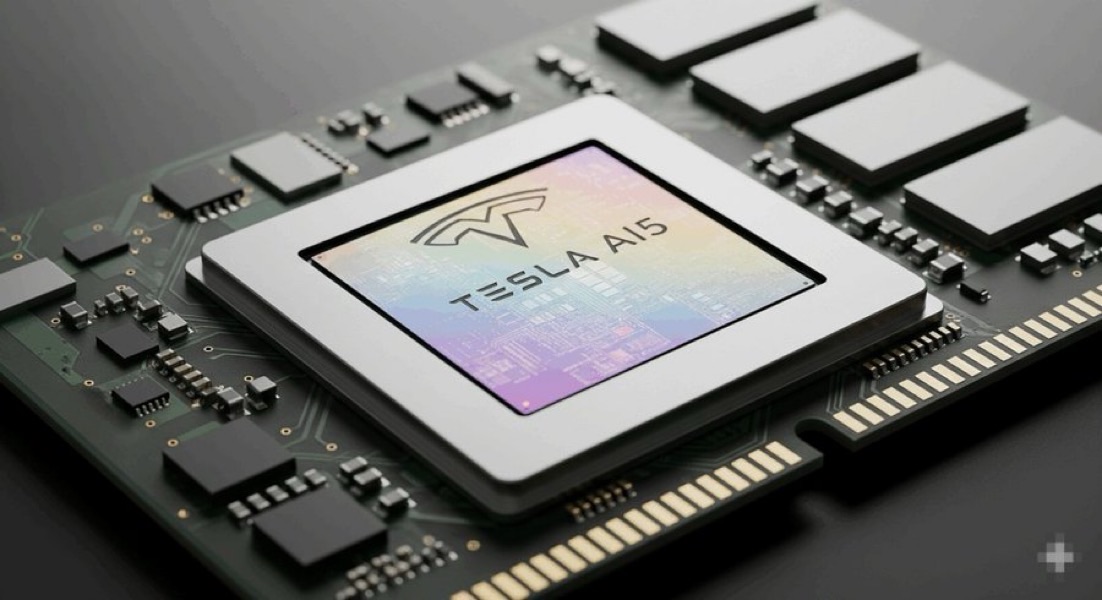
This new hardware is designed to solve the data and processing bottlenecks that Tesla’s current AI4 (Hardware 4) is facing. The recently released Full Self-Driving (FSD) V14 software, which is already rolling out to customers, has been described by Musk as having 10 times more parameters. This new software is already “maxed out” the AI4 chip, creating the urgent need for AI5.
The specs for the AI5, as detailed by Musk, are staggering:
* 8x more raw compute power than AI4.
* 9x more memory, jumping from 16GB in AI4 to a potential 144GB.
* 5x more memory bandwidth.
* Vastly streamlined code paths, shrinking some processes from 40 steps down to just a handful.
Musk claimed this custom-silicon approach will deliver the industry’s “best performance per dollar for AI, maybe by a factor of 10” and be “two or three” times more efficient per watt than competing chips, a clear shot at current AI market leader, Nvidia.
To build this new “monster” chip, Tesla is partnering with both Samsung and TSMC. In a significant move, Musk confirmed production will be based entirely in the United States, utilizing Samsung’s fab in Texas and TSMC’s facility in Arizona, with production set to begin in 2026.
Tesla’s “explicit goal,” according to Musk, is to create an oversupply of AI5 chips. The surplus, not needed for the vehicle fleet, will be routed directly into Tesla’s own data centers and AI supercomputers, which already use a mix of AI4 and Nvidia hardware.
This vertical integration will fuel Tesla’s larger ambitions. The AI5 chip is not just for cars; it is the foundation for the Optimus humanoid robot and the engine for xAI. With FSD V14 already live, Musk is aiming for what he calls “sentient-level driving” by version 14.2. By 2026, Tesla’s combined fleet of AI5-powered cars and data centers will create a distributed supercomputer, positioning the company as a dominant force in the global AI race.