
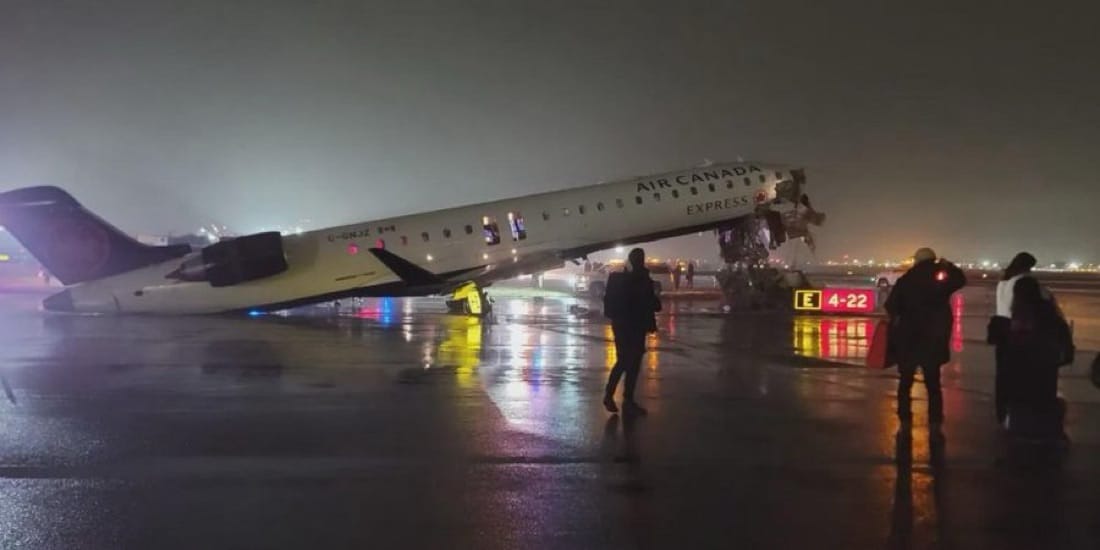

The bustling, tightly constrained tarmac of New York’s LaGuardia Airport has been violently transformed into a catastrophic disaster zone following a horrific collision between a commercial passenger jet and a heavy emergency response vehicle. In a devastating breakdown of ground control protocols, Jazz Airlines Flight 646—operating as an Air Canada Express Canadair Regional Jet CRJ-900 arriving from Montreal—slammed directly into an airport firetruck while actively navigating the taxiways near Runway 4. The sheer kinetic force of the impact severely crushed the nose and front fuselage of the regional jet, instantly killing at least two individuals and leaving dozens of terrified passengers and first responders with critical injuries.
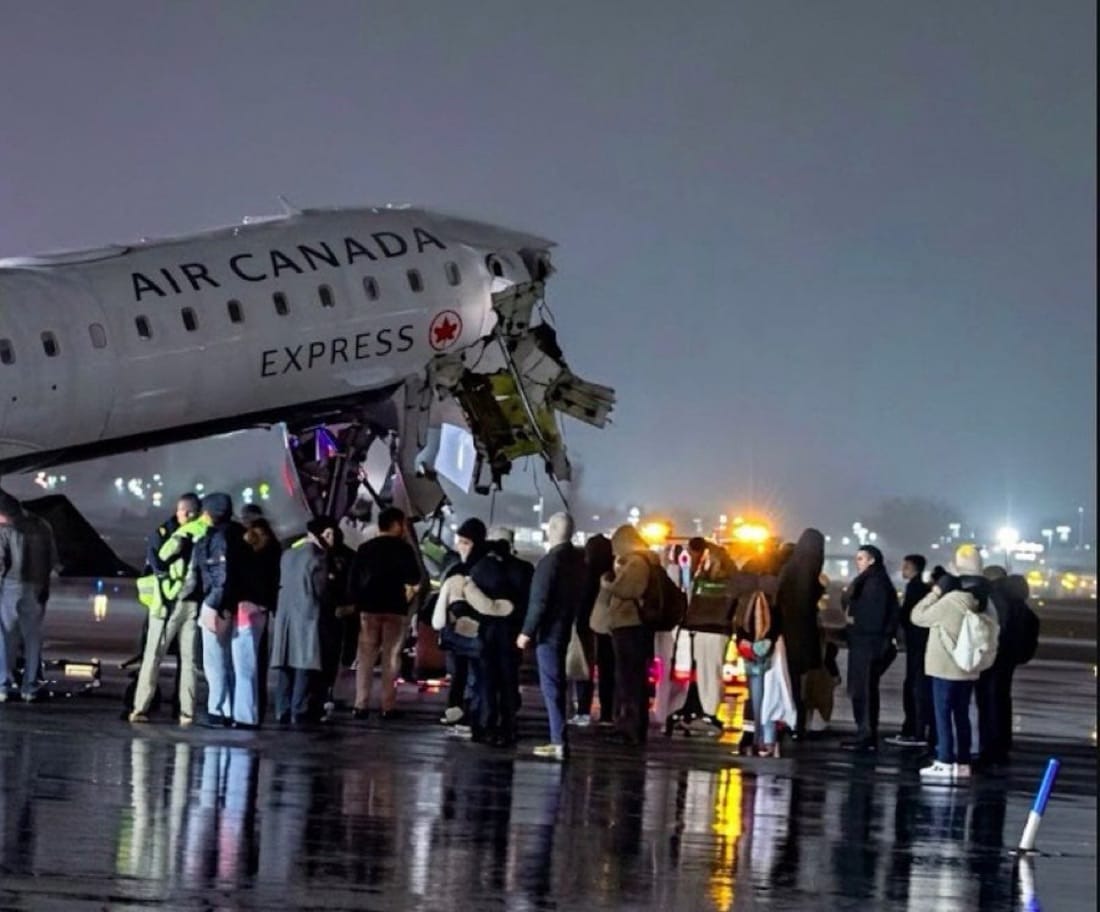
The immediate aftermath of the catastrophic impact plunged the major New York transit hub into absolute chaos. Early audio leaks and preliminary flight-tracking data suggest a terrifying sequence of miscommunication, with air traffic controllers reportedly shouting repeated instructions for both the aircraft crew and the massive Aircraft Rescue and Firefighting (ARFF) vehicle to immediately halt mere moments before the violent collision. The heavy, armored structure of the firetruck ripped directly into the fragile aluminum skin of the CRJ-900, trapping passengers in a nightmare of crushing metal on the active tarmac.
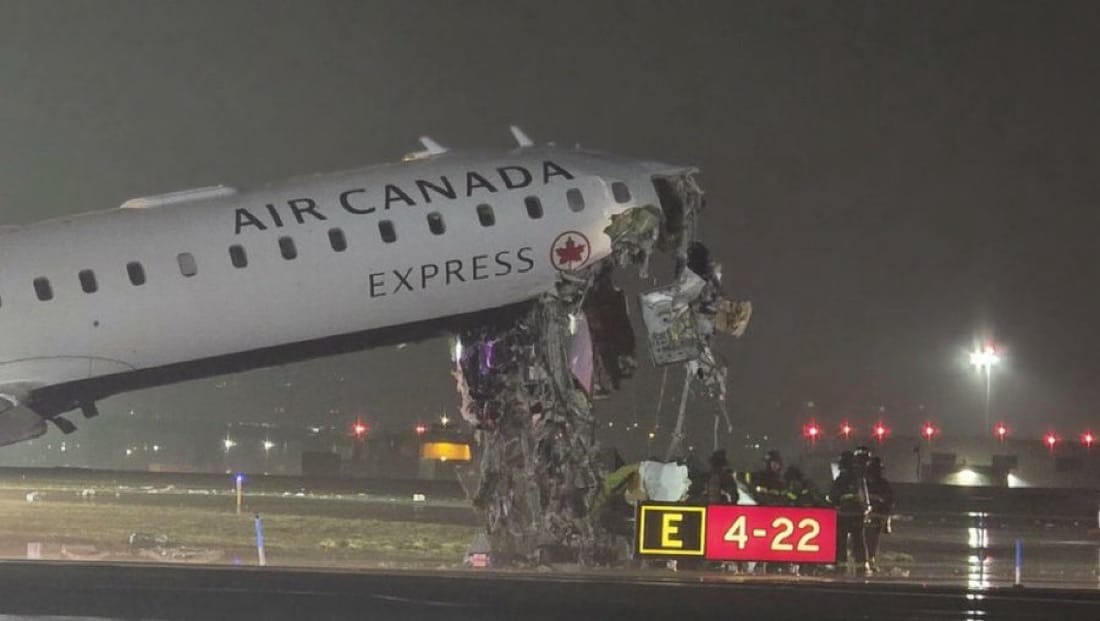
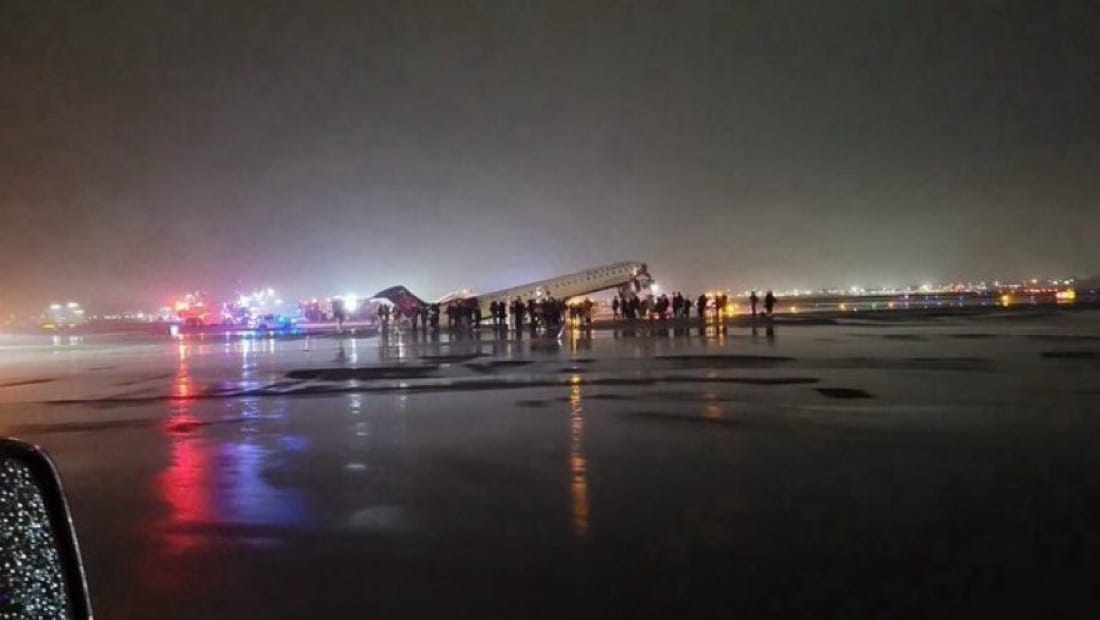
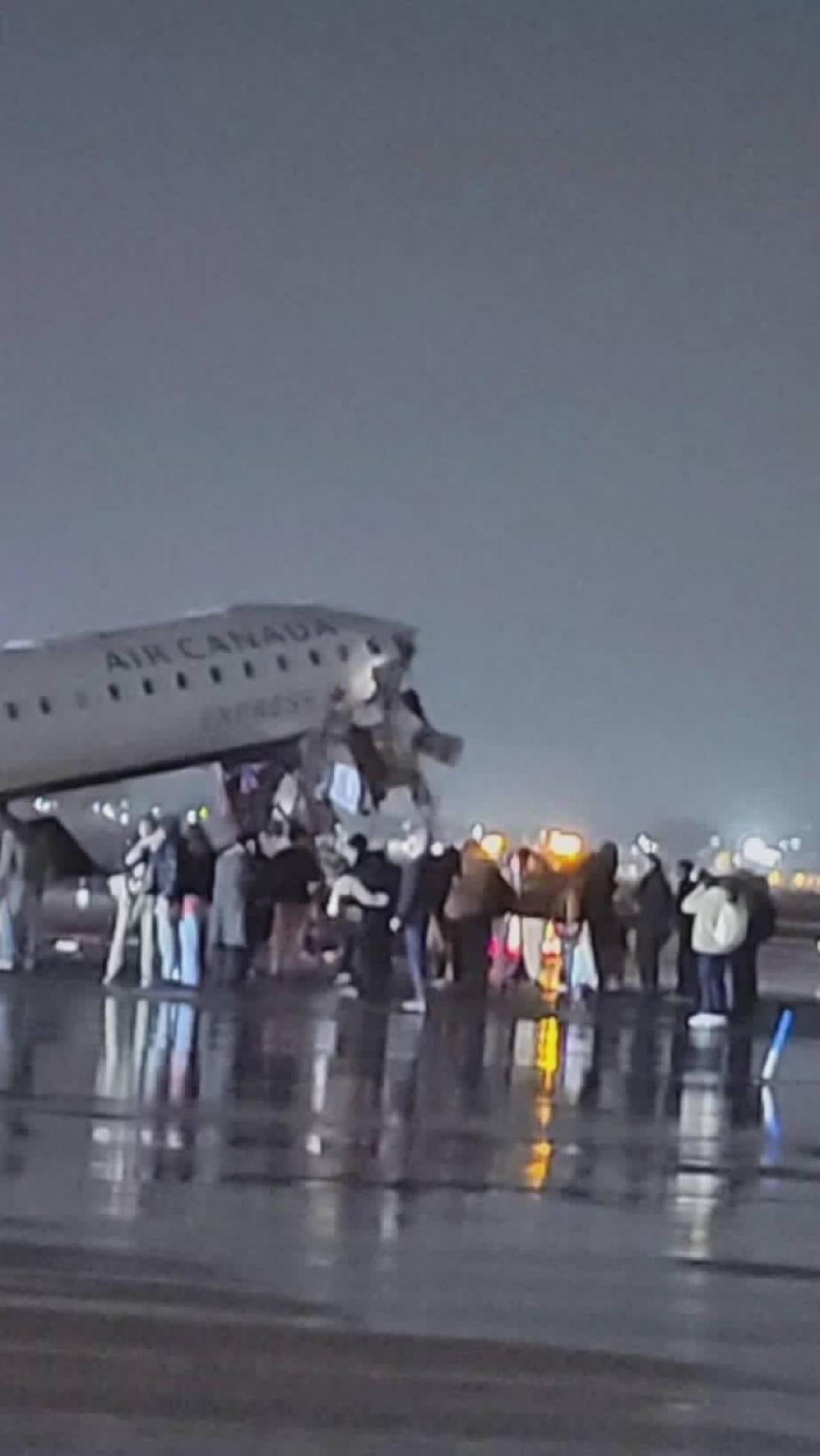
New York Fire Department units rapidly surged onto the runway, declaring a mass-casualty incident. Emergency personnel immediately initiated desperate extraction protocols to pull bleeding and deeply traumatized passengers from the shattered wreckage of the Canadian jet. Initial reports from ground crews suggest several firefighters sustained severe, “red tag” injuries during the initial impact, while scores of passengers aboard the aircraft were violently thrown upon collision. The sheer scale of the localized devastation forced the Federal Aviation Administration to instantly execute a complete ground stop, entirely shutting down all inbound and outbound flight operations at LaGuardia and sending immediate, cascading delays throughout the entire North American airspace network.
As federal investigators from the National Transportation Safety Board urgently scramble to the heavily restricted crash site, the fundamental safety architecture of one of America’s busiest airports is under intense, unforgiving scrutiny. The terrifying reality that a commercial airliner could successfully land, only to be violently intercepted and destroyed by the very emergency vehicles tasked with protecting it, points to a catastrophic failure in situational awareness and surface-level radar monitoring. As emergency convoys continue to lock down the Queens airport to tend to the wounded, the entire commercial aviation sector is bracing for the horrifying final casualty count of this entirely preventable, deadly tarmac disaster today.