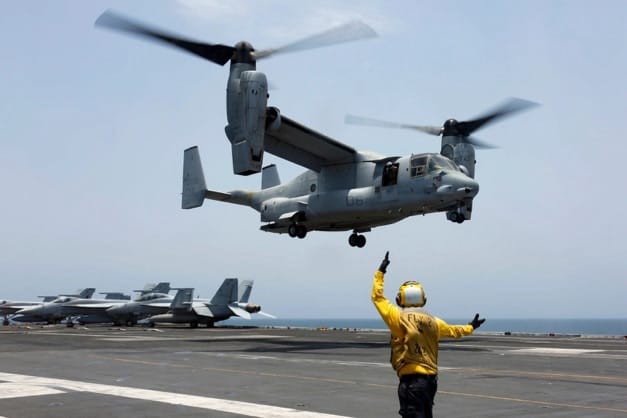

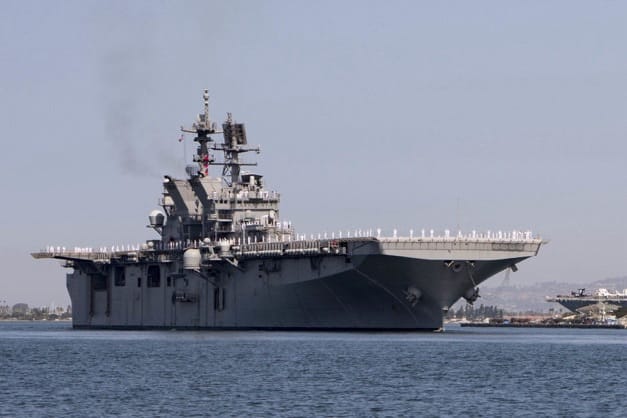
The United States has deployed the USS Tripoli (LHA-7) and its amphibious ready group to the Arabian Sea, marking a significant shift from air-focused operations toward a posture that includes rapid ground deployment capability.
The deployment includes:
• USS Tripoli (amphibious assault ship)
• USS San Diego (LPD-22)
• USS New Orleans (LPD-18)
Together, they form a Marine Expeditionary Unit (MEU) capable of executing amphibious assaults, rapid insertions, and coastal operations.
⸻
A Floating Forward Base
Unlike traditional aircraft carriers, the USS Tripoli operates as a forward-deployable assault platform, carrying:
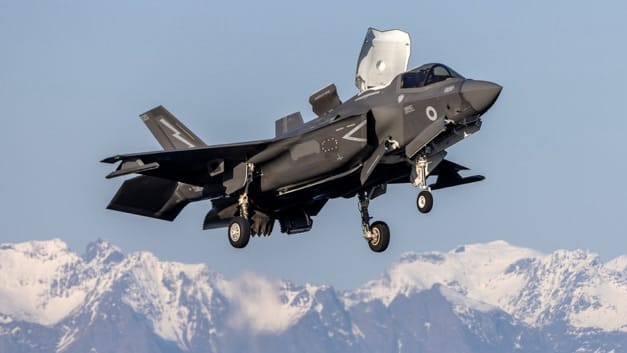
• F-35B stealth fighter jets
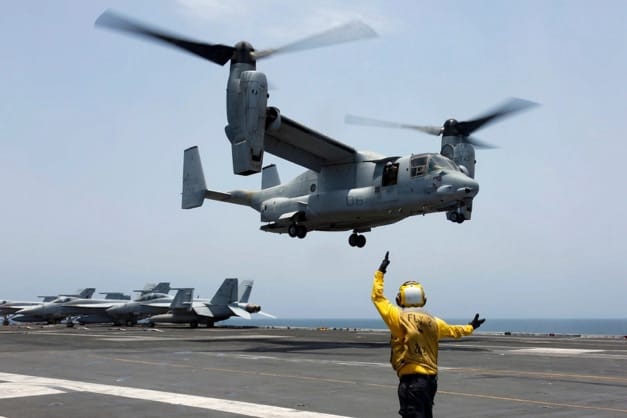
• MV-22 Osprey tiltrotors
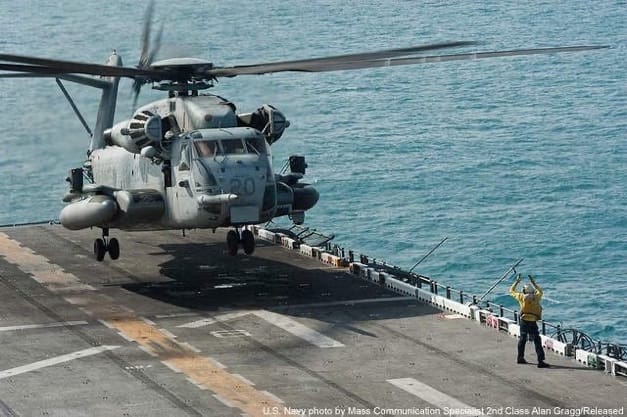
• CH-53 heavy-lift helicopters
• AH-1Z Viper attack helicopters
• UH-1Y Venom utility helicopters
It also deploys around 1,600 U.S. Marines, giving it the capability to act as a self-contained strike and landing force.
⸻
Why This Deployment Matters
The timing is critical. The Tripoli group arrived weeks after initial strikes, suggesting a transition from:
➡️ Air and precision strike phase
➡️ Potential ground or territorial control phase
Unlike large carriers that operate farther offshore, amphibious assault ships like Tripoli can:
• Operate closer to coastlines and chokepoints
• Rapidly deploy troops to strategic islands or coastal targets
• Support sustained ground presence if required
⸻
Hormuz Factor
The deployment is particularly relevant to the Strait of Hormuz, one of the world’s most critical energy corridors.
Nearby Iranian-controlled islands sit directly along key shipping lanes, making them:
• Strategic observation and control points
• Potential launch sites for disruption operations
• High-value targets in any escalation scenario
With LCAC hovercraft onboard supporting vessels, U.S. forces can transport:
• Armored vehicles
• Equipment
• Marines
…directly from sea to shore within minutes.
⸻
Strategic Signal
This deployment sends a clear message:
• The U.S. is maintaining flexibility across all domains
• It now has the option to land forces, seize terrain, and control key maritime zones
• The conflict is no longer limited to airstrikes and naval interception
⸻
Outlook
While no ground operations have been announced, the presence of an amphibious assault group indicates preparation for rapid escalation if required.
This marks a new phase of military positioning, where the ability to project power ashore becomes a central component of the operational strategy.
⸻