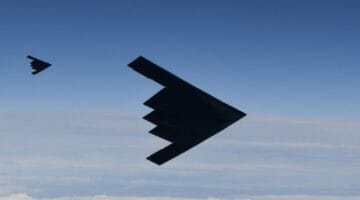


The United States military has intensified its show of force against Venezuelan President Nicolás Maduro, sending two B-1 Lancer strategic bombers near Venezuelan territory in a dramatic escalation designed to pressure the regime.
The deployment marks the most direct and visible phase yet of Washington’s campaign to destabilize Maduro’s rule—one that has already included lethal strikes on cartel vessels in the Southern Caribbean and the authorization of CIA covert operations.

The Second Strategic Bomber Mission
This B-1 flight followed an earlier, highly provocative “attack demonstration” involving other U.S. strategic aircraft.
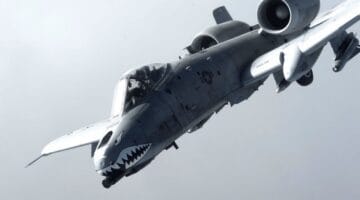
B-52 & F-35 Demonstration: Last week, three B-52H Stratofortress bombers and F-35B Lightning II stealth fighters flew off the Venezuelan coast. The U.S. Air Force described the joint exercise as an attack demonstration, showcasing America’s ability to deliver overwhelming conventional force across the Southern Command’s area of responsibility. B-1 Lancer Deployment: The subsequent B-1 Lancer mission—known for its long-range speed and massive payload capacity—amplified the message. Departing from Dyess Air Force Base in Texas, the aircraft orbited in international airspace near Venezuela, ensuring their presence was detected by Caracas.
The back-to-back deployment of two distinct classes of strategic bombers highlights a coordinated effort to signal deterrence and resolve toward the Maduro regime, which the Trump administration has labeled an adversary state with deep links to drug cartels.
Heightening Pressure on Caracas
These bomber flights go far beyond routine exercises. They form part of a calculated military campaign aimed at maximum pressure on President Maduro.
Unprecedented Show of Force: The scale of the U.S. military buildup in the Caribbean is unmatched in decades—featuring eight warships, a nuclear-powered submarine, thousands of Marines and Sailors, and forward-deployed fighter jets in Puerto Rico. The repeated presence of strategic bombers, capable of launching cruise missiles and precision strikes, signals that Washington is prepared to act. Lethal Strikes: In tandem, the U.S. military has conducted missile strikes on suspected cartel vessels since September, reportedly killing dozens of traffickers. Covert Operations: The CIA has been authorized to conduct covert actions, including potentially lethal missions, against criminal networks and the Maduro government both inside Venezuela and throughout the Southern Caribbean.
In response, Maduro has mobilized the Bolivarian Militia and denounced U.S. actions as “an imperial provocation” intended to pave the way for invasion.
Strategic Implications
The B-1 flights represent more than a symbolic gesture. They are a calculated move in a pressure campaign designed to fracture Venezuela’s military loyalty and force regime change—or, at the very least, push Caracas into concessions.
With the bombers remaining just outside Venezuelan airspace, Washington underscores both its technological superiority and its readiness to strike while maintaining plausible deniability of aggression. The message to Caracas is unambiguous: the cost of maintaining the current course is rapidly escalating.