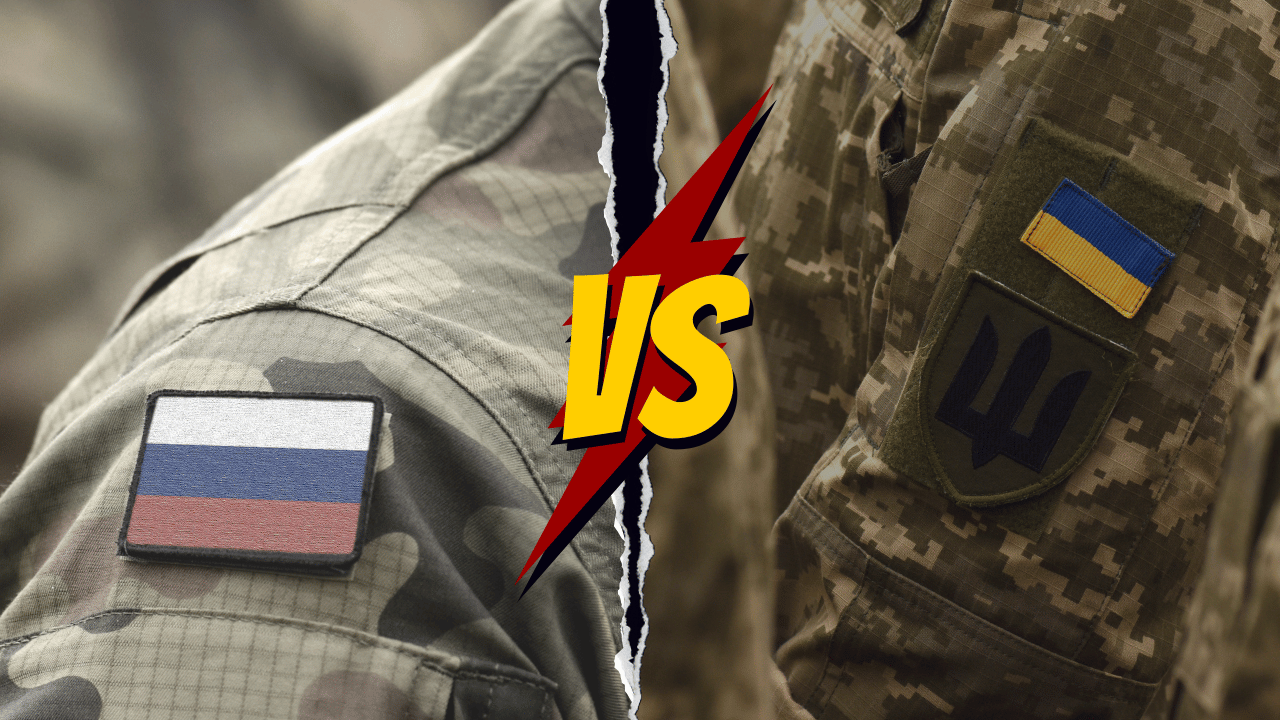

Ukrainian Military Chat : How Russian Hackers Targeted a Military Ceremony

The digital battlefield claimed a grim toll in blood on November 1, 2025, when a Russian ballistic missile screamed into the Dnipropetrovsk region and obliterated a Ukrainian military award ceremony. Nineteen people died instantly—12 servicemen and 7 civilians—while 36 soldiers sustained injuries. The strike didn’t target a random gathering; it hit a location that Russian intelligence had specifically identified through a compromised group chat on Ukrainian social media, exploiting a catastrophic failure in operational security that has now triggered a military criminal investigation and a top-level command shake-up.
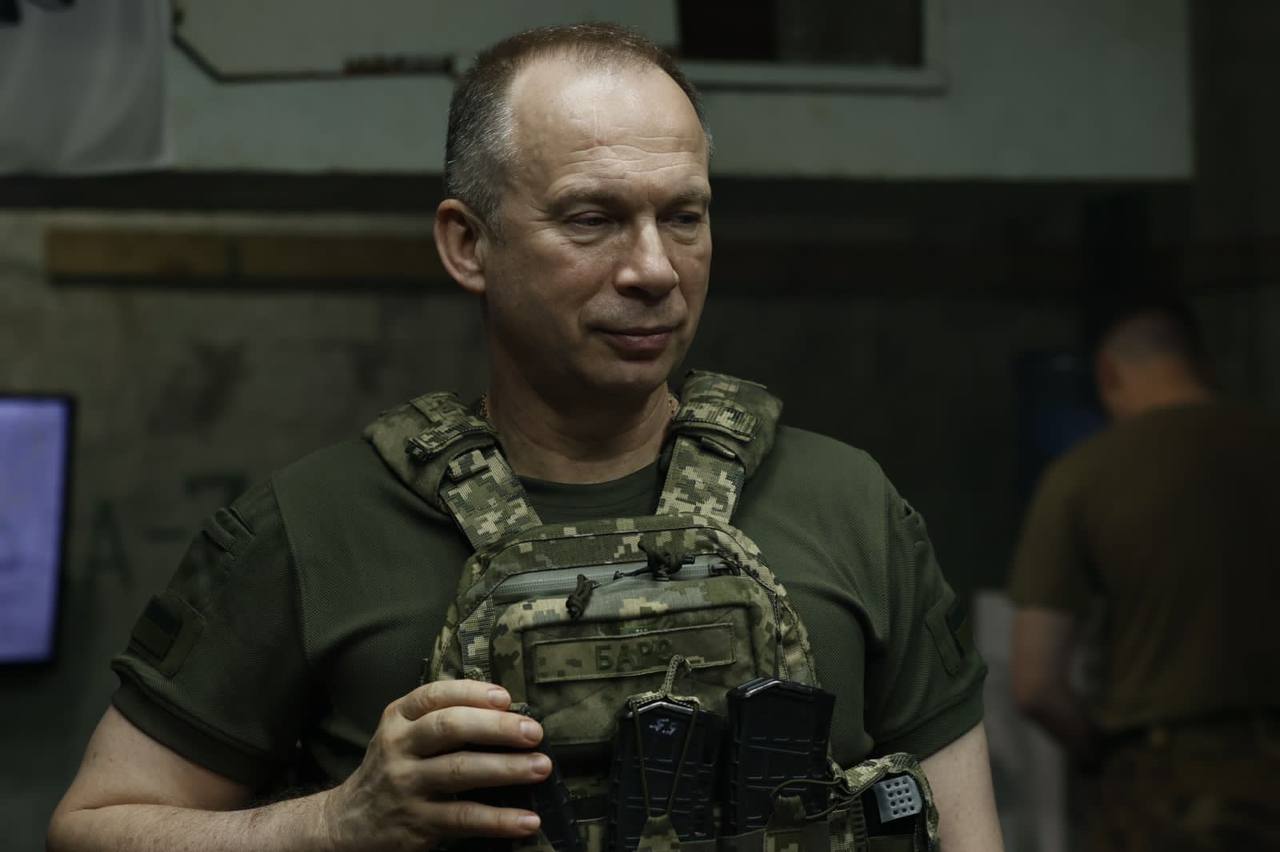
Commander-in-Chief of the Armed Forces of Ukraine Oleksandr Syrskyi confirmed the breach during a telethon interview with TSN presenter Alla Mazur, revealing that Russian hackers had infiltrated the digital conversation where Ukrainian military personnel discussed the upcoming ceremony. The revelation transforms what initially appeared to be a tragic but routine wartime attack into a stark warning about the lethal consequences of cyber vulnerabilities in modern warfare.
The Strike That Exposed a Digital Weakness
The missile landed precisely where the ceremony was underway, catching dozens of military personnel in an open area that should have been vacated according to standing security protocols. Ukrainian law enforcement quickly launched an investigation, and the State Bureau of Investigation (SBI) announced suspicion against the battalion commander under Part 4 of Article 425 of the Criminal Code of Ukraine—negligent attitude to military service committed under martial law. The Central District Court of Dnipro ordered his detention on November 8, signaling that command responsibility would be aggressively pursued.
Prosecutor General’s Office reports confirm the devastating casualty count and reveal that the investigation is examining multiple protocol failures: whether air raid alerts were issued in time, whether troop placement violated safety directives, and why a gathering of this size occurred in an open, unsecured location. The SBI has specifically questioned whether the battalion commander ignored direct orders prohibiting such assemblies in vulnerable areas.
Syrsky’s Blunt Assessment: Social Media as a Kill Chain
What makes this incident particularly alarming is Syrskyi’s candid admission about the source of the compromise. “The problem is not only that the ban on celebrations at the front was violated,” Syrskyi told Mazur. “There was a group chat on social networks again, and this is ignoring banal security standards. Because it was by hacking the networks that the Russians most likely learned about the gathering, Syrsky believes” [^source^].
The phrase “group chat on social networks” represents a glaring OPSEC failure in an army that has been fighting Russia’s combined military and cyber operations for nearly four years. Ukrainian military personnel used commercial social media platforms—likely Telegram, Signal, or similar applications—to coordinate logistics for what should have been a solemn award ceremony. Russian intelligence, monitoring these platforms as part of its standard signals intelligence operations, identified the gathering, geolocated it through metadata or location sharing, and passed the targeting data to missile units.
Syrskyi emphasized he had already discussed the tragedy with corps commanders, declaring that disciplinary decisions “should reduce the chances of betraying the enemy again to zero.” The use of “betraying” is significant—it frames the security breach not as mere negligence but as an active, if unintentional, assistance to the enemy [^source^].
The Ceremony and the Violations
The event was described by TSN journalist Dmytro Sviatnenko, whose own military brother died in the strike, as an award ceremony for fighters. Such ceremonies, while important for morale, have been explicitly restricted under Ukrainian military law since early in the full-scale invasion. Standing orders from the General Staff prohibit large gatherings in open areas, require dispersion of personnel, and mandate strict communication protocols.
The “Vostok” group of troops confirmed in an official statement that the circumstances of compliance with Commander-in-Chief and General Staff orders were under investigation, specifically mentioning “the timeliness of missile alert, prohibition (restriction) of the deployment of personnel and holding meetings and gatherings in open areas, as well as placement in places not designated for this purpose”
. This language suggests multiple command failures beyond just the digital leak.
Russian Intelligence: Exploiting Ukraine’s Digital Footprint
Russia’s ability to compromise Ukrainian communications stems from sophisticated cyber operations that have evolved significantly since 2022. The GRU’s Sandworm hacking unit has been identified repeatedly as the primary actor targeting Ukrainian military systems, specializing in synchronized cyber operations with missile and drone strikes to amplify damage
. Their tactics include phishing campaigns against military email accounts, creating fake versions of legitimate Ukrainian military websites to harvest credentials, and malware designed to extract location data from satellite communications equipment like Starlink terminals
.
In the Dnipropetrovsk case, the breach required no advanced malware—simply monitoring an unsecured social media chat where soldiers shared location details, timing, and attendance rosters. This represents a failure of basic military discipline, not sophisticated espionage. Russian forces have demonstrated they maintain continuous signals intelligence collection on Ukrainian military frequencies and digital platforms, ready to exploit any disclosure
.
The attack itself used a ballistic missile, likely an Iskander-M or similar short-range system, guided by precise coordinates fed from intelligence analysts who had geolocated the ceremony site. The missile’s accuracy and timing—striking during the event, not before or after—confirm that Russian forces had real-time or near real-time awareness of the gathering.
The Investigation and Accountability
The SBI moved swiftly, announcing suspicion against the battalion commander and seeking detention. The investigation focuses on Part 4 of Article 425, which covers negligent execution of military service duties resulting in serious consequences, especially under martial law. Potential penalties include substantial prison terms and stripping of military rank.
The battalion commander now faces charges for failing to enforce basic security protocols: prohibiting the use of unsecured social media for operational coordination, ensuring personnel dispersion, and selecting a safe location for the ceremony. His detention sends a clear message to the entire Ukrainian military hierarchy that OPSEC failures resulting in mass casualties will be treated as criminal negligence, not administrative errors
.
Broader questions remain about whether higher commanders bear responsibility. Syrskyi’s statement implies this was a unit-level failure, but the systemic nature of digital security lapses across the Ukrainian Armed Forces suggests training and enforcement gaps exist at multiple levels.
Systemic OPSEC Failures in Ukrainian Military
This incident is not isolated. Ukrainian forces have repeatedly struggled with operational security in the digital domain. In 2023, Russian hackers successfully breached the Delta system—Ukraine’s NATO-style battlefield management platform—through phishing emails targeting military accounts. In another case, malware designed to steal Starlink configuration data was discovered on Ukrainian devices, potentially allowing Russian forces to geolocate units for artillery strikes
.
The problem extends beyond technical breaches to human factors. Soldiers regularly use personal smartphones on the front lines, post geotagged photos to social media, and discuss movements in unsecured channels. The Ukrainian military has attempted to combat this through repeated warnings, mandatory cybersecurity training, and sometimes confiscating devices before operations. Yet the Dnipropetrovsk tragedy proves these measures remain insufficient.
Military analysts note that Ukraine’s force structure, which includes hundreds of thousands of mobilized personnel with limited military experience, exacerbates the problem. Many soldiers simply don’t grasp that a casual message on Telegram can be as lethal as a tracer round. The ceremony’s location—likely chosen for convenience rather than security—demonstrates how institutional culture sometimes prioritizes morale events over force protection.
Syrskyi’s Preventive Measures
Syrskyi claims his discussions with corps commanders will “reduce the chances of betraying the enemy again to zero.” This will require more than verbal directives. Effective prevention demands comprehensive changes:
- Technical solutions: Mandating use of only encrypted, military-approved communication apps; deploying jamming systems to block commercial social media near military installations; and implementing device management software that prevents installation of unsecured applications.
- Training and discipline: Zero-tolerance policies for OPSEC violations with clear, enforced penalties; regular cybersecurity drills; and embedding SIGSEC (signals security) officers at battalion level.
- Cultural shift: Transforming the perception that digital communications are informal and low-risk. Every message must be treated as a potential intelligence leak.
- Operational redundancy: Ensuring that ceremony details, when absolutely necessary, are transmitted only through secure channels with encryption and authentication.
The battalion commander’s detention represents the stick; Syrskyi must now provide the carrot through better tools, training, and leadership.
Strategic Implications
Beyond the immediate tragedy, the Dnipropetrovsk incident reveals how cyber warfare has merged with kinetic operations in Ukraine. Russian forces don’t just hack for intelligence—they hack to kill. Every compromised device, every intercepted chat, translates directly into targeting data for missiles, drones, and artillery.
For Ukraine, which operates as an open society with high digital penetration, this creates an inherent vulnerability. Russian intelligence services exploit the same platforms—Telegram, Signal, Facebook—that Ukrainian soldiers use to stay connected with families and coordinate with comrades. The difference is that Russia treats these platforms as primary intelligence sources, while Ukrainian forces too often view them as private spaces.
The incident also highlights the asymmetric nature of the conflict. Russia can afford to be sloppy with its own communications because it maintains quantitative superiority in many areas. Ukraine, fighting with more limited resources, cannot afford to give the enemy any advantage. Each leaked location represents an opportunity for Russia to inflict disproportionate casualties.
Comparisons to Other Conflicts
The Dnipropetrovsk strike echoes similar OPSEC failures in other modern conflicts. During the 2020 Nagorno-Karabakh war, both Armenian and Azerbaijani forces suffered casualties after soldiers posted location data online. In Syria, ISIS routinely tracked opposition social media to identify gathering points for strikes. The pattern is clear: anywhere soldiers use unsecured digital communications, their enemies will listen.
What distinguishes Ukraine is the scale and sophistication of Russian cyber exploitation. The GRU’s integration of hacking, signals intelligence, and strike coordination represents a new echelon of threat. They’re not just collecting data—they’re weaponizing it in near real-time.
The Path Forward
Syrskyi’s promise to eliminate future breaches “to zero” is ambitious but necessary. Ukraine’s military must treat digital OPSEC as fundamentally important as camouflage and dispersion. This means:
- Immediate enforcement: All commanders must inspect and certify their units’ communications practices within days, with random checks by military police and counterintelligence.
- Technology deployment: Accelerate fielding of secure, military-grade communication systems that replace commercial apps for operational coordination.
- Education campaigns: Mandatory training for every soldier on how Russian intelligence monitors social media, with concrete examples like Dnipropetrovsk.
- Accountability: Expand criminal investigations beyond the battalion commander if evidence shows higher headquarters failed to supervise or enforce standards.
The Ukrainian military has demonstrated remarkable adaptability throughout the full-scale invasion, rapidly learning drone warfare, artillery coordination, and combined arms tactics. It must now apply the same urgency to digital security.
The Dnipropetrovsk missile strike represents more than a tragic loss of life—it’s a wake-up call about the lethal intersection of cyber vulnerability and kinetic warfare. Russian intelligence transformed a routine social media chat into a targeting solution, killing 19 people and exposing deep flaws in Ukrainian operational security.
Syrskyi’s public admission and the swift investigation demonstrate accountability, but accountability without systemic change is insufficient. The Ukrainian Armed Forces must fundamentally reorient their approach to digital communications, treating every message, photo, and location share as a potential death sentence.
As Ukraine continues its defense against Russian aggression, the lesson of Dnipropetrovsk must be etched into every soldier’s training: in modern warfare, your smartphone can be as dangerous as the enemy’s missile. The next strike will be prevented not by better air defenses alone, but by eliminating the digital breadcrumbs that lead Russian missiles to their targets. Zero tolerance for OPSEC violations isn’t just a slogan—it’s a survival requirement.