
The scale of the aerial war over Ukraine reached unprecedented levels in 2025, with new data revealing that Russia launched a staggering 54,000 one-way attack drones and nearly 45,000 guided aerial bombs throughout the year. The statistics, released by the Ukrainian Air Force command in its end-of-year operational summary, paint a grim picture of a conflict defined by “saturation tactics” designed to overwhelm air defense grids through sheer volume.
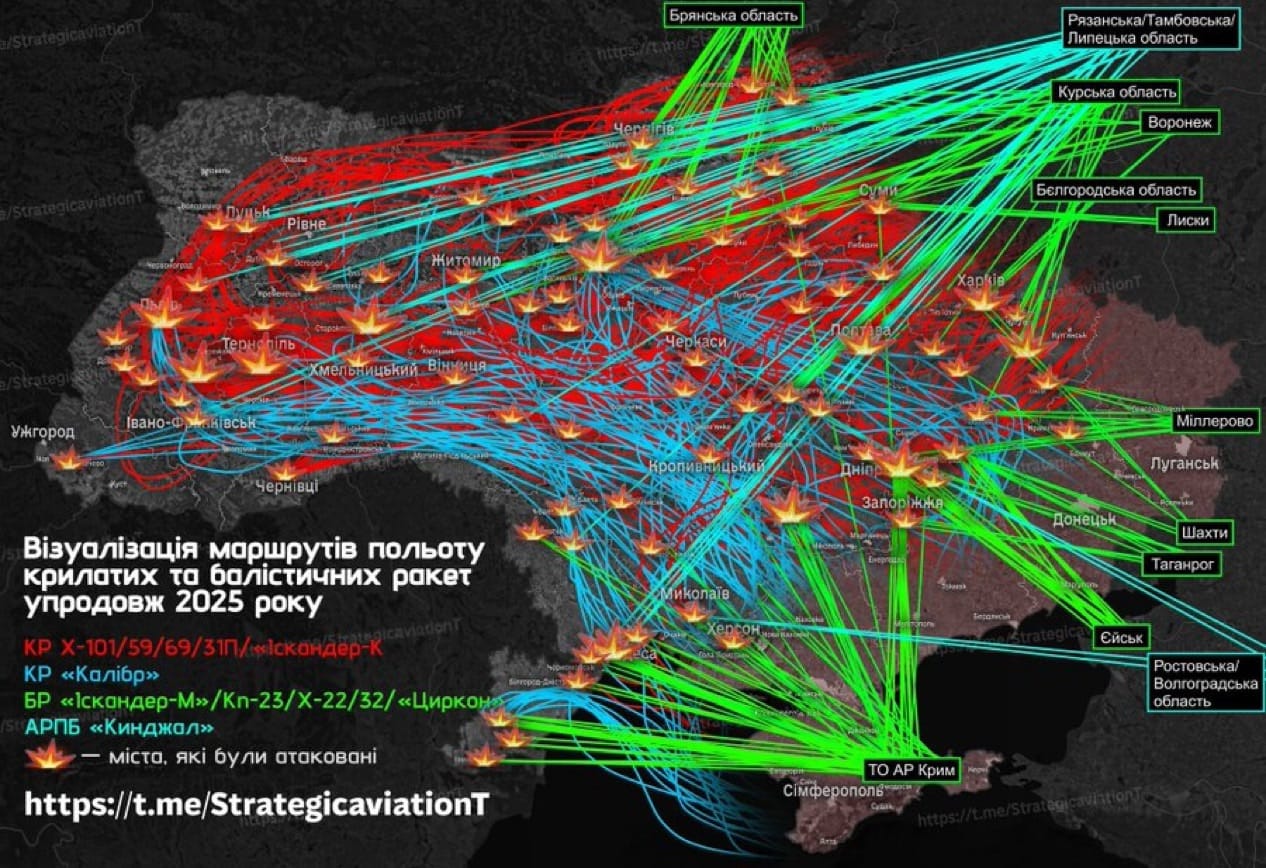
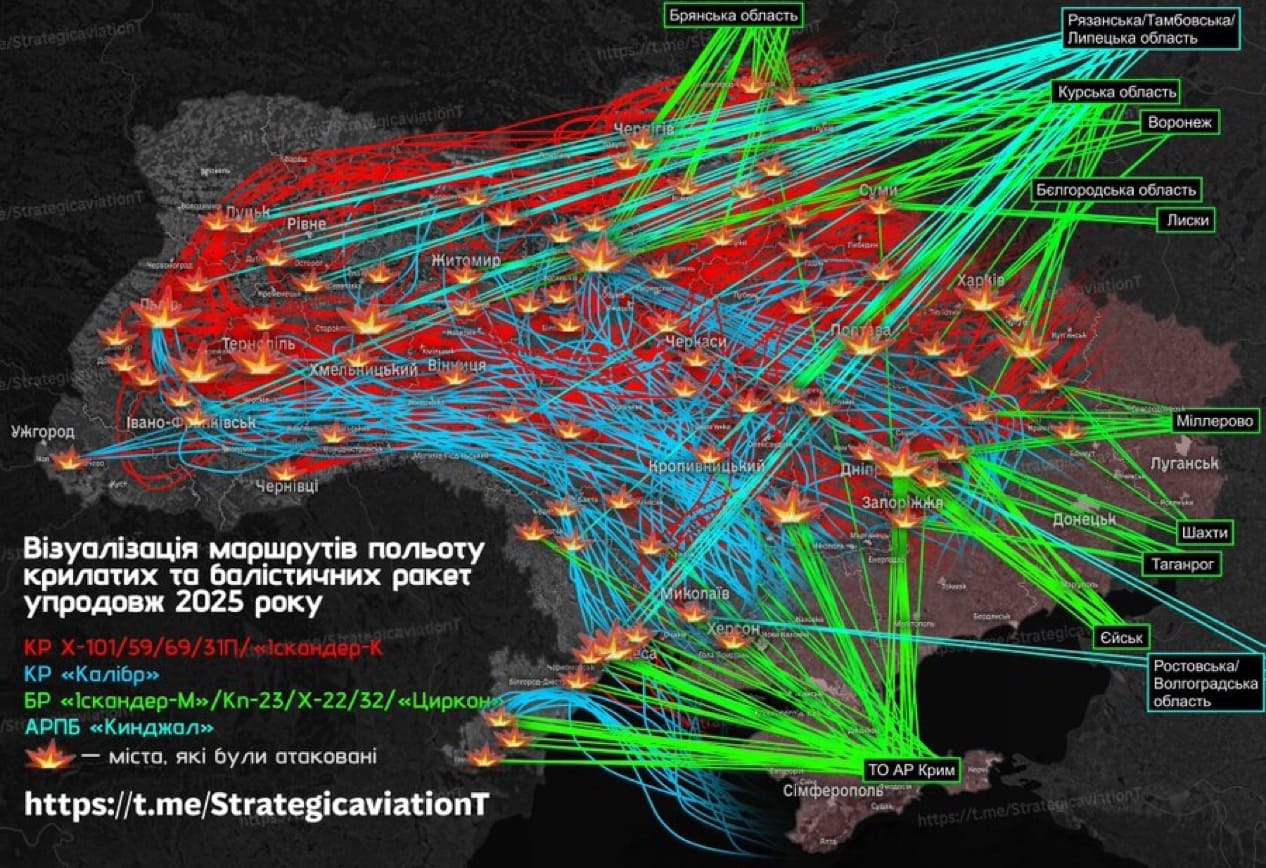
According to the report, Russian forces fired a total of 2,000 missiles of various types—including cruise, ballistic, and hypersonic variants—at Ukrainian infrastructure and military targets over the last 12 months. However, the most significant shift in strategy was the massive reliance on cheaper, mass-produced loitering munitions. The 54,000 drones launched in 2025 represent a multi-fold increase compared to previous years, indicating that Moscow has successfully industrialized the production of Shahed-type UAVs and their domestic variants.
Despite the intensity of the barrage, Ukrainian defenders achieved remarkable interception rates. Air Force officials confirmed that 46,000 of the attacking drones were successfully destroyed, reflecting an interception rate of approximately 85%. Mobile fire groups, equipped with heavy machine guns and portable anti-air systems, bore the brunt of this defense, proving to be a cost-effective solution against the low-cost drone swarms.
Missile defense proved more challenging but remained robust. Of the 2,000 missiles launched, Ukrainian systems intercepted 1,100, saving countless lives and critical energy facilities. The lower interception ratio for missiles compared to drones highlights the difficulty of countering high-speed ballistic and hypersonic threats like the Iskander-M and Kinzhal, which require specialized systems like the Patriot to neutralize.
Perhaps the most destructive element of the 2025 air campaign was the usage of 44,782 guided aerial bombs (KABs). Unlike drones or missiles, these munitions are dropped by tactical aircraft from standoff ranges, often gliding 60 to 80 kilometers to their targets. Because they are difficult to intercept directly, the only effective countermeasure has been to target the launching aircraft—a risky endeavor that has stretched Ukrainian aviation capabilities. The bombardment of nearly 45,000 heavy bombs has pulverized frontline fortifications and border towns, becoming the primary tool for Russian tactical advances in the Donbas region.
Military analysts view the 2025 statistics as evidence of a “war of exhaustion.” By launching 54,000 drones, Russia forced Ukraine to expend vast amounts of ammunition and keep its radar systems constantly active. Yet, the survival of Ukraine’s energy grid and the continued operation of its industrial base suggest that the air defense shield, while battered, held firm against the largest aerial onslaught in modern history.