Classification Level: OPEN SOURCE INTELLIGENCE SUMMARY
THREAT LEVEL: CRITICAL | REGION: MIDDLE EAST + EXPANDING | CONFLICT STATUS: INTENSIFYING ON ALL FRONTS
EXECUTIVE SUMMARY
Day 3 of the US-Israeli campaign against Iran delivered no relief — only escalation. Monday saw relentless round-the-clock airstrikes on Tehran, fresh Iranian retaliatory missile barrages across the Gulf, the first confirmed attack on a US-flagged oil tanker, and a NATO ally’s air defense accidentally downing three American fighter jets in a friendly fire incident.
Hezbollah officially re-entered the war, striking Israeli soil and triggering a furious IDF response across Lebanon. The UN, the IAEA, and leaders from Ankara to Paris pleaded for restraint. Trump, speaking from the East Room of the White House, pledged to go “far longer” than four weeks if needed — and warned that the worst strikes are still to come. By end of Monday, the US had struck over 1,200 targets across Iran in just three days — a number officials said was expected to double by Tuesday.
SECTION I — US/ISRAELI OPERATIONAL STATUS
Operation EPIC FURY (United States)
Cumulative targets struck: US and Israeli forces have already struck more than 1,200 targets in the first three days of the war — a number expected to double by Tuesday following what officials described as a relentless pace of strikes on Monday.
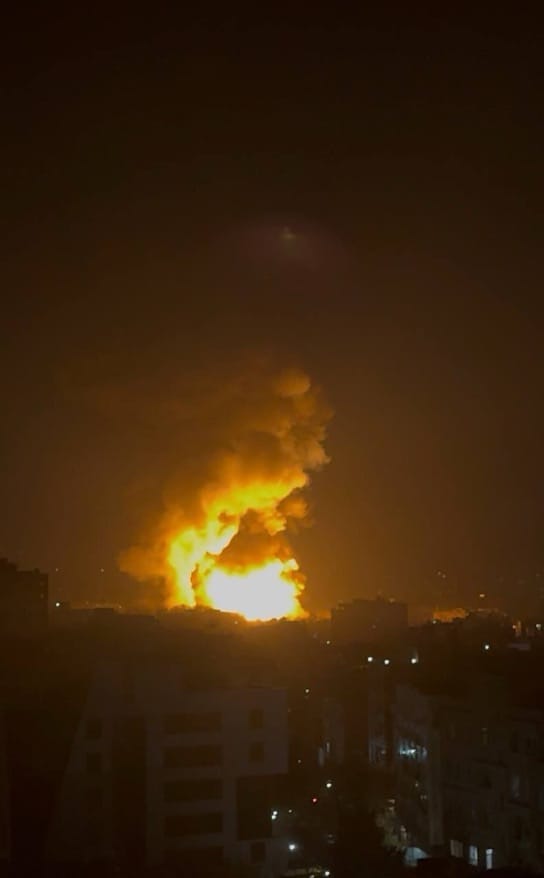
Night strike package: Monday night’s strikes by the US and Israel are expected to focus on missile launchers, internal security forces, and Revolutionary Guards targets.
Assessment: US and Israeli officials repeatedly indicated on Monday that the pace and success of the airstrike campaign is so far exceeding expectations.
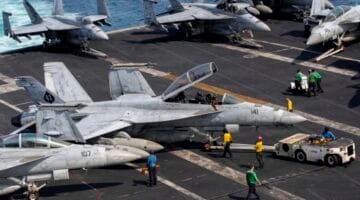
USAF action in Iran: The USAF hit military aircraft and drone launchers, including multiple F-14 Tomcats at airbases across Iran.
Natanz nuclear site: Iran stated that the Natanz nuclear site was hit by US-Israeli airstrikes. The IAEA, however, said it had “no indication” that any of Iran’s nuclear installations had been damaged.
Hospitals struck: The Khatam-al-Anbia and Gandhi hospitals in Tehran were hit by strikes, as reported by Iran and verified by BBC Verify. The former hospital is associated with the government.
UNESCO World Heritage Site damaged: A strike damaged Tehran’s historic Golestan Palace, a UNESCO-listed monument.
Friendly Fire Incident — Critical: Three US F-15 Strike Eagles flying in support of Operation Epic Fury crashed in Kuwait amid attacks from Iranian aircraft, ballistic missiles, and drones. CENTCOM confirmed the US Air Force jets were mistakenly shot down by Kuwaiti air defenses. All six aircrew ejected safely, were recovered, and are in stable condition.
Operation ROARING LION (Israel)
Iran missile capacity assessment: Israel expects Iran’s ability to fire ballistic missiles will be significantly impacted within the next 24 hours — a critical degradation milestone if confirmed.
Tehran neighborhood evacuation order: The IDF urged residents of Tehran’s Evin neighborhood to evacuate, particularly around the studio complex of the official Islamic Republic of Iran News Network.
Hezbollah leadership killed: The IDF confirmed a precise strike in Beirut killed Hussein Makled, who served as the head of Hezbollah’s intelligence headquarters.
Lebanon front: The Israeli armed forces struck three southern Lebanese towns — Haris, Nabatieh al-Fawqa, and Mayfadoun — and issued evacuation orders for 50 adjacent communities.
Niloofar Square massacre: Iran’s semiofficial news agency Mehr reported that more than 20 people were killed in a strike on Niloofar Square in Tehran.
Iranian leadership body count: Trump said in a Fox News interview that the joint US-Israeli operation had killed 48 Iranian leaders across Days 1–3.
SECTION II — IRAN’S CONTINUED RETALIATION
Iran’s retaliatory campaign continued on Day 3 with a determined multi-directional targeting posture — despite suffering catastrophic command-structure losses.
Maritime Escalation — First US Tanker Hit
A US-flagged oil tanker, the Stena Imperative, was hit by Iranian drone or missile fire on Monday, according to Reuters and maritime security firm Vanguard Tech. This marks the first confirmed strike on a US-flagged commercial vessel and a dangerous new threshold in the conflict.
Strait of Hormuz — Closure Threat Active
An adviser to the commander of Iran’s IRGC warned that vessels passing through the Strait of Hormuz — the main route for shipping crude from oil-rich countries in the region — would be targeted. The world’s most critical energy chokepoint remains under direct threat of closure.
Regional Strike Map — Day 3
Target
Strike Details
Casualties / Damage
🇮🇱 Israel (Tel Aviv/Jerusalem)
Ballistic missiles intercepted
Missiles shot down in skies above Tel Aviv and Jerusalem Monday morning
🇮🇶 Iraq (Baghdad)
Drone attack on US Victory Base near Baghdad International Airport
One drone reportedly struck the base; pro-Iran “Guardians of the Blood Brigade” claimed responsibility
🇮🇶 Iraq (Erbil)
70+ missiles and drones
52 killed, 154 wounded — ongoing from Day 2
🇰🇼 Kuwait (US Embassy area)
Missiles — smoke visible near US Embassy
Minor injuries at Mina al-Ahmadi refinery from debris; three US F-15s downed in friendly fire
🇦🇪 UAE (Dubai/Abu Dhabi)
Drones and missiles — Day 2 continued
Jebel Ali port hit; fire caused; two injuries from intercepted debris
🇧🇭 Bahrain
Drone strike on Mina Salman port
Fire reported at port
🇶🇦 Qatar
Missiles struck two energy-related sites
No fatalities reported; Qatar shot down two Iranian Su-24 bombers
🇸🇾 Syria
Iranian missile debris
Fell on Ain Terma near Damascus; man and three daughters wounded
🇨🇾 Cyprus (RAF Akrotiri)
Suspected drone strike on UK air base
Sirens blared at a British air force base in Cyprus Monday; UK military on high alert
🌊 Gulf of Oman
Explosive-laden boat attack on oil tanker
MKD VYOM oil tanker struck 52 nautical miles off Muscat; fire, engine explosion — at least 1 crew member killed
SECTION III — THE HEZBOLLAH FRONT REOPENS
Day 3 marked the formal return of Hezbollah as an active belligerent — a development that threatens to drag the conflict into a full two-front war for Israel.
Hezbollah fired six projectiles at a military base in northern Israel “in revenge for Khamenei’s death” in the early hours of Monday. Though they caused no damage, the rockets prompted a furious wave of Israeli strikes on Beirut and southern Lebanon.
The IDF stated: “Hezbollah is operating on behalf of the Iranian regime, opening fire against Israeli civilians, and bringing ruin to Lebanon. IDF troops have prepared for such a scenario as part of Operation Roaring Lion, and are prepared for an all-fronts scenario.”
Lebanon’s Health Ministry said at least 31 people were killed and 149 wounded in Israeli strikes that followed Hezbollah firing missiles into Israel early Monday. About two-thirds of the dead were in southern Lebanon.
IDF ground invasion: Not yet. Despite the escalation, the IDF said earlier Monday that there were no imminent plans to send troops across the border into Lebanon.
Hezbollah’s declaration: Hezbollah confirmed responsibility for the strikes and claimed it had attacked an IDF base in Haifa in response to Khamenei’s killing — describing it as “an official declaration of war.”
SECTION IV — US CASUALTIES UPDATE
As of 7:30 AM ET on March 2, four US service members had been killed in action. The fourth service member, who was seriously wounded during Iran’s initial attacks, eventually succumbed to their injuries.
The death toll from the attack on US troops in Kuwait has since risen to six, US Central Command announced on Monday afternoon. The attack was a direct hit on a makeshift operations center at the civilian port of Shuaiba.
Joint Chiefs Chairman Dan Caine warned in a rare on-camera press briefing that more US deaths are likely, and that accomplishing objectives will take “some time” and “in some cases will be difficult and gritty work.”
Defense Secretary Hegseth at the Pentagon podium: “An effort of this scope will include casualties. War is hell.”
Hegseth also said: “Turns out the regime who chanted ‘Death to America’ and ‘Death to Israel’ was gifted death from America and death from Israel. This is not a so-called regime-change war, but the regime sure did change, and the world is better off for it.”
SECTION V — COMMAND ASSESSMENTS & POLITICAL POSTURE
President Trump — East Room Address
Trump said the US military projected the operation in Iran could take four to five weeks, but has “the capability to go far longer than that.”
Trump claimed the campaign against Iran was the “last, best chance to strike” in order to “eliminate the intolerable threats posed by this sick and sinister regime.”
Trump did not rule out deploying US ground troops to Iran if “necessary,” telling the New York Post he would consider all options. He also confirmed he had agreed to speak with Iranian leadership — stating: “They want to talk, and I have agreed to talk.”
Secretary of State Rubio — Capitol Hill
Rubio told reporters: “The hardest hits are yet to come from the U.S. military. The next phase will be even more punishing on Iran than it is right now.”
Rubio stated: “We knew that that would precipitate an attack against American forces, and we knew that if we didn’t preemptively go after them before they launched those attacks, we would suffer higher casualties. This had to happen, no matter what.”
Secretary of Defense Hegseth — Pentagon
Hegseth confirmed the clear mission of Operation Epic Fury: destroy Iranian military threats and nuclear capabilities. He stressed the campaign is not formally a regime-change war, even as the Islamic Republic’s leadership has been systematically eliminated.
Congressional Intelligence Backlash
Senator Mark Warner (D-VA), top Democrat on the Senate Intelligence Committee, said on Sunday he had seen “no intelligence” to suggest that Iran was planning a preemptive strike on the US, directly challenging the Trump administration’s stated justification for launching the war.
SECTION VI — IRAN’S INTERNAL SITUATION
Iran’s interim leadership under Ali Larijani continued to project defiance while struggling to manage an unprecedented internal crisis — military degradation, civilian casualties, a succession vacuum, and growing internal dissent.
Larijani said Tehran has no plans to engage in negotiations with the United States: “We will not negotiate with the United States. Trump has plunged the region into chaos with his false hopes and is now worried about further casualties of American troops.”
Larijani warned that any “secessionist groups” attempting to take action would face a harsh response — a signal of deep concern about internal separatist movements exploiting the power vacuum.
Iranian President Pezeshkian condemned strikes on a Tehran hospital: “Attacks on hospitals strike at life itself. Attacks on schools target a nation’s future. Targeting patients and children blatantly violates humanitarian principles.”
Inside Iran: Anti-government protests and pro-Khamenei mourning rallies continued simultaneously across the country. Security forces maintained internet blackouts and fired on celebrating crowds in multiple cities.
SECTION VII — INTERNATIONAL RESPONSE
United Kingdom
Prime Minister Keir Starmer confirmed he had accepted a request from the US to allow UK military bases to be used for “defensive” strikes on Iran aimed at stopping retaliatory missile strikes. British RAF bases in Cyprus are now directly part of the operational architecture.
United Nations
The head of the UN atomic energy agency urged a return to diplomacy, citing “increasing risk to nuclear safety” in the region. UNESCO condemned the bombing of a primary school in Iran on Saturday as a grave violation of humanitarian law.
Turkey
President Erdoğan called for “an end to the bloodbath,” vowing to help reach a ceasefire between the US, Israel, and Iran.
Spain
Prime Minister Sánchez was the only EU leader to openly condemn Saturday’s US-Israeli strikes on Iran. He condemned Iranian strikes on Gulf states simultaneously, calling for an immediate return to diplomacy.
Australia
Foreign Minister Penny Wong told local media that Canberra does not plan to join the US-Israeli military campaign against Iran.
France
France confirmed it had reinforced its military posture in the eastern Mediterranean following the strike on its Camp de la Paix naval base in Abu Dhabi.
Jordan
Jordan’s Civil Aviation Regulatory Commission announced that the country’s airspace will be closed to all aircraft from 6PM to 9AM daily until further notice.
Melania Trump — UN Appearance
In a moment of striking optics, First Lady Melania Trump presided over a United Nations Security Council meeting promoting “peace through education” — days after strikes in Iran resulted in the bombing of a girls’ elementary school killing at least 168 children, according to Iranian state media.
SECTION VIII — ECONOMIC & INFRASTRUCTURE IMPACT
Oil markets: Oil prices skyrocketed Monday, reaching multi-month highs as markets priced in sustained Strait of Hormuz risk. J.P. Morgan analysts forecast gold reaching $6,300 by end of 2026 as geopolitical risk drives safe-haven demand.
Aviation collapse: Thousands of flights have been canceled since Saturday due to ongoing strikes in the Middle East. Many standard travel insurance policies exclude benefits in the event of military action, war, and government-mandated airspace closures. Emirates, Etihad, and Qatar Airways all suspended flights. Schools across the UAE, Qatar, Bahrain, Israel, Jordan, and Oman moved to remote learning.
Gulf infrastructure under sustained attack: Jebel Ali — one of the world’s largest port and logistics hubs — sustained damage. Mina Salman port in Bahrain was struck. Qatar’s energy infrastructure was targeted. Two oil tankers have now been attacked at sea.
SECTION IX — INTELLIGENCE ASSESSMENT
Operational Trajectory: Three days in, the US-Israeli air campaign is exceeding its own internal projections. With 1,200+ targets struck and Iran’s ballistic missile capacity expected to be “significantly impacted” within 24 hours, Day 4 will likely mark the inflection point of the kinetic campaign — either Iran’s launch capability collapses, or it deploys its last significant reserve in a desperation barrage.
The Hezbollah Variable: Hezbollah’s re-entry is the most dangerous wildcard of Day 3. If Iran orders a full Hezbollah offensive, Israel faces a two-front ground war simultaneously with the Iran air campaign — a scenario that could force early IDF ground mobilization into southern Lebanon despite official denials.
The Tanker War: Iran’s first confirmed hit on a US-flagged oil tanker signals a deliberate pivot to maritime warfare. If this escalates, the Strait of Hormuz closure threat becomes real — triggering global energy crisis conditions that could force international pressure for a ceasefire.
Trump’s Diplomatic Opening: The president’s confirmation that he will speak to Iranian representatives is the first significant diplomatic signal of the conflict. With 48+ Iranian leaders killed and nuclear/missile infrastructure under sustained attack, a negotiated off-ramp may be emerging — but both sides are still in escalation mode.
US Domestic Pressure: Congressional pushback is intensifying. The War Powers Act clock is running. Intel committee leaders from both parties are publicly questioning the “imminent threat” justification. The administration has approximately 60 days under the Act before formal authorization is required — but political pressure may arrive faster.
CASUALTY TRACKER — CUMULATIVE THROUGH DAY 3
Category
Figures
Iran — killed in US/Israeli strikes (Red Crescent)
555+
IRGC killed (Israeli military assessment)
1,500+
Iranian leaders killed (Trump/Fox interview)
48 confirmed
Girls’ school airstrike deaths (Minab)
168 (Iranian state media)
Niloofar Square, Tehran
20+
US service members KIA (CENTCOM — updated)
6
US service members wounded
Multiple (serious)
US F-15s downed (friendly fire — all crews safe)
3 aircraft lost
Israeli civilian deaths (Beit Shemesh)
6 (including 3 teenage siblings)
Lebanon killed (Israeli strikes)
31+
Lebanon wounded (Israeli strikes)
149+
Hezbollah intelligence chief killed
Hussein Makled — confirmed
Erbil, Iraq (Iranian strikes)
52 killed, 154 wounded
Oil tanker crew (MKD VYOM, Gulf of Oman)
1 killed
Karachi, Pakistan (protests)
9 killed, 50+ wounded
WATCH ITEMS — DAY 4 OUTLOOK
🔴 “The Big Wave” — Trump and Rubio both signaled the most intensive US strike package is still incoming; expected Day 4 or 5
🔴 Iran ballistic missile capacity — IDF assessment: significantly degraded within 24 hours; will Iran fire its last reserves in a final barrage?
🔴 Strait of Hormuz — Any Iranian attempt to formally close the strait triggers a global energy crisis and potential naval combat
🔴 US-flagged tanker attack — Will Iran expand maritime war? Watch for US naval response
🟠 Hezbollah ground war threshold — IDF says no imminent invasion of Lebanon; that calculus changes if Hezbollah escalates further
🟠 Trump-Iran talks — President confirmed he will speak to Iranian representatives; what channel? What terms?
🟠 War Powers Act — Congressional confrontation with White House intensifying; 60-day clock running
🟡 IAEA nuclear damage assessment — Agency says no confirmed damage to nuclear sites; US/Israel dispute this; verification remains impossible while strikes continue
🟡 Iran succession — Who runs Iran? Larijani’s council is temporary; no Supreme Leader designated; power vacuum grows