
The $30,000 SHAHED Blindspot
Ukraine spent three years teaching the world exactly how Iran’s Shahed drone bleeds a superpower. The United States watched every lesson. Then walked into the same classroom and sat in the same seat.
When Operation Epic Fury launched on February 28, 2026, the opening strikes carried all the hallmarks of modern American dominance — overwhelming precision, total information superiority, zero warning. Within hours, Iran’s missile infrastructure was degrading. Its navy was being dismantled. Its leadership was under direct threat.
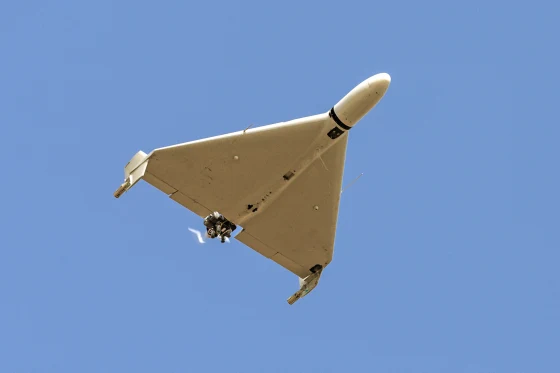
Then the Shaheds came.
Not in ones or twos. In swarms. Hundreds at a time, launched at U.S. bases across the Gulf, at infrastructure in the UAE, at shipping lanes, at data centers serving America’s largest tech companies. Slow, cheap, loud — and devastatingly effective. A weapon that costs between $20,000 and $50,000 per unit was forcing the United States to respond with $2 million interceptor missiles. The math was broken from day one.
Key Statistics
| Metric | Figure |
|---|---|
| Shaheds launched into the Gulf (first weeks) | 2,000+ |
| Maximum estimated cost per Shahed unit | $50,000 |
| U.S. munitions expended in first two days | $5.6 billion |
A Threat No One Missed
Here is what makes this failure remarkable: it was not a surprise. Not even close.
Since February 2022, Ukraine has faced the Shahed in quantities that dwarf anything Iran launched at U.S. positions. By late 2025, Russia was producing roughly 170 Geran-2 drones — its version of the Shahed — per day. Strikes averaging 143 drones daily became a near-permanent feature of Ukraine’s reality. Ukrainian forces learned, through blood and innovation, how to track these weapons, intercept them cheaply, and build layered defenses that blended missiles, guns, electronic warfare, and interceptor drones into something coherent and cost-effective.
The United States did not merely observe this from a distance. It funded it. It was briefed on it. It attended the conferences, the workshops, the interagency working groups. Defense analysts flagged the asymmetric cost problem repeatedly. The Shahed threat received, in the words of one expert, “considerable attention from U.S. military planners.”
“For some reason that didn’t translate into executing low-cost layered defenses at some of these facilities. Now we’re doing it in real time — scrambling to get it done when it could have been done before.” — Dara Massicot, Senior Fellow, Carnegie Endowment for International Peace
That is a damning sentence. Not from an adversary. From within the American defense analysis community. The knowledge existed. The threat was documented. The fix was known. And it simply was not executed.
Why It Happened
The failure is not technological. It is structural — rooted in how large military bureaucracies think, procure, and prioritize.
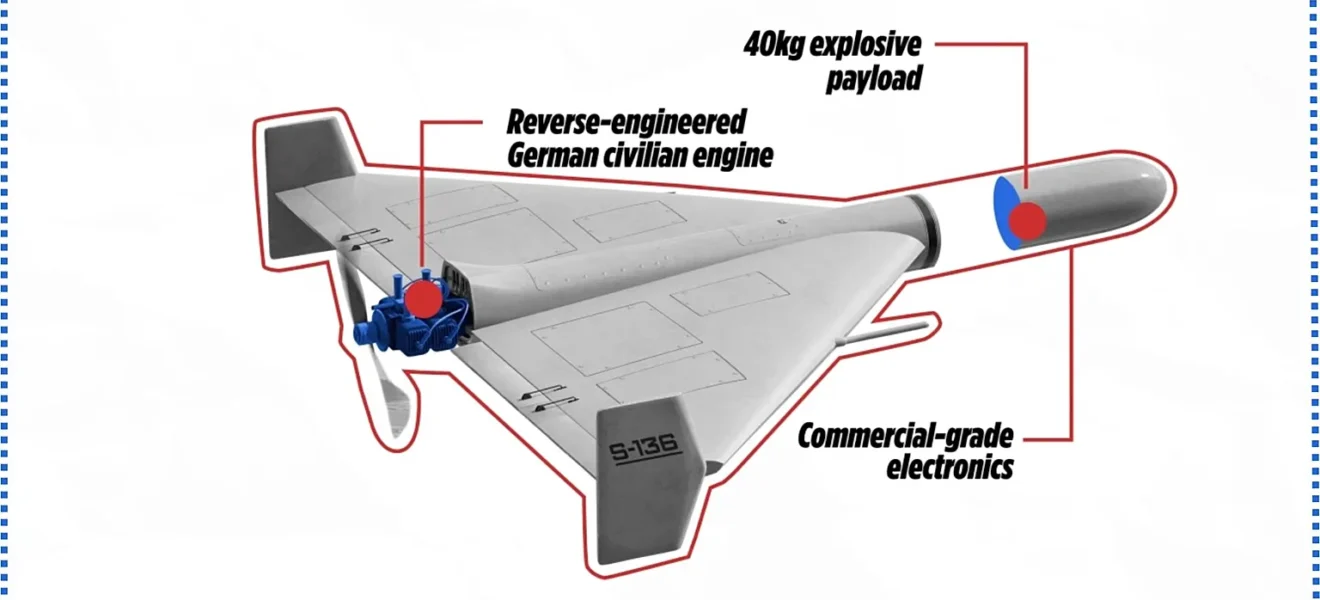
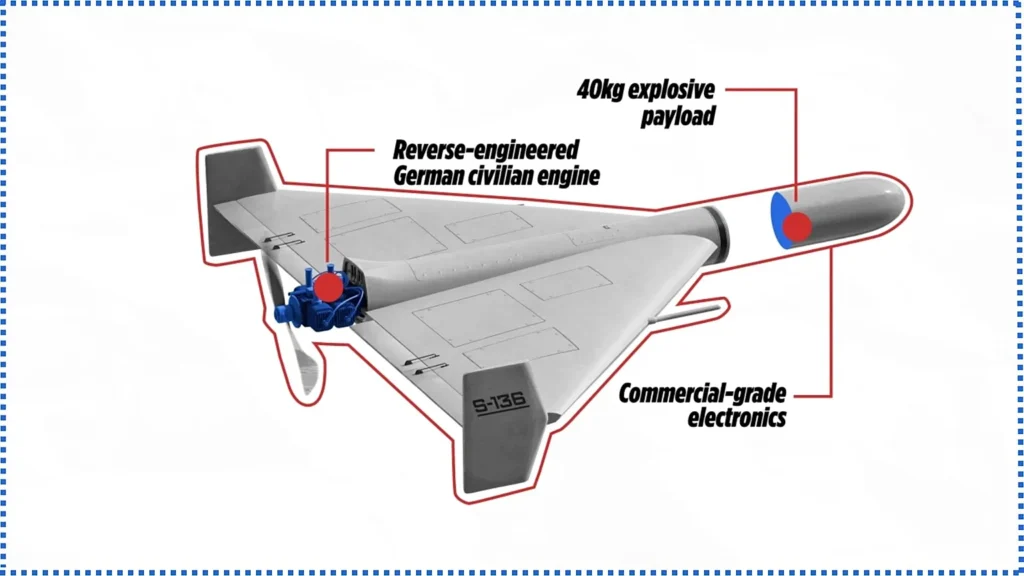
The High-Low Mismatch. For decades, American military doctrine has been built around high-end threats: advanced aircraft, ballistic missiles, carrier-killer weapons. The Shahed does not fit that framework. It flies at 185 km/h. It uses a commercially derived engine. It costs less than a luxury car. To a procurement culture optimized for Tomahawks and F-35s, the Shahed barely registered as a serious weapon system — even as it was burning Ukrainian cities.
The Interception Cost Trap. The United States does not lack the ability to shoot down Shaheds. The problem is what it costs to do so. Patriot missiles. Advanced interceptors. Fighter aircraft on rotating patrols. The cost exchange ratio is catastrophically unfavorable. Iran can saturate a defense and absorb losses at a fraction of what it costs the defender to respond. Ukraine figured this out and built cheaper solutions. The U.S. Gulf posture did not.
The Visibility Problem. Shaheds are not easy targets. They fly low. They cross radar horizons late. They are designed to blend into noise. “They’re not necessarily that hard to kill once you see them,” noted Thomas Karako of CSIS. “But they’re hard to see.” Without pre-positioned point-defense systems — machine guns, short-range interceptors, electronic jamming — at-risk facilities, the detection-to-engagement window collapses.
⚠ The Two-War Problem
Analysts describe two simultaneous air wars over the Gulf. At altitude, U.S. and Israeli jets are dominating — degrading Iran’s air defenses, destroying infrastructure, eliminating leadership. At low altitude, Iran’s Shaheds are dominating — threatening bases, disrupting the Strait of Hormuz, forcing civilian bunkerization across Gulf cities. The United States is winning one war comprehensively. It entered the other unprepared.
The Irony That Defines the Moment
Perhaps the most telling data point in this entire episode is what happened in December 2025 — just weeks before the war began. The Pentagon quietly introduced LUCAS: the Low-Cost Uncrewed Combat Attack System. Its first confirmed combat use was in Iran, on February 28, 2026 — the opening night of Operation Epic Fury.
LUCAS is a direct reverse-engineered copy of the Shahed-136.
The United States, the world’s preeminent military power, spent 18 months fast-tracking production of a weapon it copied from an adversary it was simultaneously failing to defend against. It deployed it for the first time on the same day it walked into a drone threat it had not adequately prepared for. In May 2025, President Trump had publicly praised the Shahed as cheap, fast, and deadly. The Pentagon agreed enough to replicate it. Yet the defensive infrastructure to counter it at U.S. forward positions was still not in place when the shooting started.
That contradiction is not a footnote. It is the story.
What Ukraine Knew That Washington Forgot
Ukraine’s drone experience produced a specific kind of hard-won knowledge: that stopping a Shahed swarm requires mass, not sophistication. It requires cheap interceptors in large numbers. It requires electronic warfare that confuses guidance systems. It requires gun-based point defense at the perimeter of critical sites. It requires integration — all of these layers working together, because no single system is sufficient.
Kyiv even offered to help. Ukraine developed low-cost “Sting” interceptors specifically engineered for this problem and proposed sharing them with U.S. forces in the Gulf. The offer was declined. “We don’t need their help in drone defense,” President Trump told Fox News. “We know more about drones than anybody.”
The battlefield disagreed.
The UAE alone reported over 1,600 drone engagements in the opening weeks. Gulf states began running through their interceptor stockpiles at rates that raised serious alarm — alarm serious enough that the United States formally requested assistance from the very country whose offer had just been turned down.
The Bigger Picture
This conflict is not simply a tactical episode. It is a structural demonstration of where modern warfare is heading — what analysts now call “precise mass.” The doctrine of overwhelming, expensive, exquisite weaponry meeting a doctrine of overwhelming, cheap, expendable swarming systems. The math only works one way.
Iran is not a peer competitor. Its navy is being destroyed. Its missile infrastructure is degraded. Its casualties vastly exceed American losses. By conventional metrics, the United States is winning decisively. But the Shahed has exposed something deeper: a systematic failure to operationalize known lessons, to build proportionate responses to asymmetric threats, and to treat low-cost drone warfare with the institutional seriousness it deserved — even after three years of watching it reshape a conflict the United States was deeply invested in.
The intelligence was there. The analysis was there. The warnings were there. What was missing was the will — or the organizational agility — to act on them before the first drone crossed the horizon.
RAGE X Assessment
The $30,000 drone did not catch America by surprise. America caught itself — distracted by sophistication, anchored to doctrine, and slow to internalize a lesson that a nation under siege had already paid for in full.