
• Latest
  • Trending
  • All
  • Alerts
  • Russia Ukraine Conflict
img 7367 1

Soviet Atomic Test: RDS-3I Yield Boosted to 62 Kilotons with Neutron Initiator 

1 month ago
RAGE X - Alert

F-16 Fighter Jets Scrambled from Joint Base Andrews Near DC

29 minutes ago
RAGE X - Alert

US Approves $90.5 Million Sale of Tactical Vehicles to Lebanon

2 hours ago
img 0373 1

Trump Awarded Inaugural FIFA Peace Prize at World Cup Draw

5 hours ago
RAGE X - Alert

Maduro Calls Trump Phone Call ‘Respectful,’ Hopes for Dialogue

5 hours ago
img 0353 1

Netflix Emerges as WB Frontrunner Despite Antitrust and Theatrical Fears

14 hours ago
RAGE X - Alert

Iraq Formally Designates Hezbollah and Houthis as Terrorist Entities

2 days ago
RAGE X - Alert

Trump Vows US Land Strikes Inside Venezuela “Very Soon”

2 days ago
RAGE X - Alert

Trump Administration Floats Plan to Exile Maduro to Qatar

2 days ago
RAGE X - Alert

Maduro Tightens Security, Relies on Cubans Amid US Military Threat

2 days ago
img 0283 1

US Envoys Cancel Zelensky Meeting After Russia Talks, Head Home

3 days ago
RAGE X - Alert

MH370 Deep-Sea Search to Resume December 30 After 11 Years

3 days ago
RAGE X - Alert

US Secretary of State Marco Rubio Skips Crucial NATO Summit

3 days ago
  • About Us
  • Security
  • Intelligence Index
Friday, December 5, 2025
RAGE  X
  • Home
  • Technology
  • Nuclear
  • Intelligence
No Result
View All Result
RAGE  X
No Result
View All Result

Soviet Atomic Test: RDS-3I Yield Boosted to 62 Kilotons with Neutron Initiator 

by RAGE X
1 month ago
in Nuclear
Reading Time: 3 mins read
img 7367 1
298
SHARES
765
VIEWS
Share on FacebookShare on Twitter

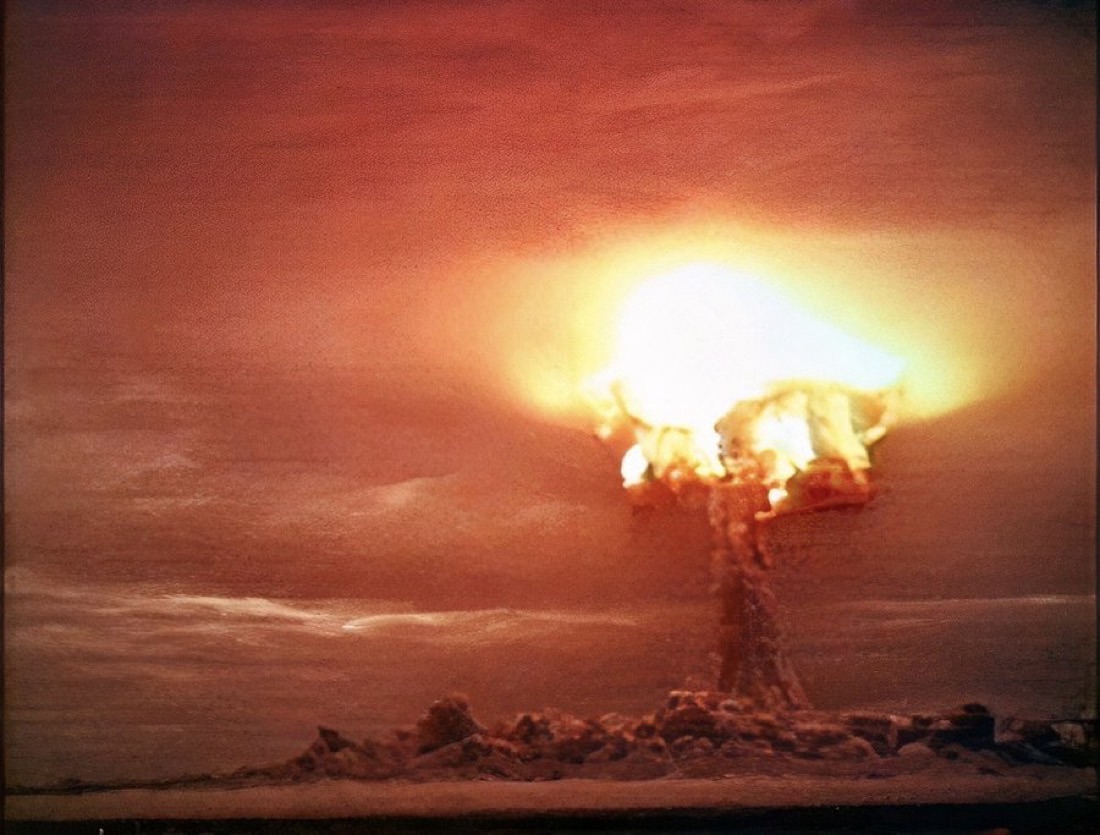
On October 23, 1954, the Soviet Union conducted a pivotal nuclear test at the Semipalatinsk test site in Kazakhstan, detonating the RDS-3I atomic bomb. This test was a significant technological step in the Soviet nuclear weapons program, as it successfully demonstrated the use of an external source of neutron initiation, dramatically increasing the weapon’s destructive yield.

img 7367

The test, which was a clear demonstration of the Soviet Union’s advancing capability to refine its nuclear arsenal, was part of a broader series of tests aimed at optimizing and developing deliverable warheads for its strategic air force.

The Technological Leap: External Neutron Initiation

The RDS-3I was an improved version of the earlier RDS-3 atomic bomb. The crucial upgrade lay in the incorporation of an external neutron initiator (also known as a timed neutron generator).  

• Purpose of the Initiator: In fission weapons, an initiator is designed to “kick-start” the nuclear chain reaction at the precise moment the fissile core reaches a state of prompt criticality. If the reaction starts too early (predetonation), the result is a low-yield “fizzle”; if it starts too late, the core begins to expand, also resulting in a reduced yield.  

• The RDS-3I Improvement: The use of an external neutron source, placed outside the fission assembly, provides greater flexibility and timing precision compared to older, internal initiators (like the beryllium/polonium-210 used in early bombs). This greater control over the timing of the initiation allowed Soviet engineers to maximize the efficiency of the fissile material.  

This technological refinement proved highly successful in the RDS-3I. The yield of the bomb was significantly increased from the 42 \text{ kilotons} of the base RDS-3 model to 62 \text{ kilotons}—a 47\% increase in explosive power achieved by optimizing the fission process.

Test Execution and Deployment

The 1954 test was conducted as an aerial drop, demonstrating the weapon’s readiness for operational deployment by the Soviet Long Range Aviation (Dal’naya Aviatsiya).

• Delivery Platform: The RDS-3I was dropped from a Tu-16 strategic bomber aircraft. The Tu-16, with the NATO codename “Badger,” was the Soviet Union’s first swept-wing bomber, entering production in 1954, and the Tu-16A variant was specifically designed and strengthened to carry nuclear weapons.  

• Detonation Site: The test took place at the Semipalatinsk Test Site (known to the Soviets as “The Polygon”) in what is now Kazakhstan, the Soviet Union’s primary nuclear testing ground.  

• Altitude: The bomb was detonated at an altitude of 410 \text{ meters} above the ground, a common height for atmospheric tests designed to maximize the destructive power of the shockwave over a target area and reduce local fallout compared to ground-level detonations.  

Context in the Soviet Nuclear Program

The RDS-3I test was conducted amid an intense technological arms race with the United States. While the Soviets had already tested their first thermonuclear device (the “Sloyka” or Layer Cake, RDS-6s, in 1953 with a yield of 400 \text{ kilotons}), the refinement demonstrated by the RDS-3I was critical for developing highly efficient, smaller, and more versatile fission warheads for tactical use and for serving as the primary stage in future two-stage thermonuclear designs.  

The successful boost in yield confirmed the Soviet mastery of advanced fission technology and further solidified the combat readiness of its strategic nuclear bomber fleet.

Share this:

  • Click to share on Facebook (Opens in new window) Facebook
  • Click to share on X (Opens in new window) X
Tags: Nuclear
Share119Tweet75Share
Previous Post

U.S. Escalates Show of Force Against Maduro: B-1 Bombers Fly Near Venezuelan Airspace

Next Post

America’s Largest Warship Deployed South as U.S. Navy Joins the War on Cartels

RAGE X

RAGE X

RelatedPosts

Nuclear

POLAND: We’ll Take French Nukes Too

8 months ago
GLOBAL CONFLICT INTELLIGENCE INDEX Oct 27 2025

Poland offers to host French nuclear weapons, expanding deterrence beyond U.S. bombs — a bold pivot in Europe’s defense posture.

Read moreDetails
by RAGE X
0 Comments
Nuclear

RUSSIAN DRONE STRIKES CHERNOBYL NUCLEAR PLANT SHELTER – DAMAGE REPORTED

10 months ago
img 8723 2 1

A Russian drone carrying a high-explosive warhead struck the protective shelter of the Chernobyl NPP’s 4th reactor. The fire was...

Read moreDetails
by RAGE X
0 Comments
Nuclear

B-52 Crash with Mk-39 Thermonuclear Bombs in Goldsboro, 1961 

11 months ago
img 7409 4 1

Learn about the 1961 Goldsboro nuclear bomb incident when a B-52 crashed, dropping two thermonuclear bombs, nearly causing a catastrophic...

Read moreDetails
by RAGE X
0 Comments
Nuclear

Wasp Prime Nuclear Test (1955): First Same-Day Detonation in History

8 months ago
img 1453 1

The Wasp Prime nuclear test on March 29, 1955, marked the first time two nuclear detonations occurred in one day....

Read moreDetails
by RAGE X
0 Comments
Next Post
img 7415 1

America’s Largest Warship Deployed South as U.S. Navy Joins the War on Cartels

Leave a Reply Cancel reply

Your email address will not be published. Required fields are marked *

RAGE  X

© 2025 RAGE X . All Rights Reserved.

Navigate Site

  • About Us
  • Artificial Intelligence: The AI Revolution Redefining Our World in 2025
  • Contact Us
  • Global Conflict Intelligence Index Mid Year 2025
  • Global Nuclear Index
  • Home
  • Intelligence Index
  • Newsletter

Follow Us

No Result
View All Result
  • About Us
  • Artificial Intelligence: The AI Revolution Redefining Our World in 2025
  • Contact Us
  • Global Conflict Intelligence Index Mid Year 2025
  • Global Nuclear Index
  • Home
  • Intelligence Index
  • Newsletter

© 2025 RAGE X . All Rights Reserved.