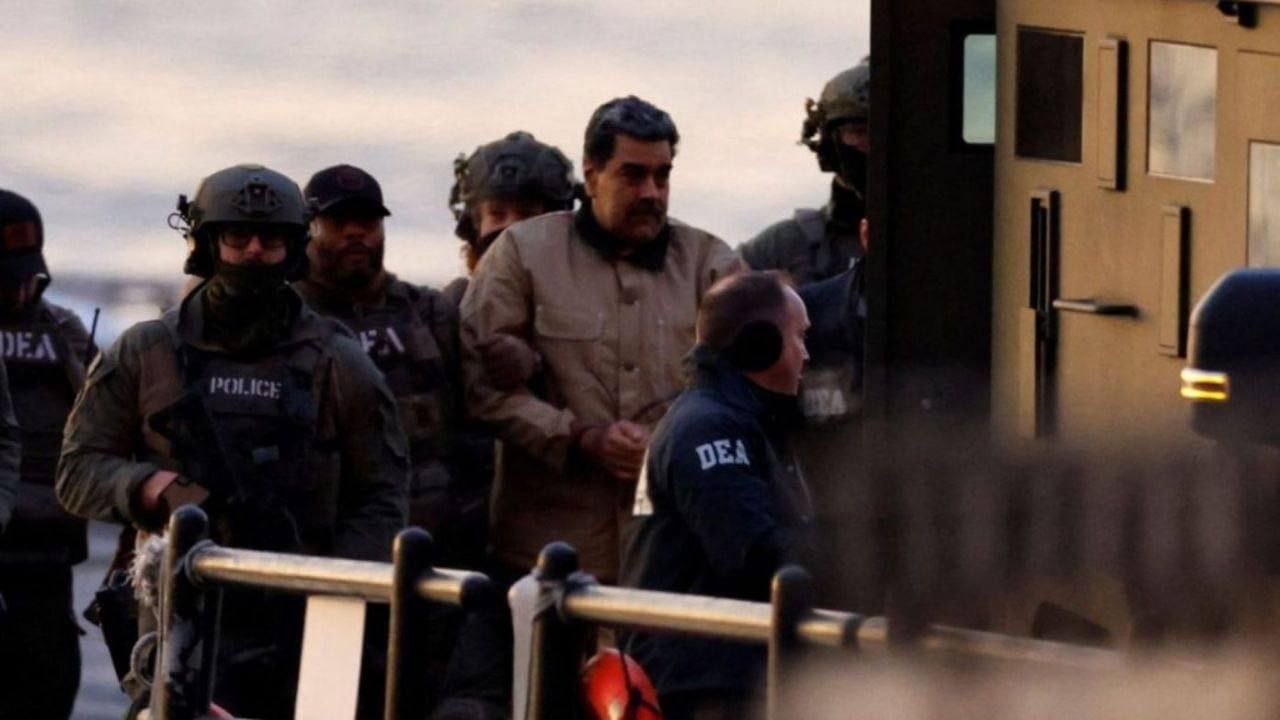
In a move of escalating desperation, Venezuelan President Nicolás Maduro has sent formal requests for military assistance to Russia, China, and Iran, as a U.S. carrier strike group and F-35 jets mass in the Caribbean. According to internal U.S. government documents obtained by The Washington Post, the Chavista regime is scrambling to upgrade its worn-out military capabilities to counter a direct U.S. military threat.
The requests are specific and tailored to each ally. For Moscow, a formal letter intended for President Vladimir Putin was reportedly delivered by a senior aide visiting the Russian capital. This letter is said to request the urgent delivery of defensive systems, including missiles and advanced radars, and, crucially, financing to repair Venezuela’s grounded fleet of Russian-made aircraft.
This plea to Russia has already seen some movement. On Sunday, October 26, a Russian Ilyushin Il-76 military cargo plane landed in Caracas. This specific aircraft is sanctioned by the United States for its previous involvement in the arms trade and transporting mercenaries. It arrived after taking a deliberately circuitous route over Africa to avoid Western airspace, signaling a clear attempt to mask its flight.
Simultaneously, a similar letter has been drafted for Chinese President Xi Jinping, asking for “expanded military cooperation” to directly counter “the escalation between the U.S. and Venezuela.”
Venezuela’s outreach to Tehran is perhaps the most detailed. The documents reveal that Transport Minister Ramón Celestino Velásquez has been in coordination with Iranian officials. Velásquez, who is planning a visit to Iran, told an official there that Venezuela is in “need of ‘passive detection equipment’ alongside ‘GPS scramblers’ and ‘almost certainly drones with 1,000 km [600 mile] range.'”
This request highlights Venezuela’s key vulnerabilities:
* Passive Detection: The need to track the U.S. naval and air assets off its coast without being detected.
* GPS Scramblers: A direct countermeasure to the U.S. electronic warfare and GPS disruption that has been reported in the region as a preparatory action for potential strikes.
* 1,000km Drones: A request for a significant offensive deterrent, giving Maduro the ability to strike targets far beyond his borders.
This diplomatic panic is a direct response to the Trump administration’s “maximum pressure” campaign, which has moved from sanctions to active military threats. The U.S. has deployed the USS Gerald R. Ford carrier strike group, authorized strikes on land-based military targets, and publicly stated that Maduro’s “clock is ticking.” With his domestic military crumbling, Maduro is now making a desperate bid for foreign intervention before the U.S. decides to enforce its red lines.
Maduro Asks Russia, China, and Iran for Missiles and Drones Amid US Threats
As a US carrier strike group sits off his coast, Venezuelan President Nicolás Maduro is begging Russia, China, and Iran for missiles, radar, and drones.