
The MQ-9 Reaper represents a pivotal evolution in modern aerial warfare, combining persistent surveillance capabilities with precision strike power in a single unmanned platform. Developed by General Atomics Aeronautical Systems for the United States Air Force, this remotely piloted aircraft has fundamentally changed how military operations are conducted across multiple theaters of conflict. Since entering service in 2007, the Reaper has accumulated tens of thousands of combat hours, establishing itself as an indispensable asset for intelligence gathering, reconnaissance, and targeted strikes against high-value objectives.
Design Philosophy and Technical Architecture
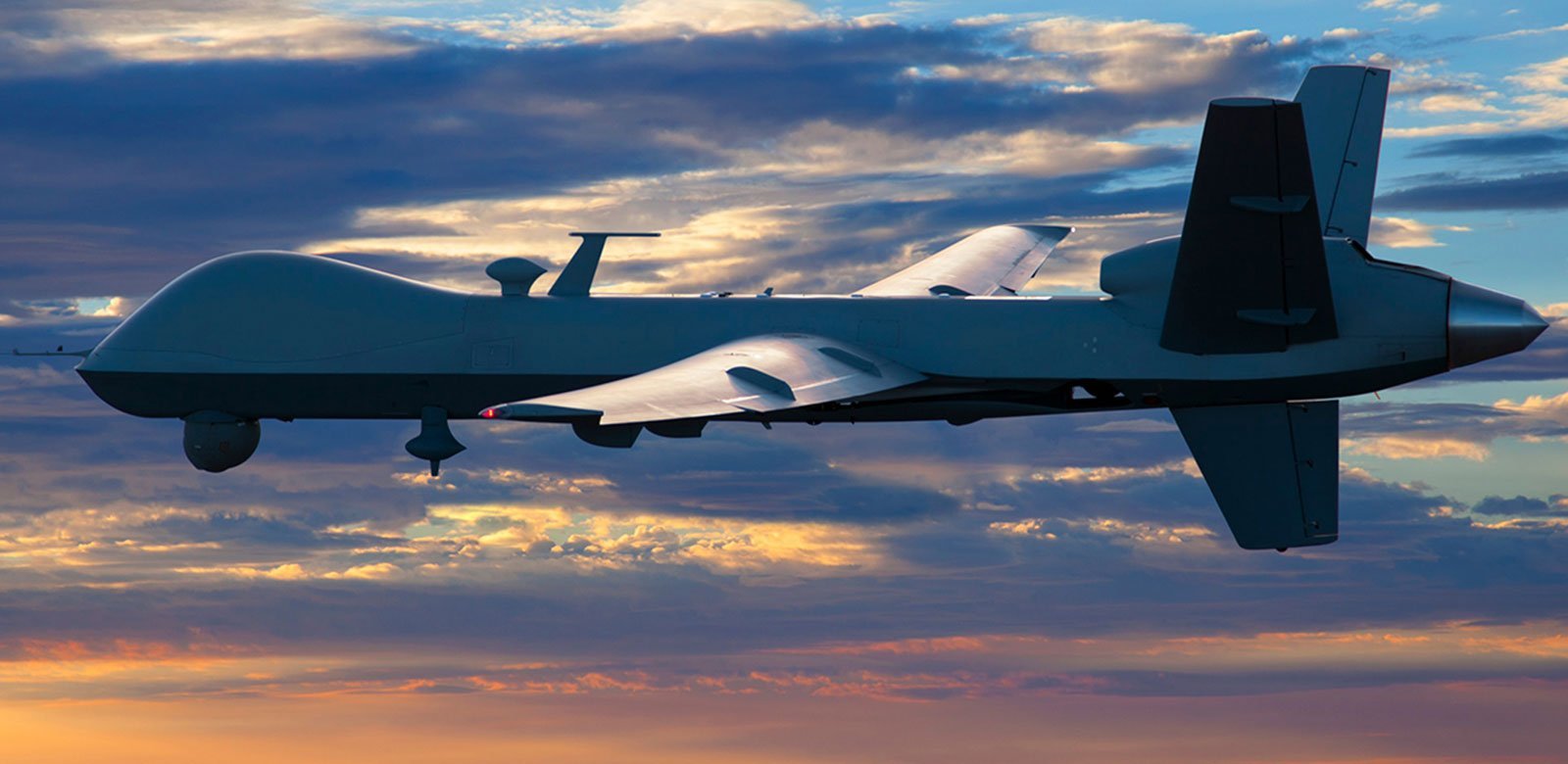
The MQ-9 Reaper’s design reflects a careful balance between endurance, payload capacity, and operational flexibility. With a wingspan of 66 feet and an overall length of 36 feet, the aircraft maintains a relatively compact footprint while maximizing aerodynamic efficiency. The platform stands 12.5 feet tall and features a distinctive inverted V-tail configuration that enhances stability during extended missions.
At the heart of the Reaper’s performance lies the Honeywell TPE331-10 turboprop engine, generating 900 shaft horsepower. This powerplant enables the aircraft to reach altitudes up to 50,000 feet, well above most conventional threats and adverse weather conditions. The engine’s fuel efficiency contributes to the Reaper’s impressive endurance of more than 27 hours, allowing operators to maintain persistent surveillance over areas of interest without requiring frequent rotation of assets.
The aircraft’s empty weight of 4,900 pounds increases to a maximum takeoff weight of 10,500 pounds when fully loaded with fuel, sensors, and ordnance. This 3,850-pound payload capacity represents a significant advancement over earlier unmanned systems, enabling the Reaper to carry multiple weapon systems simultaneously while maintaining full sensor functionality. The platform achieves a maximum speed of 300 miles per hour, with a typical cruise speed of 200 miles per hour and an operational range of 1,150 miles.
Sensor Systems and Intelligence Capabilities
The MQ-9 Reaper’s effectiveness stems largely from its sophisticated sensor suite, which provides operators with comprehensive situational awareness across multiple spectral bands. The Raytheon AN/DAS-1 multi-spectral targeting system serves as the primary sensor package, incorporating both electro-optical and infrared cameras that deliver high-resolution imagery in various lighting conditions. This system enables operators to identify and track targets with precision, even in challenging environmental conditions.
The Lynx multi-mode radar system provides additional surveillance capabilities, including synthetic aperture radar functionality that generates detailed ground maps regardless of weather or darkness. This radar can detect moving targets, track multiple objects simultaneously, and provide ground operators with real-time intelligence updates. The laser rangefinder integrated into the sensor package enables precise target designation for both onboard weapons and munitions delivered by manned aircraft.
Communication systems represent another critical component of the Reaper’s operational effectiveness. The Raytheon AN/ZPQ-1 Tactical Common Data Link facilitates high-bandwidth data transmission between the aircraft and ground control stations. This satellite-based communications architecture enables the Reaper to operate globally, transmitting full-motion video and sensor data to commanders and analysts positioned anywhere on Earth. The Automatic Identification System further enhances maritime surveillance capabilities, allowing the platform to track and identify naval vessels.
Armament and Strike Capabilities
The MQ-9 Reaper’s designation as a “hunter-killer” platform reflects its dual-role capability to both locate and engage targets without requiring coordination with separate strike assets. The aircraft can carry up to 3,850 pounds of ordnance distributed across six external hardpoints, providing flexibility in mission configuration based on operational requirements.
The AGM-114 Hellfire missile serves as the Reaper’s primary air-to-ground weapon, offering precision engagement capability against vehicles, buildings, and personnel targets. Multiple Hellfire variants enable operators to select the optimal warhead configuration for specific target sets, including anti-armor, blast-fragmentation, and thermobaric options.
For targets requiring larger explosive yields, the Reaper carries various precision-guided bombs. The GBU-12 Paveway II laser-guided bomb delivers 500 pounds of explosive force with exceptional accuracy, while the GBU-38 Joint Direct Attack Munition utilizes GPS guidance to strike targets in adverse weather conditions. Enhanced Paveway variants, including the GBU-49 and GBU-50, combine laser and GPS guidance for maximum flexibility. The platform can also accommodate larger munitions such as the GBU-31 and GBU-32 JDAM variants when mission parameters require increased destructive capacity.
Operational Employment and Combat Record
Since achieving initial operational capability in 2007, the MQ-9 Reaper has accumulated an extensive combat record across multiple theaters of operation. Afghanistan and Iraq served as primary operational environments during the platform’s early deployment years, where Reaper squadrons conducted thousands of combat sorties supporting counterinsurgency operations. The aircraft’s persistent surveillance capabilities proved invaluable for tracking insurgent networks, while its strike capacity enabled rapid engagement of time-sensitive targets.
The Reaper’s operational employment extends beyond traditional combat zones. The United States Customs and Border Protection operates Reaper variants for border surveillance and interdiction missions along U.S. borders. Intelligence agencies have utilized the platform for counterterrorism operations worldwide, exploiting its ability to loiter over target areas for extended periods while remaining undetected.
International operators have recognized the Reaper’s capabilities, with military forces from the United Kingdom, France, Spain, Italy, and India incorporating the platform into their respective aerial fleets. Each operator has adapted Reaper employment to their specific operational requirements, from maritime patrol missions to counterterrorism operations in remote regions.
Crew Operations and Training
Despite being an unmanned aircraft, the MQ-9 Reaper requires a two-person crew for effective operation. The pilot maintains responsibility for aircraft control, navigation, and tactical employment, while the sensor operator manages the targeting systems, analyzes intelligence data, and coordinates weapon employment. Both crew members operate from ground control stations that may be located thousands of miles from the actual aircraft.
This remote operation model presents unique challenges and advantages. Crews can conduct extended missions without the physical fatigue associated with cockpit operations, and pilot rotation can occur mid-mission without affecting aircraft performance. However, the lack of physical presence in the aircraft requires pilots to develop specialized skills in interpreting sensor data and maintaining situational awareness through electronic interfaces.
Ethical Considerations and Future Outlook
The proliferation of unmanned combat aircraft has generated substantial debate regarding the ethical implications of remote warfare. Critics argue that the physical and psychological distance between operators and combat zones may lower thresholds for employing lethal force. Documented incidents of civilian casualties resulting from Reaper strikes have intensified discussions about targeting procedures, rules of engagement, and accountability mechanisms.
Looking forward, the MQ-9 Reaper continues to evolve through incremental improvements in sensors, weapons integration, and communications systems. However, the platform faces potential obsolescence as peer competitors develop advanced air defense systems capable of detecting and engaging unmanned aircraft at high altitudes. Future unmanned platforms will likely require stealth characteristics, higher performance, and increased autonomy to operate in contested environments.
The current unit cost of approximately $16 million per aircraft represents a significant investment, yet remains substantially lower than most manned combat aircraft. This cost-effectiveness, combined with proven operational capabilities, ensures the Reaper will remain a cornerstone of U.S. military aviation for years to come.
The MQ-9 Reaper has fundamentally transformed aerial warfare by demonstrating that unmanned systems can effectively conduct complex military operations requiring both intelligence gathering and precision strike capabilities. Its combination of long endurance, sophisticated sensors, diverse armament options, and global operational reach has made it an essential tool for military and intelligence operations worldwide. While ethical questions surrounding unmanned warfare persist, the Reaper’s operational record demonstrates the platform’s effectiveness in supporting national security objectives across diverse mission sets and geographic regions.