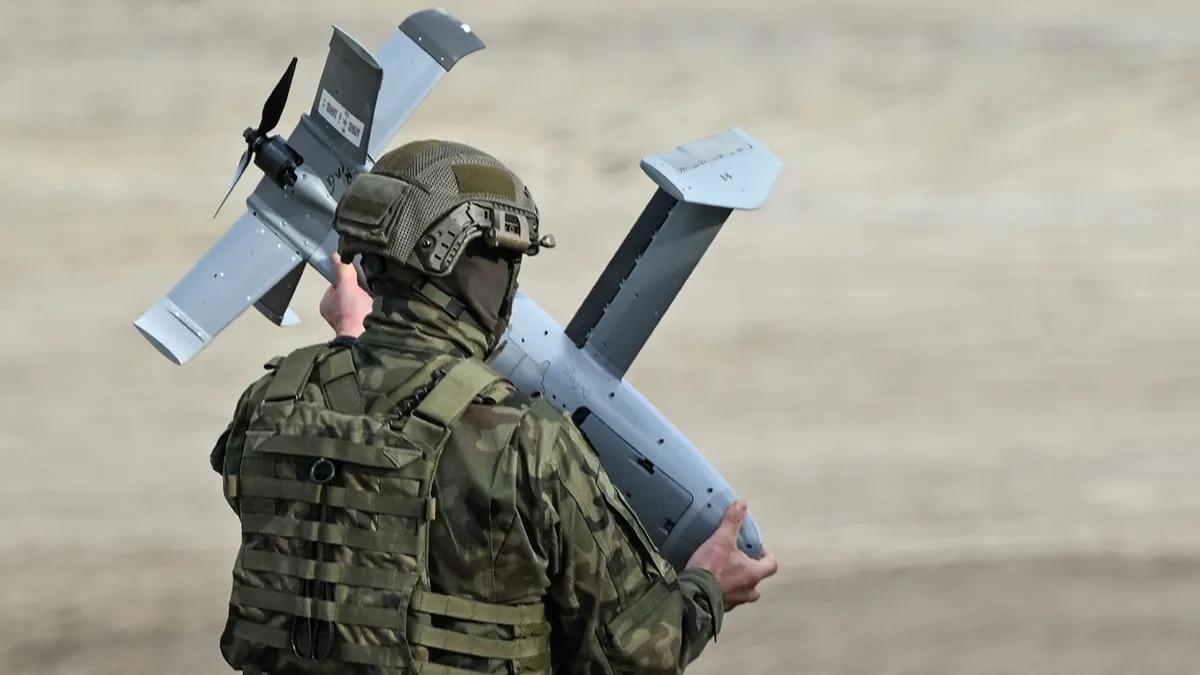
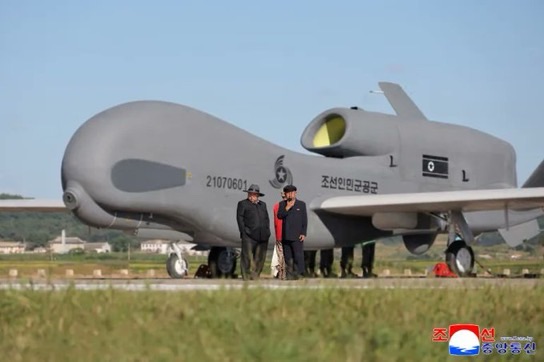

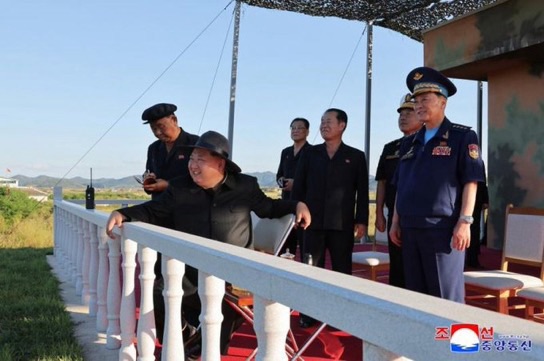
In a significant and unsettling development, North Korean leader Kim Jong Un has made the advancement of artificial intelligence (AI) in military technology a “top priority,” with a specific focus on unmanned aerial vehicles (UAVs). According to a report by the state-run Korean Central News Agency (KCNA), Kim personally oversaw a test of new tactical attack drones at a plant in Pyongyang and immediately ordered an expansion of mass production for the military UAVs. This move signals a new and dangerous phase in North Korea’s military modernization, as it seeks to leverage cheap, effective, and expendable AI-powered weapons.
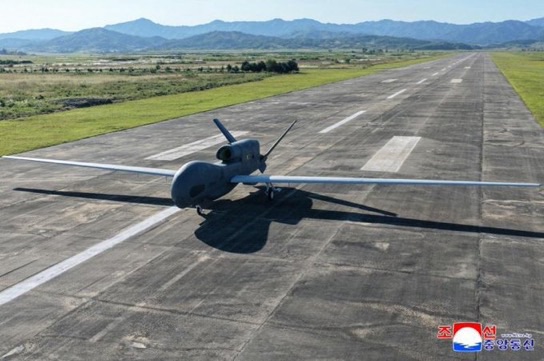
Images and reports from the KCNA showed an unmanned vehicle taking off and then successfully destroying a target, an exercise that state media said demonstrated the “excellent combat effectiveness of Kumsong-series tactical attack drones.” Kim reportedly expressed “great satisfaction” with the results and stated that drones are emerging as a “major military activity asset.” The North Korean leader also ordered “efforts to rapidly develop the newly introduced artificial intelligence technology” as well as the “expanding and strengthening” of drone production capabilities.
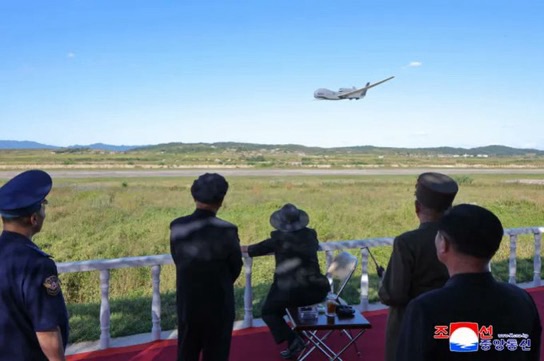
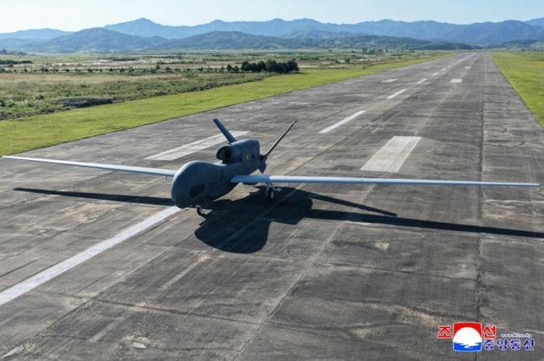
The development of AI-powered drones is a major strategic concern for the United States, South Korea, and Japan. According to analysts, these drones offer a “low-cost, high-efficiency threat” due to their autonomous mission execution, improved accuracy, and lethality. Dr. Lim Eul-chul at South Korea’s Kyungnam University stated that AI could allow North Korean drones to “operate even if GPS or communications signals are jammed, relying on pre-trained algorithms.” Experts also believe that North Korea’s AI drive has gained momentum from technology transfers from Russia and lessons learned from the war in Ukraine, where drones have proven to be a decisive factor on the battlefield.
The focus on AI drones comes just a week after Kim supervised tests of a new high-thrust solid-fuel engine for intercontinental ballistic missiles (ICBMs). That test, which was hailed by Kim as a “significant change” in Pyongyang’s nuclear capabilities, showed a successful ground test of a powerful new engine that will be used for future ICBMs. Solid-fuel engines are considered a major advancement because they can be transported and launched more quickly than liquid-fuel models, making them harder to detect and neutralize.
The back-to-back tests of advanced drone and missile technology highlight Kim’s determination to cement North Korea’s status as a formidable military power. The dual-track approach of modernizing both its nuclear and conventional forces, particularly with AI, underscores the belief that Pyongyang is in its “strongest strategic position in decades,” as noted by a recent U.S. military intelligence report. The international community has condemned the tests, but they are a clear signal of Kim’s commitment to building a military that can not only threaten the region but also the U.S. homeland.