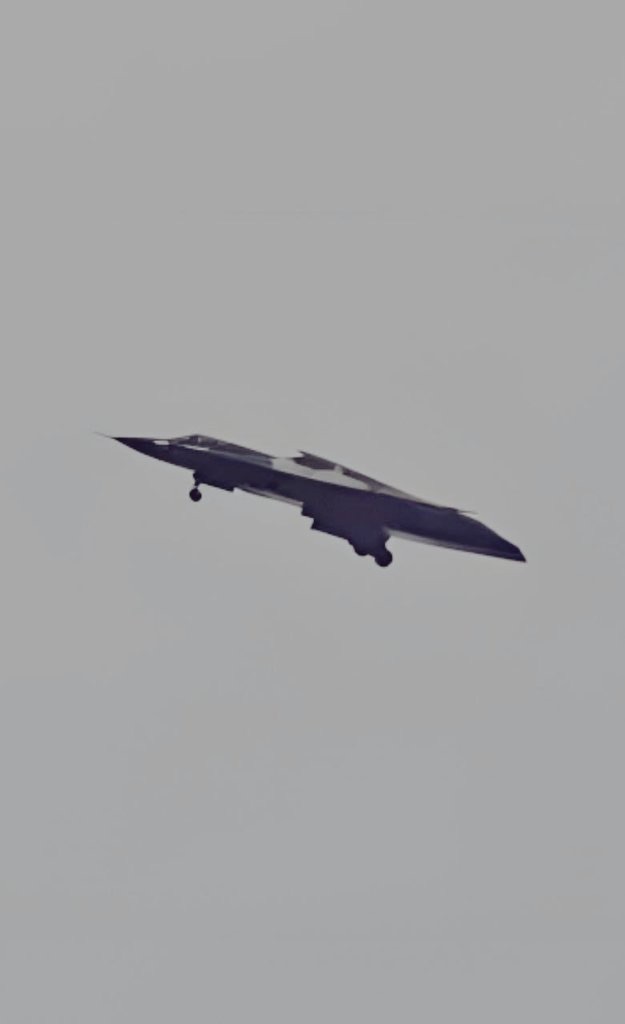

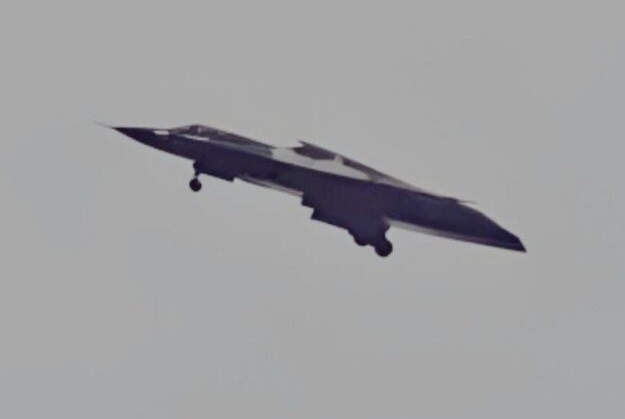
China’s rapid advancements in military aviation have culminated in the development of the J-36, a fifth-generation stealth fighter designed to secure air dominance and project power across the Indo-Pacific. As tensions escalate in contested regions like the South China Sea and Taiwan Strait, the J-36 represents a critical leap in the People’s Liberation Army Air Force’s (PLAAF) modernization efforts. This report examines the J-36’s technical specifications, strategic role, and historical context, offering insights into its potential impact on global military balances.
Development and Historical Context
The J-36 emerges from China’s decades-long push to reduce reliance on foreign technology and establish itself as a global defense innovator. Key milestones include:
- Predecessors: The J-20 (entered service in 2017) laid the groundwork with stealth and sensor fusion, while the FC-31/J-31 prototype tested carrier compatibility.
- Timeline: Development of the J-36 reportedly began in the early 2010s, with prototypes sighted in 2022. Initial operational capability is projected by 2026.
- Strategic Drivers: Countering U.S. F-22/F-35 dominance and addressing vulnerabilities exposed by Taiwan’s F-16V upgrades and Japan’s F-X program.
Technical Specifications
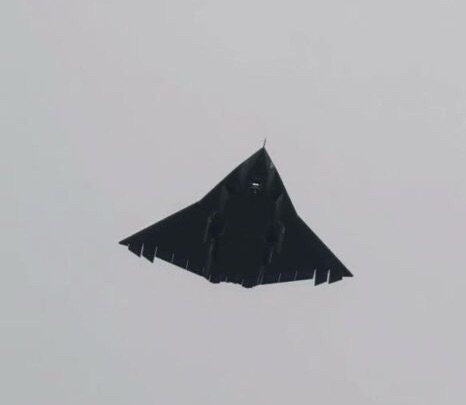
The J-36 integrates cutting-edge systems to outperform rivals in stealth, speed, and situational awareness:
- Airframe and Stealth:
- Shape: Angled surfaces, internal weapons bays, and radar-absorbent materials reduce radar cross-section (RCS) to <0.01 m².
- Coatings: Hexagonal metamaterial tiles enhance broadband stealth.
- Propulsion:
- Engine: WS-15 turbofan (2 x 180 kN thrust) enables supercruise (Mach 1.5+ without afterburners).
- Range: 2,200 km combat radius; extendable via aerial refueling.
- Avionics and Sensors:
- Radar: AESA (Active Electronically Scanned Array) with 2,000+ TR modules for 360° coverage.
- EW Suite: Advanced jamming and cyber-defense systems to disrupt enemy networks.
- IRST: Infrared search-and-track for passive targeting.
- Armament:
- Internal Bays: PL-15 long-range air-to-air missiles (200 km range), PL-10 short-range missiles.
- External Hardpoints: For anti-ship missiles (YJ-12) or precision-guided bombs in non-stealth configurations.
Operational Capabilities
The J-36 is tailored for multirole missions, prioritizing air superiority while retaining strike capabilities:
- Stealth Penetration: Infiltrate contested airspace to neutralize high-value targets (e.g., AWACS, carriers).
- Network-Centric Warfare: Integrates with satellites, drones, and ground systems via BeiDou navigation and datalinks.
- Carrier Compatibility: Foldable wings and reinforced landing gear suggest a future naval variant for the Type 003 aircraft carrier.
Strategic Implications
- Indo-Pacific Balance: The J-36 strengthens China’s A2/AD (Anti-Access/Area Denial) strategy, complicating U.S. intervention in Taiwan contingencies.
- Export Potential: While unlikely for NATO-aligned states, sales to Pakistan or Middle Eastern allies could shift regional dynamics.
- Technological Leap: Indigenous WS-15 engines and AESA radar underscore China’s growing self-reliance amid Western sanctions.
Challenges and Limitations
- Cost: Estimated $85 million per unit limits mass production.
- Maintenance: Stealth coatings require controlled environments, challenging forward deployments.
- Electronic Warfare: Vulnerabilities to next-gen U.S. NGJ (Next-Generation Jammer) systems.