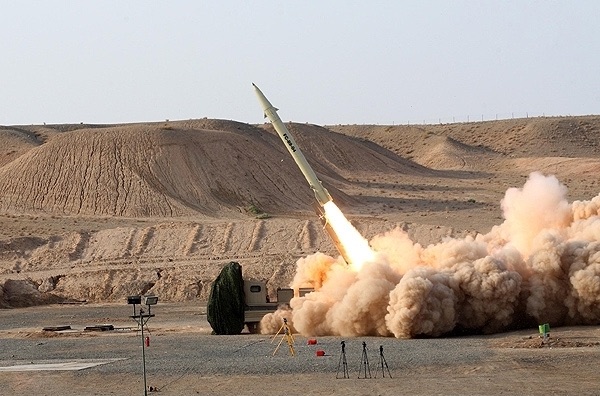

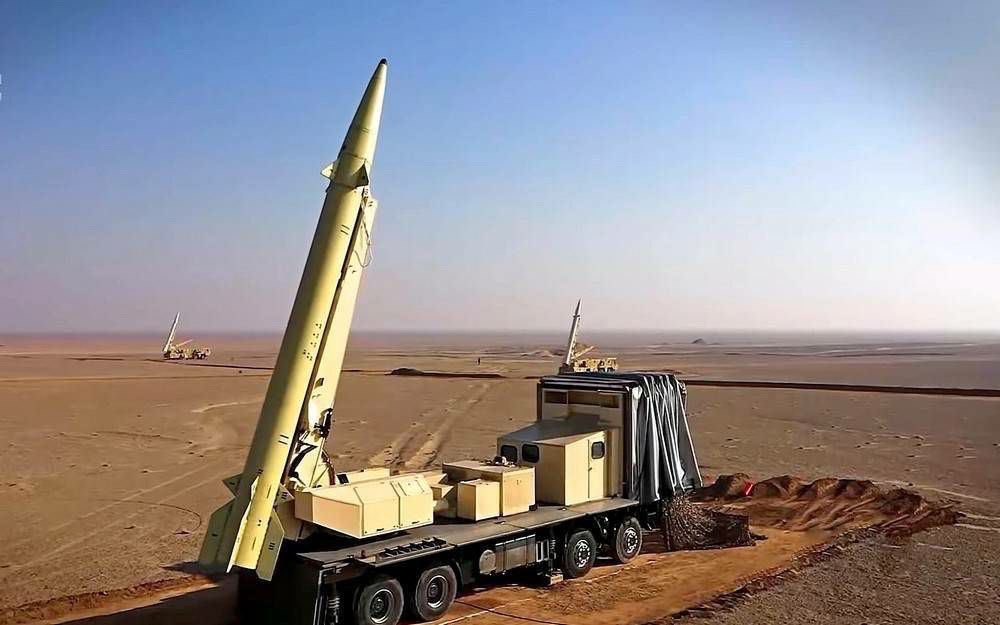
The Fateh-110 (Persian: “Conqueror”), also designated as Qadr-1 in some versions, is a short-range ballistic missile (SRBM) developed by Iran. Introduced in the early 2000s, this solid-fueled, road-mobile missile has undergone several iterations, with improvements in range, accuracy, and lethality. As a symbol of Iran’s indigenous missile capabilities, the Fateh-110 has become a strategic asset in Iran’s missile arsenal. It is designed to carry out precision strikes on both land and sea targets, making it a versatile tool for military operations. The missile is primarily used by the Iranian Revolutionary Guard Corps (IRGC).
Technical Specifications and Features
General Overview:
• Type: Short-Range Ballistic Missile (SRBM)
• Alternative Name: Qadr-1 (for certain enhanced versions)
• Country of Origin: Iran
• In Service Since: Early 2000s
• Manufacturer: Iran Aerospace Industries Organization (AIO)
• Primary Operator: Islamic Revolutionary Guard Corps (IRGC)
Missile Structure and Propulsion:
• Fuel Type: Solid propellant (which ensures rapid deployment and low maintenance)
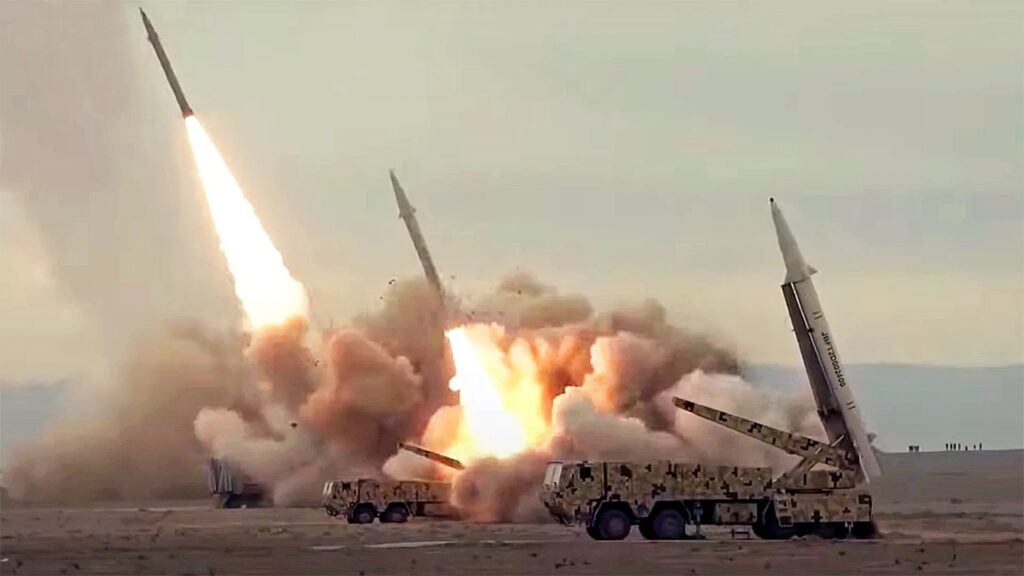
• Launch Platform: Road-mobile transporter erector launcher (TEL), which allows for high mobility and flexibility in launch operations.
• Stages: Single-stage missile
• Length: Approx. 8.86 meters (29 ft 1 in)
• Diameter: 0.61 meters (2 ft)
• Weight: Varies by version, but generally around 3,500 kg (7,716 lbs)
Range and Performance:
• Range:
• Fateh-110 (First Generation): ~200 km
• Fateh-110 (Second Generation): ~250 km
• Fateh-110 (Third Generation): ~300 km
• Fateh-110 (Fourth Generation): ~300 km to 350 km with improved accuracy
• Qadr-1 Version: ~800 km (extended range version with enhanced capabilities)
• Speed: Mach 3 to Mach 4 (hypersonic speed capabilities)
• Accuracy (CEP – Circular Error Probable):
• 10 meters for later versions, showcasing precision-strike capabilities.

Warhead and Payload:
• Warhead Type: High-explosive (HE) fragmentation or submunitions.
• Warhead Weight: Approximately 450 kg (1,000 lbs)
• Warhead Options: Some versions are capable of carrying chemical or biological warheads, though this has not been officially confirmed.
• Guidance System:
• Inertial Navigation System (INS): Initial versions used INS for midcourse guidance.
• GPS/GLONASS Augmentation: Later versions have been equipped with satellite navigation systems to improve terminal guidance accuracy.
• Electro-optical and Radar Seeker: Fourth-generation models and the Qadr-1 are reported to feature advanced seekers for terminal phase precision.
Mobility and Deployment:
• Launch Mechanism: The Fateh-110 is launched from a highly mobile Transporter Erector Launcher (TEL), which allows for rapid deployment in various terrain.
• Mobility: Road-mobile and capable of quick redeployment to avoid counterattacks.

Upgrades and Variants:
• Fateh-110 First Generation: Initial design with basic guidance and a range of 200 km. Entered service in 2002.
• Fateh-110 Second Generation: Introduced around 2004, featuring improvements in range (~250 km) and guidance systems.
• Fateh-110 Third Generation: Enhanced in 2010 with a range of 300 km and improved precision guidance systems.
• Fateh-110 Fourth Generation: First showcased in 2012, with further improvements in accuracy (CEP ~10 meters) and the ability to hit moving targets, including naval targets.
• Qadr-1: An extended-range variant with a reported range of up to 800 km, equipped with enhanced guidance and targeting systems.
Launch Capabilities and Deployment:
The Fateh-110 and its variants, including the Qadr-1, have been designed for rapid deployment and can be launched within minutes of receiving an order. The solid-fueled propulsion system allows it to be stored for long periods, ready for immediate use. Road mobility is a key advantage, making it difficult to detect and counter.
Operational Use and Capabilities
The Fateh-110 has been deployed in various capacities by Iran and its regional allies, most notably by Hezbollah in Lebanon. The missile has been reportedly used during conflicts in Syria and Iraq, and there are indications that it has been exported to various militant groups and countries aligned with Iran’s strategic interests. The Qadr-1 version, with its extended range, is viewed as a more strategic tool, capable of striking targets much deeper within enemy territory, including critical infrastructure or military bases.
• Regional Impact: The Fateh-110 is seen as a critical part of Iran’s deterrent strategy, especially against neighboring Gulf countries and Israel. With its increased range and precision, the missile is capable of threatening vital installations, including military bases, oil facilities, and urban centers across the region.
• Military Use: In recent years, Iran has demonstrated the missile’s capability in military drills and retaliatory strikes, most notably during the IRGC’s strike on U.S. bases in Iraq following the assassination of General Qassem Soleimani in January 2020. The missile proved effective in these strikes, showcasing its precision.
Historical Development Timeline
• 2002: First-generation Fateh-110 enters service with a range of 200 km.
• 2004: Second-generation Fateh-110 introduced with a range of 250 km.
• 2010: Third-generation Fateh-110 unveiled, extending its range to 300 km with better accuracy.
• 2012: Fourth-generation Fateh-110 enters service with a reported range of 300-350 km and improved terminal guidance systems.
• 2014-2016: Reports of Qadr-1 variant with extended range and advanced guidance systems, extending its reach up to 800 km.
The Fateh-110 (Qadr-1) is a crucial element of Iran’s missile arsenal, offering a blend of range, accuracy, and mobility. With continuous upgrades, it has evolved from a basic SRBM into a precision-guided missile capable of striking both stationary and moving targets, including naval vessels. The missile’s operational flexibility, combined with Iran’s advanced missile production capabilities, underscores its strategic importance in the region.