
Fateh-110: Iran’s Precision Strike Ballistic Missile
The Fateh-110, whose name translates to “Conqueror” in Persian, represents a watershed in Iranian ballistic missile development—the first domestically produced system to achieve true precision-strike capability rivaling Western guided weapons. Developed during the 1990s and continuously improved through multiple generations, this short-range ballistic missile (SRBM) has evolved from a relatively crude unguided system into a sophisticated precision weapon employing terminal guidance and capable of striking targets within meters of aim points at ranges approaching 300 kilometers.
Lebanon 🇱🇧 | Israel 🇮🇱 | Iran 🇮🇷
The missile’s significance extends beyond its technical capabilities to encompass its role as centerpiece of Iranian asymmetric warfare strategy. Unable to compete with adversaries including the United States and Israel in conventional military capabilities, Iran has invested heavily in ballistic and cruise missiles, unmanned systems, and naval asymmetric capabilities designed to impose costs on superior opponents while avoiding direct confrontation that would expose Iranian conventional forces to devastating defeat. The Fateh-110’s combination of precision, mobility, and relative affordability makes it ideal weapon for this strategic approach.
Iran’s willingness to transfer Fateh-110 technology and complete systems to proxy forces including Hezbollah in Lebanon, various Iraqi Shia militias, Houthi forces in Yemen, and potentially other groups represents deliberate strategy of projecting power and threatening adversaries while maintaining plausible deniability about direct Iranian involvement. These transfers have created distributed missile threat networks that complicate adversary targeting and defense planning while enabling Iran to strike enemies including Israel, Saudi Arabia, and U.S. forces across the region without directly employing Iranian military assets.
The missile’s combat employment demonstrates both capabilities and limitations of modern short-range ballistic missiles against defended targets. Hezbollah has launched Fateh-110 variants against Israeli territory on multiple occasions, including during the 2006 Lebanon War and more recent conflicts. These attacks have achieved varying success—some missiles have struck targets despite Israeli air defenses, while others have been intercepted by Iron Dome, David’s Sling, or Patriot systems. The ongoing tactical competition between Iranian missiles and Israeli defenses drives continuous evolution in both offensive and defensive technologies.
Development History and Variants
The Fateh-110’s origins lie in Iran’s determination to develop indigenous ballistic missile capabilities following the 1980-1988 Iran-Iraq War, during which both nations employed Soviet-supplied Scud missiles against each other’s cities and military targets. That conflict demonstrated ballistic missiles’ strategic value while also exposing Iran’s vulnerability to weapons embargoes that could cut off access to foreign military technology. The experience drove Iranian investment in domestic missile production capabilities that would prove resilient to international sanctions and political isolation.
Initial Fateh-110 development during the 1990s produced a relatively basic solid-fuel ballistic missile with limited accuracy—circular error probable (CEP) measured in hundreds of meters, making it suitable only for attacking large area targets like cities, military bases, or industrial facilities rather than precision strikes against specific buildings or installations. The system’s solid-fuel propulsion offered significant advantages over liquid-fueled alternatives including faster launch preparation, reduced logistical footprint, and improved storage characteristics enabling extended deployment without maintenance.
The Fateh-110A first-generation variant, unveiled in 2002, featured a 500-kilogram warhead and range approaching 200 kilometers with CEP of approximately 250-300 meters. While impressive for indigenous Iranian development, this accuracy proved insufficient for striking point targets and limited the missile’s military utility beyond terror bombardment of civilian areas. The mobile launcher design mounting missiles on transporter-erector-launcher (TEL) vehicles provided tactical mobility enabling battery displacement after launches, complicating enemy targeting and enhancing survivability.
The Fateh-110B second-generation variant incorporated modest range extension to approximately 250 kilometers and improved warhead designs optimizing terminal effects against various target types. However, accuracy improvements remained incremental, with CEP still measured in hundreds of meters. This generation introduced improved solid propellant formulations increasing range without requiring larger missile dimensions, maintaining compatibility with existing launchers and logistics infrastructure.
The revolutionary Fateh-110D variant, sometimes designated Fateh-313, integrated terminal guidance systems transforming the missile from an area weapon into precision strike platform. This variant employs radar or electro-optical seekers providing terminal homing during final approach, reducing CEP to approximately 30 meters or less—accuracy sufficient for striking individual buildings, bridges, radar sites, or other point targets. The addition of movable control surfaces on the missile body enables maneuvering during terminal phase, both for precision guidance and potentially for complicating interception by defensive systems.
Later variants including Fateh-110D1 and Fateh-313 pushed capabilities further with reported ranges approaching 300 kilometers and continued accuracy improvements. These systems incorporate lessons learned from combat employment and represent maturation of Iranian guidance technology to levels approaching capabilities of advanced military powers. The missile family’s evolution demonstrates Iran’s growing technological sophistication despite sanctions and international isolation that restrict access to foreign technology and components.
Technical Specifications and Capabilities
The Fateh-110’s technical characteristics reflect careful engineering optimized for Iran’s strategic requirements and industrial capabilities while accepting limitations imposed by sanctions restricting access to advanced materials and components.
The missile measures approximately 8.86 meters in length with body diameter of 0.61 meters, dimensions that enable road-mobile deployment while maintaining sufficient internal volume for propellant, guidance systems, and substantial warhead. The relatively compact size facilitates storage in hardened shelters, tunnels, or other protected facilities that complicate enemy targeting while enabling dispersed deployment across wide geographic areas.
The solid-fuel propulsion system provides critical advantages for military operations. Solid propellant remains stable during extended storage, eliminates the dangerous fueling procedures required for liquid-fueled missiles, and enables rapid launch timelines measured in minutes rather than hours. The missile employs single-stage propulsion, with the solid rocket motor providing acceleration to velocities approaching Mach 3-4 during boost phase before burnout and transition to ballistic trajectory. The high velocities achieved during boost phase carry the missile to apogee heights of approximately 80-100 kilometers depending on range and trajectory optimization.
The 500-kilogram warhead represents substantial explosive payload capable of inflicting significant damage against most target types. High-explosive warhead designs optimize blast and fragmentation effects against soft targets including buildings, vehicles, and personnel, while penetrator variants might exist for attacking hardened structures including bunkers or reinforced buildings. The large warhead enables single-missile strikes to achieve mission objectives against many target types, though hardened military facilities might require multiple hits or specialized warheads to ensure destruction.
Terminal guidance systems distinguish modern Fateh-110 variants from earlier generations and represent the most significant capability enhancement. The precise guidance mechanisms employed remain subject to debate, with various sources claiming different approaches including:
- Electro-optical/infrared seekers that acquire visual or thermal imagery of target areas during terminal descent, comparing observed scenery to stored reference images and adjusting trajectory to impact designated aim points. This approach provides high accuracy but can be degraded by weather, smoke, or deliberate obscuration.
- Radar seekers that detect targets through active radar emission, enabling engagements in adverse weather or darkness when electro-optical systems prove ineffective. Radar guidance proves particularly effective against large metal structures including bridges, ships, or industrial facilities but may struggle distinguishing specific buildings in dense urban environments.
- GPS/GLONASS guidance potentially augmented by inertial navigation, providing all-weather capability without active terminal homing that might be jammed or deceived. However, GPS guidance remains vulnerable to jamming or spoofing, and sanctions have complicated Iranian access to advanced GPS receiver technology and denied access to military GPS signals offering greater accuracy and jam resistance than civilian signals.
The guidance system selection likely varies by target type and operational circumstances, with different variants optimized for specific mission profiles. The existence of multiple guidance options also provides redundancy, enabling continued operations if specific guidance modes prove degraded by countermeasures or environmental conditions.
Control surfaces including movable fins or canards enable trajectory adjustment during powered and terminal phases, providing the maneuverability necessary for precision guidance. These control surfaces also potentially enable evasive maneuvers designed to complicate interception by air defense systems, though the effectiveness of such techniques against modern interceptors remains debated. The control authority provided by these surfaces remains limited by aerodynamic forces and structural constraints, restricting the missile’s ability to execute radical maneuvers during high-speed terminal descent.
The mobile launcher system typically consists of modified truck chassis mounting single or multiple missile canisters, launch control equipment, and potentially integrated fire control systems. The TEL vehicles enable rapid deployment, launch from unprepared sites, and quick displacement after firing—critical capabilities for surviving in contested environments where enemy air power or long-range strike systems threaten fixed launch positions. Launch preparation times reportedly range from minutes to tens of minutes depending on circumstances, with trained crews capable of extremely rapid launch sequences when tactical situations demand.
Regional Proliferation and Proxy Arsenal Integration
Iran’s transfer of Fateh-110 technology and complete systems to proxy forces throughout the Middle East represents deliberate strategy projecting power while maintaining plausible deniability about direct Iranian military involvement. This proliferation has created distributed missile threat networks targeting Israel, Saudi Arabia, U.S. forces, and other Iranian adversaries from multiple directions simultaneously.
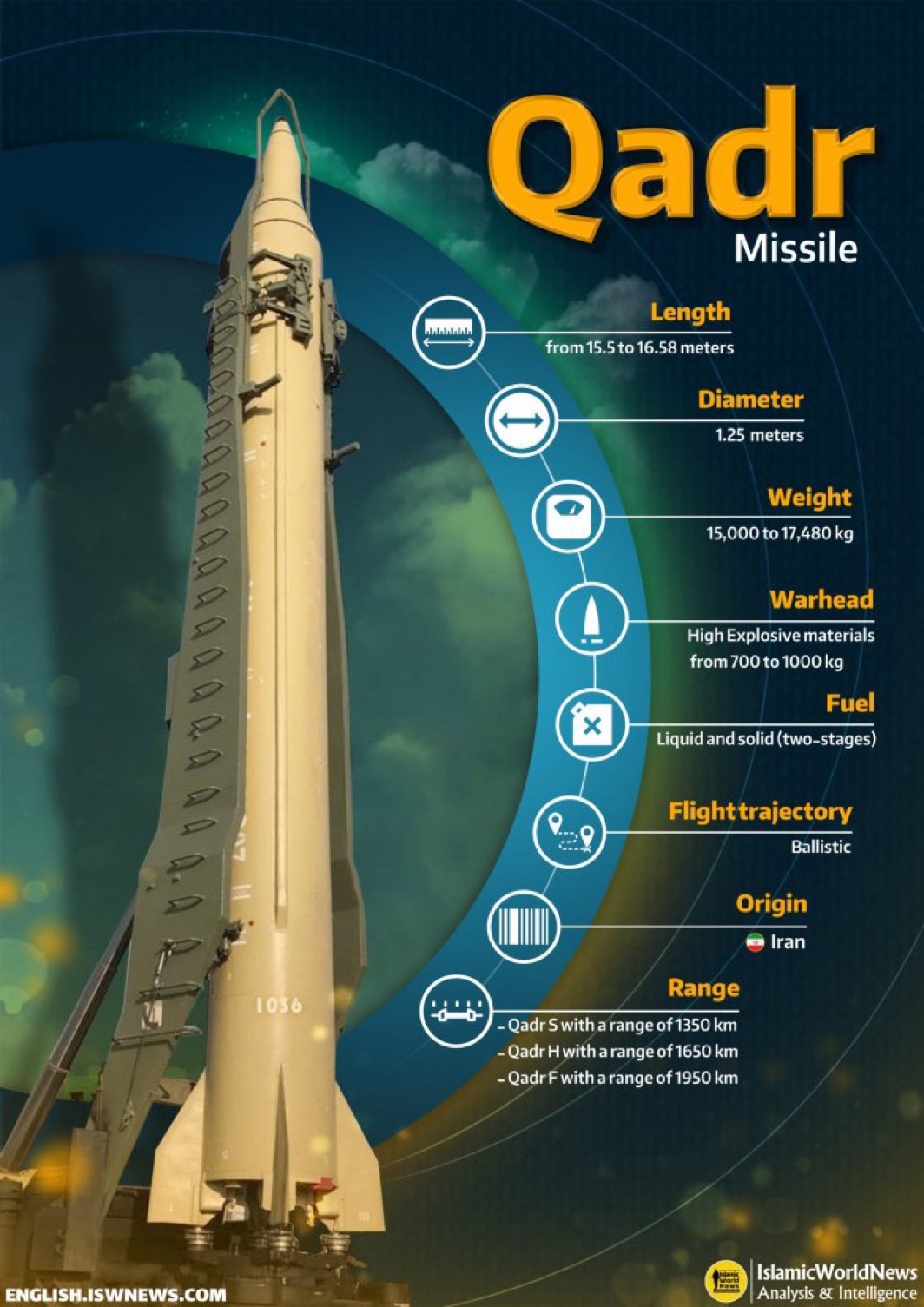
Hezbollah in Lebanon possesses the most extensive and sophisticated Fateh-110 arsenal outside Iran, with estimates suggesting hundreds of missiles deployed in hardened facilities, underground storage, and mobile launchers distributed across southern Lebanon and the Bekaa Valley. The organization refers to these missiles as Qadr-1 (or sometimes Khaibar-1), maintaining fiction of indigenous production while the weapons clearly originate from Iranian transfers or technology transfer enabling local assembly from Iranian-supplied components.
Hezbollah’s Fateh-110/Qadr-1 inventory represents qualitative leap beyond the crude Katyusha rockets that constituted the organization’s primary arsenal during earlier conflicts. While Katyushas provided saturation bombardment capability against broad area targets, their extreme inaccuracy precluded precision strikes against specific military installations or infrastructure. The Fateh-110’s precision enables Hezbollah to threaten specific Israeli military facilities, power plants, ports, airports, and government installations—a capability that fundamentally changes the strategic calculus of potential conflicts.
The 2006 Lebanon War marked the combat debut of Hezbollah’s precision missile capabilities, with the organization launching Fateh-110 variants against Israeli territory including attempted strikes on military installations and population centers. Israeli air defenses proved limited during this conflict, as Iron Dome had not yet deployed and existing systems focused on aircraft rather than short-range ballistic missiles. Some Fateh-110 launches achieved successful strikes, demonstrating the threat these weapons posed and accelerating Israeli investment in multi-layered missile defense architecture.
More recent conflicts including the October 2023-ongoing war following Hamas attacks have seen renewed Fateh-110 employment, with Hezbollah launching these missiles as part of broader campaign of rocket and missile strikes against northern Israel. Israeli air defenses have intercepted numerous Fateh-110 launches using Iron Dome, David’s Sling, and potentially Patriot systems, demonstrating improved defensive capabilities but also revealing that sophisticated missiles can penetrate defenses when employed in sufficient numbers or with tactical deception.
Iraqi Shia militias aligned with Iran possess Fateh-110 variants that have been employed against U.S. forces, Israeli targets, and other objectives. These weapons provide capabilities far exceeding the improvised rockets and mortars that previously constituted these groups’ primary indirect fire arsenal. The presence of precision missiles in Iraqi militia arsenals complicates U.S. force protection and provides Iran means of threatening American personnel and facilities without direct Iranian military involvement.
Houthi forces in Yemen have employed what appear to be Fateh-110 derivatives or closely related systems against Saudi Arabian and potentially Emirati targets. These attacks have struck civilian infrastructure including airports and oil facilities, demonstrating the strategic reach these weapons provide to non-state actors. The Houthi arsenal also includes more sophisticated missiles and drones, creating multi-faceted threat that has taxed Saudi air defenses and inflicted economic costs through infrastructure disruption and oil production impacts.
Palestinian Islamic Jihad and potentially Hamas in Gaza may possess limited numbers of Fateh-110 variants or related technology, though the weapons’ size and launch signatures make concealment and operation in Gaza’s confined environment extremely challenging. Any such capability would represent significant threat given Gaza’s proximity to Israeli population centers and critical infrastructure, though Israeli military operations and intelligence targeting appear to have limited proliferation into Gaza compared to Lebanon.
Combat Employment and Tactical Doctrine
The Fateh-110’s employment reflects broader Iranian and proxy force tactical doctrine emphasizing mobility, deception, redundancy, and overwhelming defense through saturation attacks when circumstances permit.
Launch site selection prioritizes survivability through dispersion, concealment, and hardening. Missiles deploy in underground facilities, tunnels carved into mountainous terrain, hardened bunkers, and mobile launchers kept hidden until launch preparation begins. This dispersion complicates enemy intelligence collection and targeting, ensuring that even successful strikes against known facilities leave substantial portions of the missile force intact and operational.
Launch preparation timelines represent critical vulnerability, as missiles emerging from concealment for launch become vulnerable to detection and attack. Trained crews practice rapid deployment sequences, with some reports suggesting launches can occur within 15-20 minutes of receiving fire orders. However, more realistic timelines likely extend to 30-60 minutes when accounting for communications, coordination, target selection confirmation, and technical preparations. Adversary surveillance assets including reconnaissance satellites, airborne platforms, and ground-based sensors attempt to detect launch preparations, creating time-sensitive targeting opportunities for preventive strikes.
Salvo tactics employ multiple simultaneous launches to overwhelm air defenses through saturation, forcing defensive systems to engage more targets than available interceptors can defeat. Mixing Fateh-110 precision missiles with larger numbers of crude rockets further complicates defense, as systems must discriminate genuine threats from projectiles landing in unpopulated areas while managing finite interceptor inventories. This tactical approach exploits the economic asymmetry where defensive interceptors cost far more than offensive missiles, potentially enabling attackers to exhaust defensive ammunition through sustained campaigns.
Target selection emphasizes high-value strategic and operational objectives including:
- Military installations including airbases, command centers, radar sites, and logistics facilities that enable adversary military operations
- Critical infrastructure including power generation, water treatment, ports, and telecommunications that support both military operations and civilian economic activity
- Symbolic targets including government buildings or national monuments whose destruction might achieve psychological impact beyond physical damage
- Population centers where strikes against civilian areas might influence public opinion and pressure governments toward conflict de-escalation
The ethical and legal dimensions of deliberately targeting civilian populations remain profoundly troubling, representing potential war crimes under international humanitarian law. However, adversary willingness to employ such tactics necessitates defensive preparation and response planning regardless of moral considerations.
Concealment and deception measures attempt to protect launch sites and complicate defensive targeting. Decoy launchers, camouflage, underground facilities, and mobile operations all contribute to survivability. Electronic warfare and communications security prevent adversaries from intercepting orders or monitoring preparations. Operational security disciplines prevent information leakage that might compromise planned operations or reveal capability limitations.
Israeli Air Defense Response and Intercept Capabilities
Israeli multi-layered air defense architecture represents the most sophisticated and combat-tested system globally, specifically designed to address threats including Fateh-110 and similar short-range ballistic missiles. The integration of Iron Dome, David’s Sling, Patriot, and Arrow systems creates overlapping defensive zones that substantially reduce the probability of successful missile strikes.
Iron Dome provides the shortest-range defensive layer, engaging rockets and mortars with flight times of seconds to minutes. While originally designed for crude unguided rockets, Iron Dome has demonstrated capability against some ballistic missiles and potentially early-warning against Fateh-110 launches that might be engaged by other systems. The system’s sophisticated radar discrimination enables it to calculate impact points and selectively engage only projectiles threatening populated areas or critical facilities, conserving interceptors by ignoring projectiles landing in open terrain.
David’s Sling occupies the middle defensive tier specifically optimized for threats including short-range ballistic missiles, cruise missiles, and aircraft at ranges and altitudes where Iron Dome proves less effective but threats remain within the atmosphere. This system employs two-stage interceptors with sophisticated seekers capable of discriminating warheads from debris and achieving intercepts against maneuvering targets. David’s Sling represents ideal counter to Fateh-110, with engagement envelope, interceptor performance, and sensor capabilities optimized for precisely this threat category.
Patriot batteries provide additional mid-tier capability with extensive combat experience and proven effectiveness against various threats. Israeli Patriot systems have undergone continuous upgrades incorporating PAC-3 hit-to-kill interceptors offering enhanced lethality against ballistic missiles compared to earlier fragmentation warheads. Patriot’s longer-range compared to David’s Sling provides additional engagement opportunities and creates redundancy ensuring multiple attempts against priority threats.
Arrow systems address higher-tier threats including longer-range ballistic missiles, though they might engage Fateh-110 launches under specific circumstances when optimal geometry exists or other systems prove unavailable. Arrow’s exoatmospheric and high-endoatmospheric capabilities target missiles during midcourse and terminal phases, providing final layer protecting against strategic threats to Israeli survival.
The integration and networking of these diverse systems through sophisticated battle management creates defensive capability far exceeding the sum of individual components. Centralized command and control enables optimal interceptor allocation based on threat characteristics, engagement geometry, and defensive system availability. Early warning from multiple sensors provides maximum time for defensive response, while continuous tracking through multiple radar systems ensures no gaps in surveillance coverage.
However, even sophisticated defenses face limitations. Saturation attacks employing more simultaneous threats than available interceptors can overwhelm defenses through sheer numbers. Deception tactics including decoys, trajectory variation, and electronic warfare can degrade tracking or cause interceptor waste. Surprise attacks providing minimal warning reduce time available for defensive response. And the inherent physics of ballistic missile defense—intercepting Mach 3+ targets during brief terminal phase engagement windows—ensures that even excellent systems achieve less than perfect intercept rates.
The economic sustainability of intensive air defense operations raises long-term questions. Interceptors cost hundreds of thousands to millions of dollars each, while offensive missiles cost tens to hundreds of thousands of dollars. During sustained conflicts with hundreds of launches, this cost differential accumulates to billions of dollars in defensive expenditures that smaller economies cannot sustain indefinitely. This asymmetry provides strategic advantage to attackers willing to accept interceptor-to-missile cost ratios favoring defense, knowing that eventually economic constraints will force difficult choices about allocation of finite defensive resources.
Strategic Implications and Regional Security Dynamics
The proliferation of precision ballistic missiles throughout Iranian proxy networks fundamentally alters regional security dynamics and military planning across the Middle East. What was once theoretical threat has become demonstrated capability, forcing adversaries to invest heavily in defenses while recognizing that perfect protection remains impossible.
For Israel, the distributed missile threat from multiple directions simultaneously—Hezbollah from Lebanon, Hamas and Palestinian Islamic Jihad from Gaza, potentially Iraqi militias from the east, and Iranian forces from the northeast—creates strategic dilemma requiring defense of entire national territory against attacks that might originate from any direction. The country’s limited geographic extent means that ballistic missiles launched from neighboring territories reach targets within minutes, providing minimal warning time and demanding automated defensive responses that human operators cannot execute within available timeframes.
The missile threat also influences Israeli military planning for potential conflicts. Any military operation against Hezbollah, Iran, or other adversaries must account for massive retaliatory missile strikes that would target Israeli population centers and critical infrastructure. The need to protect civilians while conducting military operations creates constraints on Israeli freedom of action and provides adversaries with strategic deterrence against attacks they might otherwise suffer without capacity for effective response.
For Saudi Arabia and Gulf states, Iranian proxy missile capabilities demonstrated through Houthi attacks against Saudi territory reveal vulnerability to precision strikes despite substantial investments in advanced Western military equipment. The attacks have damaged oil infrastructure, disrupted aviation, and demonstrated that even wealthy, technologically advanced nations struggle to achieve perfect defense against determined missile attacks. This vulnerability influences Saudi calculations about confronting Iran directly and has contributed to recent diplomatic engagement seeking to reduce tensions.
For United States forces throughout the Middle East, the proliferation of precision missiles to Iranian proxies creates force protection challenges and complicates operational planning. American bases in Iraq, Syria, and potentially other locations face threats from precision missiles that can strike specific facilities, hangars, or command centers rather than merely lobbing unguided rockets hoping for lucky hits. This threat influences force posture decisions, infrastructure hardening requirements, and potentially the sustainability of American military presence in exposed locations.
The deterrence dynamics created by proxy missile arsenals prove complex and somewhat ambiguous. Iran can threaten adversaries through proxy attacks while maintaining plausible deniability about direct Iranian involvement, complicating retaliation decisions and potentially deterring actions that might otherwise target Iranian territory directly. However, this strategy also risks escalation if adversaries hold Iran responsible for proxy actions and respond against Iranian assets regardless of Iranian claims of non-involvement.
Countermeasures and Defensive Strategies
Defending against Fateh-110 and similar precision ballistic missiles requires multi-layered approach encompassing active defenses, passive measures, preemptive operations, and strategic deterrence.
Active defense systems including Iron Dome, David’s Sling, Patriot, and Arrow provide kinetic intercept capability, though even sophisticated systems achieve less than perfect intercept rates and face sustainability challenges during intensive attacks. Continuous system improvements including enhanced radar discrimination, improved interceptor kinematics, and expanded magazine depths address known limitations while adversaries simultaneously work to develop countermeasures.
Passive defensive measures reduce vulnerability through dispersal, hardening, redundancy, and concealment. Critical military facilities employ hardened structures resistant to missile strikes, while redundant systems ensure single attacks cannot eliminate essential capabilities. Dispersing assets across wide geographic areas prevents concentration that would enable single missiles to destroy multiple valuable systems. Concealing facilities and employing decoys complicate adversary targeting and potentially cause missile waste against non-critical objectives.
Preemptive operations targeting missile storage facilities, launchers, command centers, and production infrastructure attempt to destroy offensive capability before employment. Israeli strikes against Hezbollah and Iranian targets in Syria and Lebanon specifically target missile-related facilities, accepting international criticism and escalation risks to reduce threats before they manifest. However, the dispersion and concealment of modern missile forces limit preemptive strike effectiveness, ensuring substantial capability survives even successful attack campaigns.
Electronic warfare can potentially disrupt missile guidance through jamming or spoofing GPS signals, interfering with radar or electro-optical seekers, or degrading communications between launch platforms and command authorities. However, adversaries employ counter-countermeasures including inertial guidance backup, frequency-hopping communications, and multi-mode seekers resistant to single-point jamming. The electronic warfare competition drives continuous evolution in both offensive and defensive capabilities.
Diplomatic and deterrence strategies attempt to prevent missile employment through threats of massive retaliation that would inflict unacceptable costs on attackers. Israel maintains declared policy of holding not only direct attackers but also sponsoring states responsible for proxy attacks, explicitly threatening Iranian targets if Hezbollah launches missiles from Lebanon. However, deterrence proves imperfect, as adversaries may calculate that limited attacks achieve objectives without triggering overwhelming retaliation, or may accept retaliation costs to achieve strategic or political objectives.
Conclusion: The Precision Missile Challenge
The Fateh-110 and its variants represent successful Iranian development of indigenous precision strike capability and its proliferation throughout proxy networks aligned with Tehran’s regional strategy. This proliferation fundamentally alters Middle Eastern security dynamics by providing non-state actors with capabilities previously exclusive to advanced militaries, enabling precision strikes against specific targets from standoff ranges that complicate defensive response.
The missile’s combat employment demonstrates both capabilities and limitations of modern short-range ballistic missiles against defended targets. Sophisticated air defense systems including those Israel deploys can intercept substantial percentages of incoming missiles, reducing damage and casualties compared to undefended scenarios. However, perfect defense remains impossible, with some missiles penetrating defenses and striking targets despite sophisticated protective measures.
The economic dimensions of this competition favor attackers, with relatively affordable offensive missiles forcing deployment of expensive defensive systems and consumption of costly interceptors. This asymmetry creates sustainability questions about long-term defensive viability during intensive conflicts when hundreds of missiles might be launched over weeks or months. The development of alternative defensive approaches including directed energy weapons, electronic warfare systems, and lower-cost interceptors attempts to address this economic challenge.
Looking forward, the continuous evolution of both offensive missiles and defensive systems ensures ongoing competition between adversaries seeking advantage through technological innovation. Iranian development of more sophisticated guidance, maneuvering capabilities, and countermeasures will attempt to reduce defensive effectiveness, while Israeli and allied investment in enhanced sensors, faster interceptors, and improved discrimination algorithms will seek to maintain or enhance defensive performance.
For regional security, the proliferation of precision missiles represents destabilizing development that lowers thresholds for conflict, enables non-state actors to threaten nation-states, and creates escalation risks through competition spirals and miscalculation during crises. Managing these dynamics requires combination of defensive capability, deterrence, diplomacy, and acceptance that some level of vulnerability persists despite best efforts to achieve perfect protection—a sobering reality in an era of proliferating precision strike technology.