

Charlotte train stabbing suspect Sister Says He Killed Because He Thought Victim Was Reading His Mind
The suspect in the fatal stabbing of Ukrainian refugee Iryna Zarutska in Charlotte, North Carolina, told his family he killed her because he believed she was reading his mind, according to his sister. In a tragic and disturbing revelation, Tracey Brown, the sister of the accused killer, Decarlos Brown Jr., told CNN that her brother is a paranoid schizophrenic who has a history of violent outbursts and delusions. His mental state had deteriorated after his release from prison in 2022, and his family’s desperate attempts to get him long-term care were met with roadblocks in the justice system.

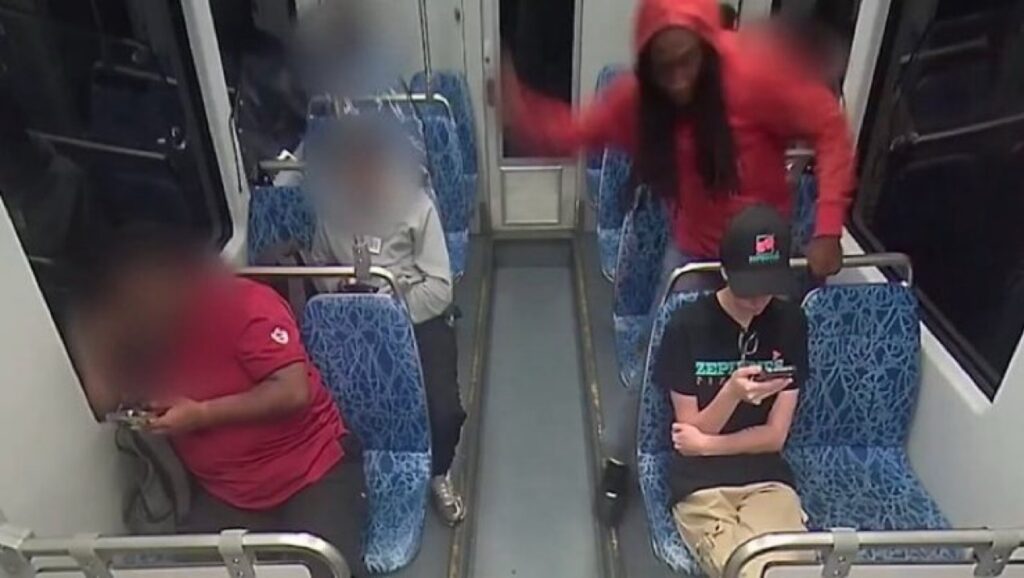
Brown, 34, was arrested on the scene and has since been charged with first-degree murder. The unprovoked attack, which was captured in chilling surveillance footage released by the Charlotte Area Transit System (CATS), shows him stabbing Zarutska, 23, in the throat as she was sitting on a light rail train. The young woman, who had come to the United States to escape the war in Ukraine, was reportedly listening to music on her phone when she was brutally attacked. The crime has sparked a national debate over the intersection of mental illness, public safety, and a criminal justice system that critics say has failed to keep dangerous individuals off the streets.
Court records and news reports confirm that Brown has a lengthy criminal history, with 14 prior arrests in Mecklenburg County dating back to 2011. He served a five-year sentence for armed robbery and was released in 2020. Within months of his release, he was arrested again for assaulting his sister, Tracey, who told CNN she tried to get him placed in a long-term mental care facility but was unable to do so because she was not his legal guardian.
According to North Carolina state laws, a family member can seek an involuntary commitment for a loved one if they are a danger to themselves or others. However, without a legal guardianship, a family member’s rights to information and control over a patient’s care are limited by HIPAA privacy laws, making it difficult to ensure they receive the necessary treatment.
The legal and political fallout from the case has been significant. In January, months before the murder, Brown was arrested after repeatedly calling 911 from a hospital. According to a police affidavit, he told officers he believed a “man-made material” was controlling his body. A Charlotte judge released him at the time without bail, a decision that has drawn sharp criticism. His mother has told local television that he should never have been free. This case has become a flashpoint in the debate over “soft-on-crime” policies.
The Justice Department has since taken a rare step and filed a federal criminal complaint against Brown, charging him with committing a fatal act of violence on a mass transportation system. Attorney General Pamela Bondi announced the federal charges and stated that the government would “seek the maximum penalty for this unforgivable act of violence,” including the possibility of the death penalty. She said that Zarutska’s “horrific murder is a direct result of failed soft-on-crime policies that put criminals before innocent people.”
FBI Director Kash Patel added that the FBI would ensure justice is served and that “the perpetrator is never released from jail to kill again.” The federal charges are a sign of the case’s national importance and the government’s resolve to seek a severe penalty.
The case has been widely publicized and has drawn the attention of politicians and public figures across the country. President Donald Trump has publicly weighed in on the killing, calling Brown a “monster” and a “career criminal” who had been “released on cashless bail.” He argued that “criminals like this need to be LOCKED UP,” and that the tragic killing “could have been prevented.”
The public outrage has also led to calls for increased security on the Charlotte light rail system, as the community grapples with the fallout from a senseless crime that has brought the issues of mental health and public safety to the forefront of the national conversation. The case highlights the complex challenges of balancing a person’s rights with the need to protect the public from individuals with severe mental illnesses and a history of violence.
RAGE X is your trusted source for real-time military intelligence, defense analysis, and global conflict updates. We deliver in-depth coverage of wars, security threats, and geopolitical developments with unmatched accuracy and speed. From battlefield reports to strategic assessments, RAGE X combines professional military analysis with breaking news to keep you ahead of unfolding events.
Trusted by defense experts, journalists, and security professionals worldwide, we provide the insights you need to understand today’s complex security landscape.
CIS Security is Lebanon’s leading security company, trusted for over 35 years to deliver professional protection and peace of mind. From highly trained security guards and executive protection to advanced surveillance and risk management, we provide tailored solutions for businesses, residences, and institutions.
With a legacy built on trust and a vision of “Thriving Today, Securing Tomorrow,” CIS Security combines experience, innovation, and reliability to keep you safe. Whether you need on-site personnel, event security, or long-term corporate solutions, our team ensures unmatched safety standards across Lebanon.