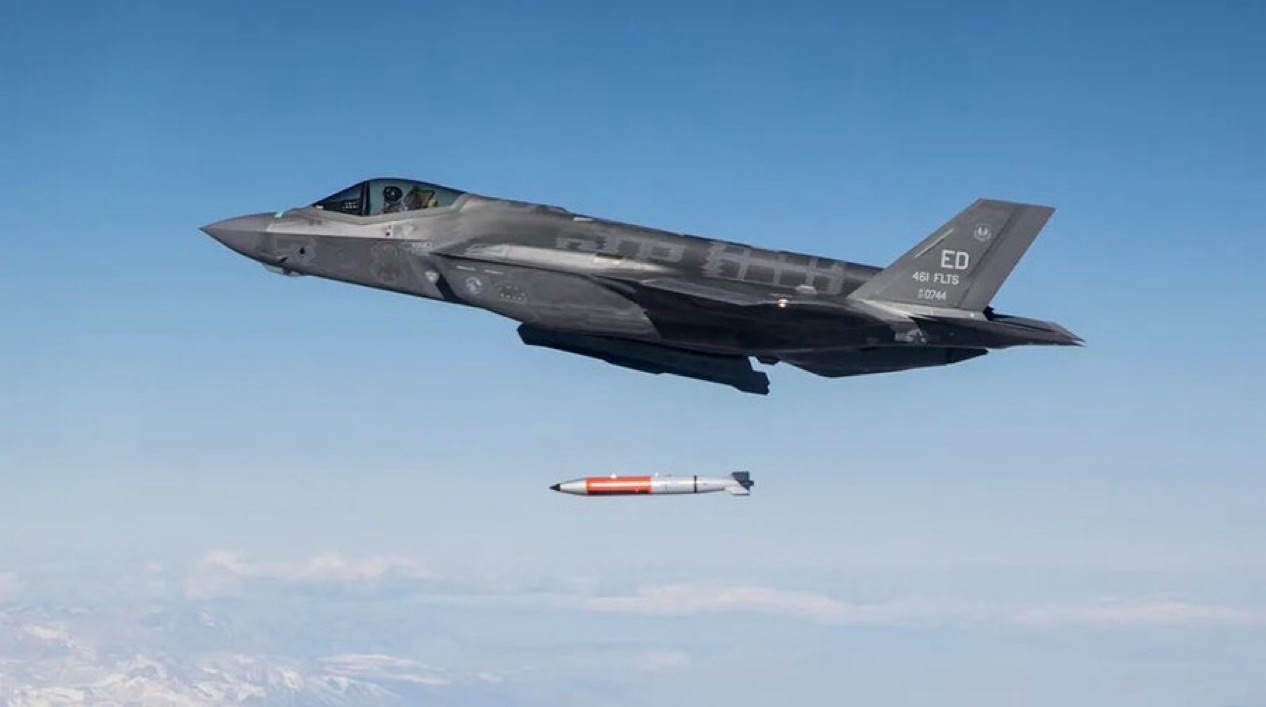

B61-12: America’s Modernized Nuclear Deterrent in Europe
The B61-12 Life Extension Program represents the culmination of more than a decade of development aimed at consolidating four aging B61 variants into a single modernized weapon combining enhanced accuracy, variable yield flexibility, and compatibility with both legacy and fifth-generation aircraft. This consolidation addresses sustainment challenges with Cold War-era weapons while providing capabilities that proponents argue enhance deterrence credibility through more discriminate employment options and reduced collateral damage potential.
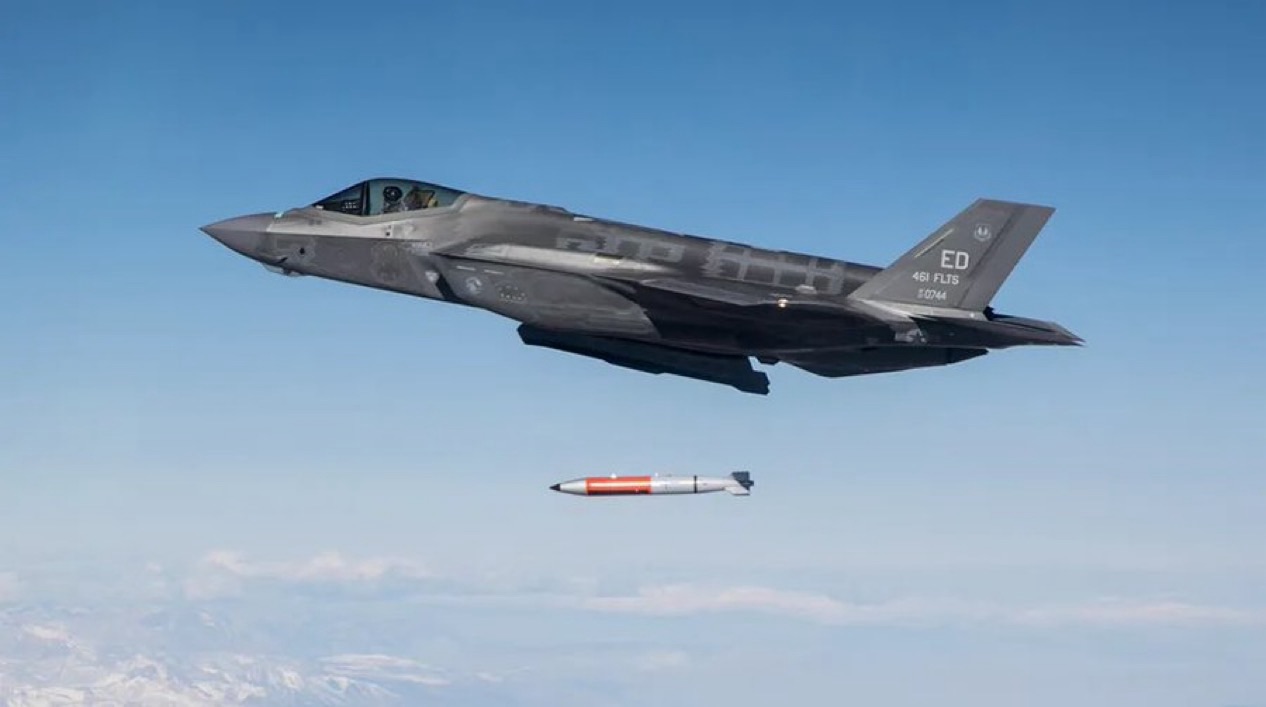
The weapon’s deployment to Europe marks the return of American nuclear weapons to British soil for the first time since 2008, when the last remaining weapons at RAF Lakenheath were withdrawn amid optimism about improving relations with Russia and broader nuclear disarmament trends. The subsequent deterioration of European security following Russia’s 2014 annexation of Crimea, 2022 full-scale invasion of Ukraine, and increasingly aggressive nuclear rhetoric from Moscow has driven reassessment of NATO nuclear posture and the decision to forward-deploy modernized weapons.
The B61-12’s integration with the F-35A Lightning II stealth fighter creates particularly significant capability enhancement. Previous tactical nuclear delivery relied on aging F-15E Strike Eagles and European F-16s and Tornado aircraft that would struggle penetrating modern integrated air defense systems. The F-35’s low-observable characteristics, advanced sensors, and electronic warfare capabilities provide substantially improved probability of reaching targets in contested environments—a capability that strengthens deterrence by ensuring adversaries cannot dismiss nuclear threats as militarily infeasible.
However, critics argue that deploying more accurate, lower-yield nuclear weapons with enhanced penetration capabilities lowers thresholds for nuclear use by making such weapons appear more “usable” in military planning. They contend that any nuclear employment risks catastrophic escalation and that modernization programs like the B61-12 undermine nonproliferation efforts while wasting resources that could address more pressing security challenges. This debate reflects fundamental disagreements about nuclear weapons’ role in contemporary security and whether modernization enhances or undermines strategic stability.
Technical Specifications and Design Features
The B61-12 incorporates sophisticated technologies that distinguish it from earlier nuclear gravity bombs while maintaining external dimensions and weight compatible with existing aircraft and storage infrastructure. This compatibility requirement constrained design choices but enabled relatively straightforward integration with delivery platforms and simplified logistics compared to developing entirely new weapons with different handling requirements.
The weapon measures approximately 12 feet in length and 13 inches in diameter, with weight around 825 pounds—dimensions identical to earlier B61 variants ensuring compatibility with existing bomb racks, storage facilities, and handling equipment. The external similarity conceals extensive internal modernization replacing virtually every component except the physics package containing fissile material that generates nuclear yield. The refurbishment and reuse of existing physics packages rather than manufacturing new ones addresses nonproliferation concerns while reducing costs compared to new warhead production.
The Tail Kit Assembly provides the most visible external modification, incorporating inertial navigation systems, GPS receivers, and movable control surfaces that transform the B61-12 from ballistic “dumb” bomb into precision-guided munition. The tail kit’s guidance systems enable Circular Error Probable accuracy measured in tens of meters rather than the hundreds of meters typical of unguided nuclear weapons—precision sufficient to strike hardened military facilities including command bunkers, deeply buried weapons storage, or other high-value targets while minimizing collateral damage to surrounding areas.
The guidance system combines inertial measurement units tracking weapon motion after release with GPS receivers providing position updates enabling continuous trajectory correction. Movable tail fins execute guidance commands, adjusting the weapon’s flight path to compensate for winds, release errors, or targeting updates. This precision guidance enables employment from greater standoff distances and higher altitudes than unguided weapons would allow, improving aircraft survivability by reducing exposure to enemy air defenses during weapon delivery.
The variable-yield warhead represents perhaps the B61-12’s most strategically significant feature, enabling operators to select explosive yield ranging from approximately 0.3 kilotons to 50 kilotons depending on mission requirements. This “dial-a-yield” capability allows tailoring effects to specific targets and operational circumstances, with low yields for tactical missions against localized military targets and higher yields for strategic attacks against larger area targets or deeply buried facilities requiring greater explosive force.
The four selectable yield settings—reportedly 0.3, 1.5, 10, and 50 kilotons—span three orders of magnitude, providing unprecedented flexibility compared to earlier weapons offering at most two yield options. The lowest setting produces explosive force comparable to several hundred tons of conventional explosives—substantial but far below the Hiroshima bomb’s 15-kiloton yield. The highest setting approaches tactical nuclear weapon upper bounds while remaining well below strategic warhead yields measured in hundreds of kilotons or megatons.
This yield flexibility theoretically enables more discriminate nuclear employment, with lower yields reducing unintended civilian casualties and fallout compared to higher-yield weapons employed against the same targets. Proponents argue this discrimination enhances deterrence credibility by providing options between conventional weapons and city-destroying strategic weapons, enabling responses proportional to provocations rather than requiring immediate escalation to massive retaliation. Critics counter that any nuclear use risks uncontrollable escalation and that “more usable” nuclear weapons paradoxically increase employment probability by reducing perceived barriers to nuclear war.
The enhanced safety and security features incorporate modern permissive action links, arming systems, and physical security measures that substantially exceed earlier weapons’ protection against unauthorized use, accidental detonation, or terrorist acquisition. Multiple independent safety mechanisms must be deliberately defeated in correct sequence before the weapon can detonate, with safeguards designed to prevent detonation even under scenarios including aircraft crashes, fires, or direct conventional attack against weapons storage facilities.
The estimated service life extension to 20-30 years addresses sustainment concerns with aging nuclear stockpile, as original B61 variants approached the end of reliable service life and required expensive ongoing maintenance to remain certified for deployment. The modernization program replaces aging components with modern equivalents that offer improved reliability, reduced maintenance requirements, and extended operational life—attributes that reduce long-term costs despite substantial upfront development and production expenses exceeding $10 billion.
NATO Nuclear Sharing and European Deployment
The B61-12’s deployment to Europe occurs within the framework of NATO nuclear sharing arrangements dating to the Cold War, when concerns about Soviet conventional superiority led to forward deployment of American tactical nuclear weapons providing deterrent against overwhelming Warsaw Pact forces. These arrangements persist despite the Soviet Union’s collapse and dramatic changes in European security environment, justified by proponents as essential element of alliance cohesion and deterrence against Russian aggression.
Nuclear sharing enables non-nuclear NATO members to participate in nuclear planning, training, and potentially employment under a dual-key arrangement requiring both American and host-nation authorization for weapon release. Host nations maintain delivery aircraft, conduct training missions, and would theoretically deliver American nuclear weapons in wartime scenarios if authorized by both the U.S. President and host-nation government. This arrangement provides non-nuclear states with nuclear deterrent participation while technically maintaining their non-nuclear weapon state status under the Nuclear Non-Proliferation Treaty—an arrangement that critics argue violates treaty spirit if not letter.
Approximately 100-150 B61 gravity bombs have been deployed at European airbases for decades, with the B61-12 now replacing earlier variants as they undergo life extension refurbishment. The confirmed or suspected deployment locations include:
RAF Lakenheath, United Kingdom – The reported deployment of B61-12 weapons to this base reverses the 2008 withdrawal and reflects heightened threat perception and the F-35A’s certification as nuclear delivery platform. The base hosts the 48th Fighter Wing operating F-35A aircraft specifically modified for nuclear mission including specialized wiring, weapons interfaces, and pilot training for nuclear delivery profiles. The United Kingdom officially neither confirms nor denies hosting nuclear weapons, maintaining deliberate ambiguity that some argue enhances deterrence while others contend creates dangerous uncertainty.
Kleine Brogel Air Base, Belgium – Belgian F-16 aircraft certified for nuclear delivery maintain readiness to employ B61 weapons stored at this base under American custodianship. Belgium’s participation in nuclear sharing proves domestically controversial, with recurring political debates about withdrawing from the arrangement amid concerns about nuclear escalation risks and moral objections to hosting weapons of mass destruction. However, successive Belgian governments have maintained participation, judging the alliance cohesion benefits and deterrent contribution outweigh concerns.
Büchel Air Base, Germany – German Tornado aircraft conduct nuclear delivery training with B61 weapons stored at this facility in western Germany. The impending retirement of Tornado aircraft without immediate certified replacement has generated concern about continuity of German nuclear sharing participation. Germany’s procurement of F-35A aircraft specifically includes nuclear certification capability, though the delivery timeline remains uncertain and domestic political opposition to nuclear weapons deployment continues generating debate about Germany’s nuclear role.
Aviano Air Base, Italy – Italian F-16 aircraft participate in nuclear sharing with B61 weapons deployed to this northeastern Italian base. Italy’s geographic position provides access to targets across southeastern Europe and potentially into Middle Eastern and North African theaters, though the realistic scenarios requiring nuclear weapon employment from Italian territory remain highly debatable. Italian political debates about nuclear hosting parallel those in Belgium and Germany, though mainstream political consensus currently supports continued participation.
Ghedi Air Base, Italy – This second Italian base hosts additional B61 weapons deliverable by Italian Air Force aircraft, providing redundancy and geographic dispersal that complicates adversary targeting while ensuring capability survives potential attacks against individual locations. The dual Italian locations reflect the country’s Cold War-era commitment to nuclear sharing and continued willingness to accept the political and security risks associated with hosting American nuclear weapons.
Incirlik Air Base, Turkey – Turkish participation in nuclear sharing has generated increasing controversy given Turkey’s deteriorating relations with other NATO members, authoritarian political trajectory under President Erdoğan, and occasionally conflictual relationship with the United States. The security of nuclear weapons stored in Turkey remains subject to periodic concern, particularly following the 2016 coup attempt when the base’s status became uncertain. Some analysts advocate withdrawing weapons from Turkey given these concerns, while others argue that withdrawal would signal alliance fracture and potentially accelerate Turkish drift away from NATO.
The physical security of deployed weapons reflects extraordinary protective measures given their strategic significance and catastrophic consequences of unauthorized access. Weapons remain under continuous American military guard, stored in hardened underground vaults designed to survive conventional attack, and protected by elaborate intrusion detection systems, armed response forces, and multiple redundant security layers. Host nations provide perimeter security and maintain overall base protection, creating shared responsibility that demonstrates alliance integration while ensuring American control over the weapons themselves.
F-35A Integration and Delivery Platform Modernization
The F-35A Lightning II’s certification for nuclear delivery represents transformative enhancement to NATO’s nuclear deterrent, replacing Cold War-era platforms with fifth-generation stealth aircraft capable of penetrating modern air defense systems that would likely destroy conventional aircraft attempting similar missions. This capability upgrade addresses the credibility challenge that increasingly sophisticated Russian air defenses posed to earlier nuclear delivery plans relying on F-15, F-16, and Tornado aircraft with limited stealth characteristics and dated electronic warfare systems.
The F-35A modification for nuclear mission required extensive development work despite the aircraft’s original design specifications including nuclear capability as potential requirement. The modifications include specialized wiring and software enabling communication with B61-12 weapon systems, structural hardening ensuring the aircraft survives nuclear blast effects from its own weapon detonation, and cockpit interface changes enabling pilots to manage nuclear weapon parameters including yield selection and fuzing options.
The internal weapons bay enables F-35A to carry B61-12 weapons while maintaining low-observable characteristics essential for survival in contested environments. External weapons carriage would dramatically increase radar cross-section and negate stealth advantages, likely resulting in aircraft detection and destruction before reaching targets. Internal carriage preserves the aircraft’s signature management while imposing weapons load constraints—F-35A can carry two B61-12 weapons internally compared to potential external loadouts on non-stealth aircraft carrying larger numbers.
The stealth characteristics dramatically improve penetration probability against modern integrated air defense systems employing multiple sensor types, networked fire control, and sophisticated electronic warfare. Low radar cross-section reduces detection ranges, enabling aircraft to approach closer to targets before defensive systems recognize threats. Advanced electronic warfare capabilities can jam or spoof enemy radars while signature management across infrared and visual spectrums further reduces detection probability. These combined advantages mean F-35A possesses substantially higher probability of successfully delivering weapons against defended targets compared to legacy platforms.
The sensor fusion and situational awareness provided by F-35A’s advanced avionics enable crews to navigate complex threat environments, identify and avoid air defense systems, and potentially conduct battle damage assessment after weapon delivery. The sophisticated sensor suite processes data from radar, electro-optical systems, electronic warfare receivers, and data links from other platforms, presenting pilots with comprehensive tactical picture enabling informed decision-making during high-stress nuclear delivery missions where survival depends on superior situational awareness and rapid threat response.
Training and certification for nuclear delivery mission requires specialized instruction exceeding standard F-35A training, including academic study of nuclear weapon effects, delivery profiles, and safety procedures, simulator training practicing delivery techniques and emergency procedures, and live flight training with instrumented training weapons replicating B61-12 handling and ballistic characteristics. Crews undergo continuous evaluation ensuring proficiency maintenance and identifying any performance degradation requiring remediation. The small number of pilots certified for nuclear delivery reflects both the specialized training requirements and the desire to limit access to sensitive information about employment concepts and targeting.
The dual-capable aircraft concept enables F-35As to conduct both nuclear and conventional missions, with aircraft switching between roles based on assigned tasking. This flexibility provides operational and political advantages—peacetime conventional missions maintain pilot proficiency while avoiding the diplomatic sensitivity of continuous nuclear alert postures, while crisis scenarios enable rapid transition to nuclear tasking without requiring obvious force generation that might signal escalatory intent. However, dual-capability also creates ambiguity where adversaries might struggle distinguishing conventional from nuclear missions, potentially contributing to crisis instability.
Strategic Implications and Deterrence Theory
The B61-12 deployment reflects broader debates about nuclear deterrence requirements in contemporary security environment characterized by renewed great power competition, erosion of arms control architecture, and technological developments affecting strategic stability. Proponents and critics advance fundamentally different arguments about whether B61-12 modernization enhances or undermines security.
Deterrence proponents argue that credible nuclear forces require modern, reliable weapons compatible with survivable delivery platforms enabling realistic employment options across diverse scenarios. They contend that aging weapons with questionable reliability and vulnerable delivery aircraft undermine deterrence by creating adversary doubt about NATO’s willingness and ability to execute nuclear missions. The B61-12’s precision and variable yield provide options between massive retaliation and surrender, strengthening deterrence by ensuring proportional response capabilities that make nuclear threats more credible.
The extended deterrence requirement particularly emphasizes modernization necessity, as NATO’s security architecture depends on American nuclear umbrella protecting European allies lacking indigenous nuclear capabilities. Visible commitment to extended deterrence through forward-deployed modern weapons reassures allies about American security guarantees while demonstrating to adversaries that attacking NATO members would trigger nuclear response. The physical presence of American weapons on European soil, guarded by American forces, provides tangible proof of American commitment that verbal assurances cannot match.
Critics counter that nuclear modernization programs including B61-12 undermine strategic stability by appearing to lower nuclear use thresholds through enhanced accuracy and reduced yields that make nuclear weapons seem more “usable.” They argue that any nuclear employment risks catastrophic escalation regardless of initial yield, making discrimination between “tactical” and “strategic” nuclear use meaningless in practice. The massive financial investment—over $10 billion for B61-12 alone—diverts resources from conventional capabilities or non-military security investments that might address actual threats more effectively.
The arms control implications concern critics who note that American nuclear modernization programs provide Russia justification for its own modernization efforts while complicating negotiation of future arms control agreements. The B61-12’s enhanced capabilities might be perceived as destabilizing, potentially triggering Russian countermeasures including deployment of additional tactical nuclear weapons near NATO borders or development of new delivery systems. The collapse of the Intermediate-Range Nuclear Forces Treaty and challenges to New START extension reflect broader deterioration of arms control architecture that nuclear modernization potentially accelerates.
European political dynamics reflect significant public opposition to nuclear weapons deployment, with recurring protests at host bases and political pressure on governments to withdraw from nuclear sharing arrangements. Proponents argue these political costs must be accepted to maintain credible deterrence, while critics contend that forcing weapons on reluctant populations undermines democratic principles and alliance cohesion. The tension between strategic arguments for nuclear deployment and domestic political opposition creates ongoing challenges for governments balancing security requirements against public opinion.
The Russian perspective frames NATO nuclear modernization as threatening, arguing that forward-deployed nuclear weapons near Russian borders demonstrate aggressive intent and necessitate Russian countermeasures. Moscow particularly criticizes the F-35A’s stealth characteristics and B61-12’s precision as enabling disarming first strike capabilities against Russian strategic forces. Western analysts generally dismiss these claims as propaganda given the limited number of B61-12 weapons and their tactical yields inappropriate for strategic counter-force missions, but the perception gap between NATO and Russian threat assessments contributes to security dilemma dynamics and potential miscalculation.
Alternative Perspectives and Policy Debates
The B61-12 deployment generates intense debate within strategic studies community, with respected analysts advancing competing positions about wisdom of nuclear modernization in general and European deployments specifically.
Abolition advocates argue for complete nuclear disarmament, contending that weapons whose employment would cause humanitarian catastrophe and risk civilization’s destruction cannot provide legitimate security. They advocate progressive steps toward abolition including withdrawal of forward-deployed weapons, no-first-use declarations, and negotiated mutual disarmament with Russia and other nuclear powers. The 2017 Treaty on the Prohibition of Nuclear Weapons, while not signed by any nuclear-armed state, reflects growing international sentiment that nuclear weapons’ humanitarian consequences render them unacceptable regardless of strategic justifications.
Minimum deterrence proponents accept nuclear weapons’ continued necessity but argue that far smaller arsenals would suffice for deterrence if sized merely to ensure unacceptable damage to any aggressor. They contend that thousands of weapons deployed globally with elaborate employment plans and diverse delivery systems exceed deterrence requirements and waste resources while increasing risks of accidental war, unauthorized use, or escalatory spirals. They would eliminate tactical nuclear weapons entirely, dramatically reduce strategic forces, and adopt defensive postures emphasizing deterrence of nuclear attack rather than warfighting capabilities.
Arms control advocates support maintaining nuclear deterrents but emphasize negotiated limitations, transparency measures, and risk reduction initiatives that enhance strategic stability while preserving core deterrent capabilities. They view B61-12 modernization as acceptable within properly bounded arsenals subject to verification and mutual constraint, but worry about unconstrained modernization racing and erosion of arms control architecture. They advocate for dialogue with Russia about mutual concerns, new treaties addressing emerging technologies, and confidence-building measures reducing miscalculation risks.
Deterrence optimists defend robust nuclear modernization as essential for credible deterrence in competitive security environment. They argue that precision, flexibility, and survivability enhancements provided by B61-12 and F-35A integration strengthen deterrence by ensuring adversaries cannot doubt NATO’s capability and will to respond to aggression. They contend that arms control agreements prove ineffective without underlying power balances and shared interests, making military capability rather than diplomatic agreements the foundation of security. They view nuclear modernization as relatively affordable insurance policy against catastrophic war that expenditure justifies regardless of probability.
Conclusion: Nuclear Weapons in 21st Century Security
The B61-12’s deployment to Europe represents continuity of Cold War-era nuclear policies adapted to contemporary security challenges through technological modernization and adjusted force posture. The weapon’s enhanced precision, variable yield, and integration with stealth aircraft address legitimate concerns about aging arsenal and delivery platform vulnerability while creating new questions about whether these improvements enhance strategic stability or increase nuclear employment risks through reduced barriers to use.
The fundamental dilemma persists that nuclear deterrence theory requires credible employment options while actual nuclear use would likely prove catastrophic regardless of initial yield or target selection. This tension between requirements for deterrence credibility and realities of potential nuclear war effects generates perpetual debate about optimal nuclear posture, with competing schools of thought offering incompatible recommendations based on different assumptions about adversary rationality, escalation dynamics, and whether discrimination between tactical and strategic nuclear use can survive contact with wartime stress and emotions.
For NATO and European allies, the B61-12 deployment reflects judgment that forward-deployed modern nuclear weapons remain necessary for deterrence and alliance cohesion despite substantial costs and political controversy. The visible American commitment to extended deterrence through weapons physically present on European soil, guarded by American forces and deliverable by increasingly capable platforms, provides reassurance that verbal security guarantees alone cannot match. However, this commitment also entails risks—of accident, miscalculation, escalation, and the moral burden of possessing weapons whose employment would violate humanitarian principles while defending them as necessary for preventing war.
The debate about B61-12 deployment ultimately reflects deeper questions about nuclear weapons’ role in security that remain unresolved eight decades after Hiroshima and Nagasaki demonstrated their terrible power. As international security environment deteriorates and great power competition intensifies, these questions gain renewed urgency. The B61-12 represents one answer—maintaining and modernizing nuclear deterrent while hoping its existence prevents circumstances requiring its use. Whether this answer proves wise or folly will depend on dynamics no single weapon system determines, shaped instead by the complex interplay of technology, strategy, politics, and human judgment that will define security in the nuclear age.