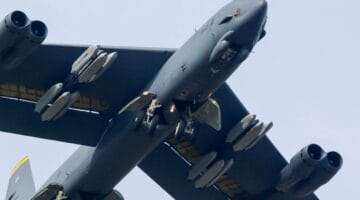
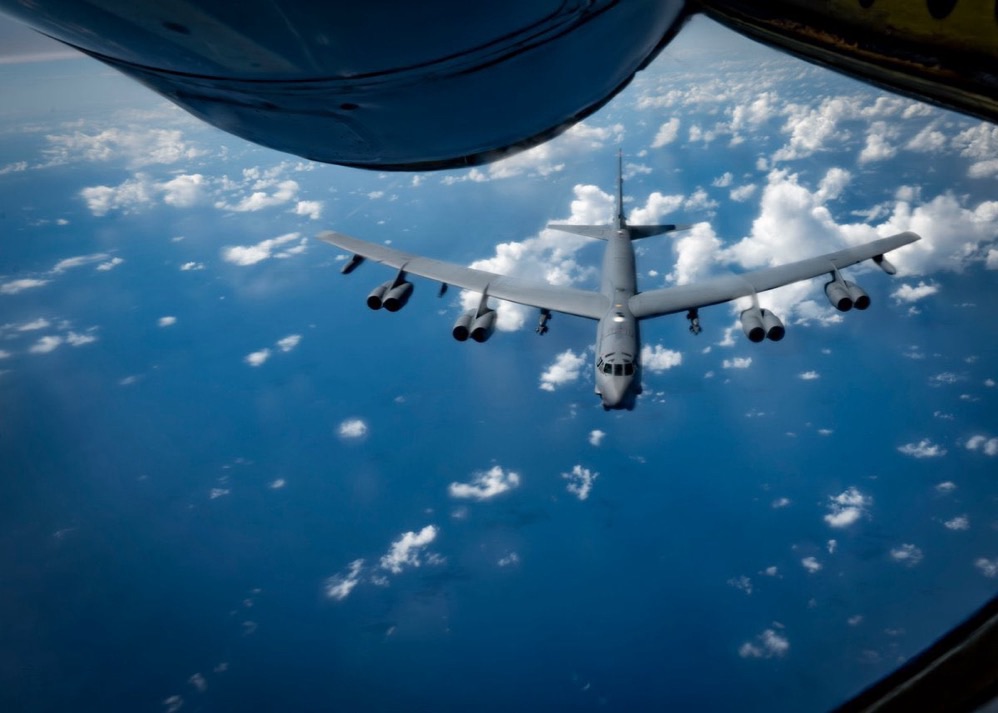

U.S. Air Forces Southern (AFSOUTH) has released a series of high-resolution images today confirming a major strategic projection of airpower along the northern coast of South America. The photos showcase a B-52H “Stratofortress” long-range strategic bomber assigned to the 23rd Bomb Squadron—the famed “Bomber Barons”—of the 5th Bomb Wing, operating in the Caribbean Sea just off the coast of Venezuela.
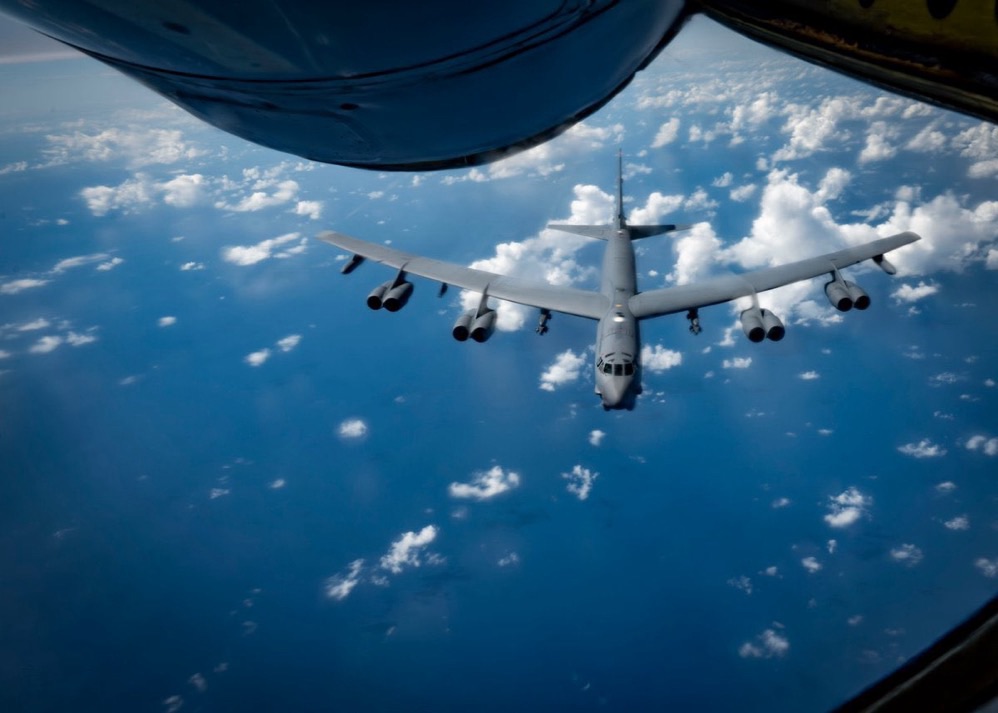
The imagery captures the nuclear-capable heavy bomber executing a “Bomber Attack Demo,” a specialized mission profile designed to simulate the rapid delivery of overwhelming firepower against maritime and coastal targets. This sortie is a key component of “Operation Southern Spear,” the massive U.S. military buildup in the region officially tasked with counter-narcotics operations but widely viewed as a “maximum pressure” campaign against the Nicolás Maduro regime.
In the released photos, the B-52H is seen patrolling international airspace near the Venezuelan coastline, a visible symbol of American global strike reach. The mission was not conducted in isolation; the bomber was integrated with a joint force package that included F/A-18E/F Super Hornets. These fighter jets are deployed aboard the USS Gerald R. Ford (CVN-78), the world’s largest aircraft carrier, which is currently serving as the flagship for the U.S. naval task force in the Caribbean.
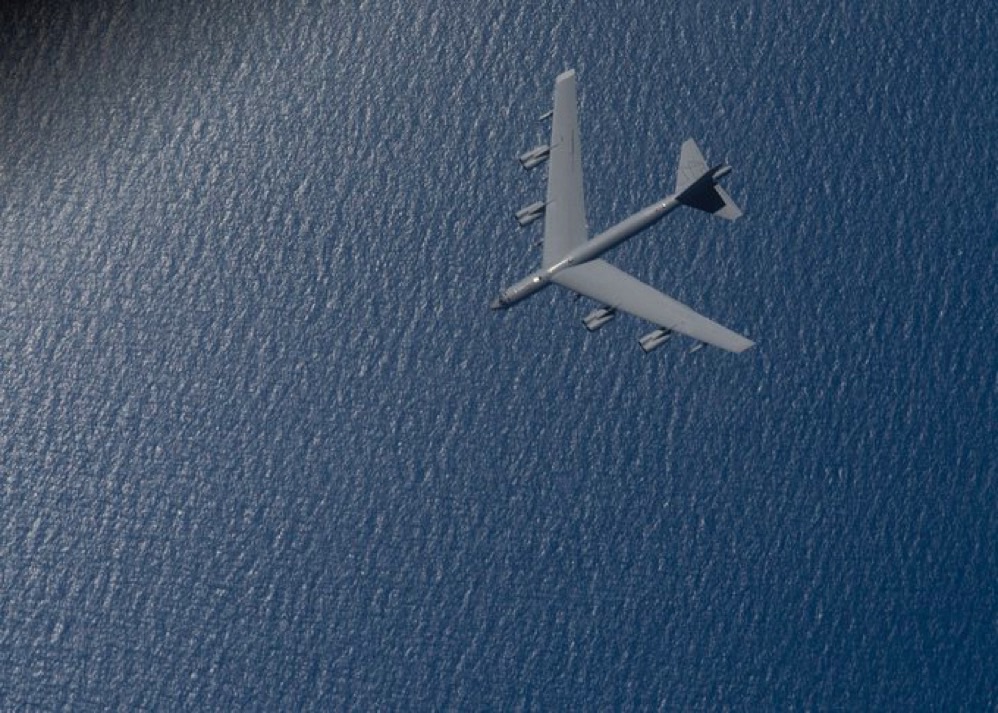
“The presence of the 23rd Bomb Squadron in the Southern Command area of responsibility demonstrates our ability to rapidly project decisive airpower to any corner of the globe,” an AFSOUTH statement noted accompanying the release. The “Bomber Barons,” operating out of Minot Air Force Base in North Dakota, have a storied history of spearheading such deterrence missions. Their deployment to the Caribbean theater marks a significant escalation in the scope of Operation Southern Spear, moving from naval interdiction to the overt display of strategic air supremacy.
The “Bomber Attack Demo” serves a dual purpose. Tactically, it allows U.S. crews to train in complex maritime environments, coordinating targeting data between strategic bombers and carrier-based naval assets. Strategically, it sends an unambiguous message to Caracas. By flying heavy bombers capable of carrying vast payloads of precision munitions just miles from Venezuelan airspace, Washington is underscoring the “military option” that administration officials have refused to rule out in recent weeks.
This visual confirmation follows reports of increased activity in the region, including the FAA’s recent closure of Venezuelan airspace to U.S. civil aviation and the designation of the “Cartel of the Suns” as a terrorist organization. As the USS Gerald R. Ford patrols nearby, the sight of a B-52 “Stratofortress” casting its shadow over the Caribbean signals that the U.S. military is operating on a pre-operational footing, ready to transition from patrol to combat at a moment’s notice.