

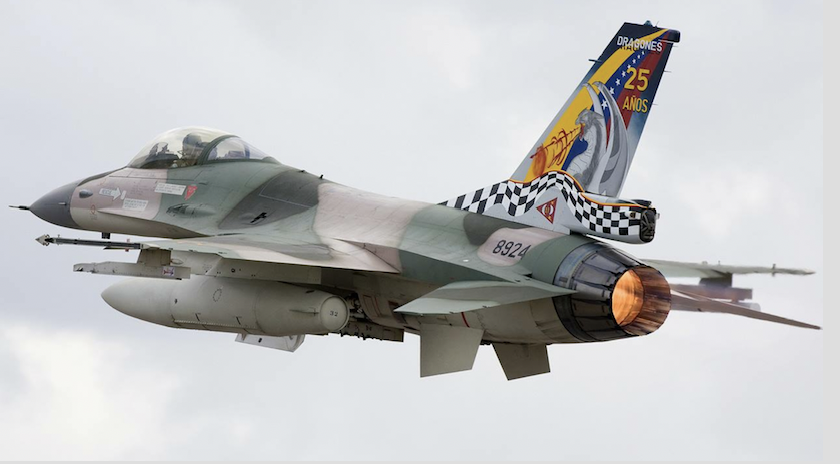
Tensions between the United States and Venezuela have exploded in the southern Caribbean after two armed Venezuelan F-16 fighter jets conducted a flyover of the U.S. Navy guided-missile destroyer USS Jason Dunham. The incident, which occurred on Thursday in international waters, was swiftly condemned by the Pentagon as a “highly provocative move” and a “deliberate show of force.” The USS Jason Dunham did not engage the Venezuelan aircraft, highlighting a cautious stance amid a volatile standoff.
The flyover is the latest and most direct military confrontation in the region. It follows a kinetic strike conducted by U.S. forces just two days prior, which targeted a smuggling vessel and killed 11 people. The U.S. government, including President Donald Trump and Secretary of State Marco Rubio, has claimed the individuals killed were members of the Tren de Aragua gang, a Venezuelan-based criminal organization that the U.S. has designated as a “narco-terrorist” group. This strike and the subsequent flyover have brought the long-simmering conflict to a new and dangerous level.
Venezuelan President Nicolás Maduro has publicly denounced the U.S. military presence in the Caribbean, calling the U.S. warships a “criminal and bloody threat.” In response to the U.S. naval buildup, which includes at least seven warships, a nuclear submarine, and thousands of troops, Maduro has ordered the deployment of his own ships and drones along Venezuela’s coast. The U.S. has also doubled the reward for information leading to Maduro’s arrest to $50 million, accusing him of running a major drug cartel.

The incident underscores the high-stakes brinkmanship being played by both sides. For Washington, the naval deployment is a counter-narcotics mission aimed at disrupting a major source of revenue for the Maduro regime. For Caracas, the U.S. presence is a thinly veiled pretext for military intervention. The F-16 flyover, while not resulting in a direct clash, signals that Venezuela is willing to use its military to challenge the U.S. presence and assert its sovereignty. The lack of an immediate U.S. military response to the provocation suggests that while Washington is prepared to use force, it is also trying to avoid a full-scale armed conflict.
As both countries continue to deploy forces and exchange threats, the situation in the Caribbean remains on a knife’s edge. The incident on Thursday is a stark reminder that a miscalculation by either side could quickly escalate into a larger and more devastating conflict.