

Two U.S. Navy aircraft — a MH-60R Sea Hawk helicopter and an F/A-18E Super Hornet fighter jet — went down in the South China Sea during separate but consecutive operations launched from the USS Nimitz carrier group. Both crashes occurred within less than an hour of each other, prompting immediate search and rescue operations in one of the world’s most volatile maritime zones.
According to U.S. defense officials, all five crew members from both aircraft were successfully rescued and are in stable condition. The Navy has not yet identified the causes of either crash, emphasizing that both incidents occurred during routine missions and not during hostile engagement or combat operations.
The MH-60R Sea Hawk, primarily used for anti-submarine warfare, search and rescue, and fleet logistics, reportedly went down first, triggering an emergency response from nearby vessels. The F/A-18E Super Hornet, a carrier-based multirole fighter known for strike missions and air superiority roles, was lost shortly thereafter under unclear circumstances.
The dual crashes have raised immediate operational and safety concerns within the U.S. Indo-Pacific Command. Preliminary reports suggest adverse weather, mechanical malfunction, or coordination errors could have played a role, though official investigations are ongoing.
The South China Sea remains a flashpoint for military activity and geopolitical tension, claimed in part by China, Vietnam, the Philippines, and Malaysia. The presence of U.S. carrier strike groups in the area underscores Washington’s commitment to freedom of navigation operations (FONOPS) and deterrence against regional aggression.
Analysts note that while accidents are not uncommon during complex carrier flight operations, the near-simultaneous loss of two advanced aircraft — both from the same strike group — is a rare and concerning event, potentially prompting an operational stand-down for review.
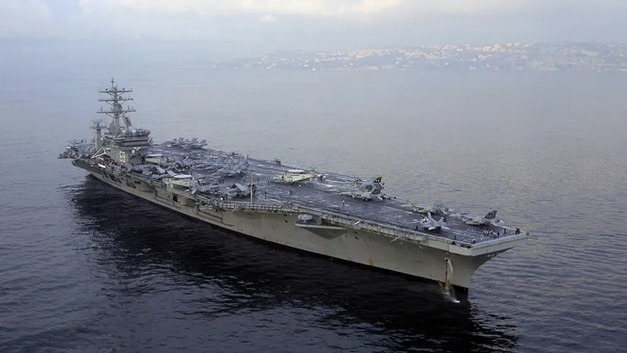
The USS Nimitz (CVN-68), one of America’s most storied nuclear-powered supercarriers, continues to operate in the region as investigations unfold. Naval experts point out that such incidents, though tragic, reflect the high-risk nature of continuous naval aviation, particularly in contested waters where both environment and geopolitics add to mission complexity.
For now, what remains clear is that within 30 minutes, the U.S. Navy lost two critical aircraft — but not their crews — in a region where every mission carries both strategic weight and operational danger.