

In 2020, the U.S. government faced an unprecedented crisis—and responded with an unprecedented mistake. When the pandemic shut down the economy, Washington decided the cure was simple: print $6 trillion out of thin air. It was the biggest monetary flood in history, and its consequences are still rippling through every corner of the global economy.
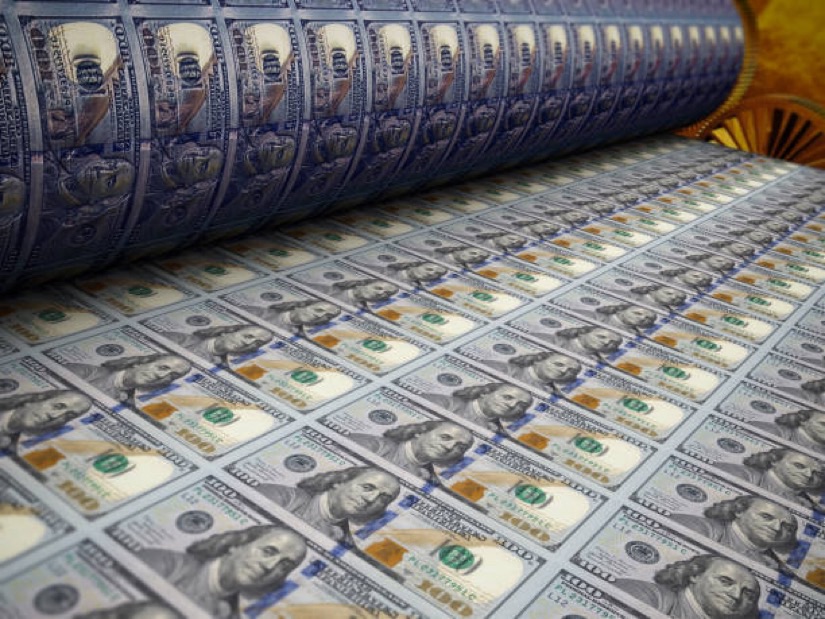
The logic at the time seemed compassionate—“stimulate the economy, protect families, and save jobs.” But behind that noble language was an old, dangerous idea: that you can create prosperity by simply creating more dollars.
Those trillions weren’t conjured by hard work, production, or innovation. They were created on a keyboard at the Federal Reserve—instant cash injected into the bloodstream of Wall Street, the banks, and the federal bureaucracy. A fraction of it reached the average American household, just enough to keep quiet the anger while the real beneficiaries made fortunes in the markets.

The Hidden Cost of “Free Money”
That $6 trillion wasn’t free—it was a delayed tax. Inflation, once dormant for decades, roared back to life. The cost of living exploded. Housing, groceries, fuel, and everything else you need to survive became more expensive—not because of greed or shortages, but because the dollar itself lost its value.
For years, economic orthodoxy—from the Austrian School to the Chicago School—warned that easy money distorts the economy. When bad businesses fail, it’s painful but necessary. That’s how markets reset and rebuild stronger. But Washington couldn’t bear the pain. Instead, it nationalized failure. Every problem, from bankrupt corporations to reckless banks, became the taxpayer’s problem.
Since the 1980s, the U.S. has been hooked on bailouts. It started small—oil loans, then the savings and loan crisis, then the 2008 meltdown. But 2020 broke all limits. Suddenly, every struggling sector, every failing business, every bloated institution was “too big to fail.”
The result? A distorted economy built on fake growth, artificial demand, and unsustainable debt.
The Mirage of Recovery
When inflation finally hit, the same experts who caused it pretended to be shocked. They blamed “supply chain issues,” “corporate greed,” and “global shocks.” Anything but their own addiction to the printing press.
But here’s the brutal truth: you can’t print your way out of a shutdown, any more than you can eat your way out of starvation. Money creation doesn’t make wealth—it dilutes it. Every new dollar makes the ones in your pocket worth a little less.
The pandemic didn’t just test America’s resilience—it exposed its economic rot. The Federal Reserve, once the guardian of stability, became the world’s biggest counterfeiter. The politicians who promised “stimulus” quietly mortgaged the nation’s future. And now, as interest rates rise to contain the damage, ordinary Americans are left holding the bill.
If printing money solved problems, Zimbabwe and Venezuela would be paradise. Instead, they’re cautionary tales—and the U.S. isn’t as far from them as it thinks.
The Reckoning Ahead
The $6 trillion surge of 2020 was sold as salvation. In reality, it was a mirage—a temporary illusion of prosperity masking long-term decay. Debt has ballooned past $35 trillion, savings are evaporating, and the next generation inherits a system addicted to intervention.
Every fantasy ends eventually. The illusion of free money will, too. And when it does, it won’t be Wall Street or Washington that pays the price—it’ll be everyone else.