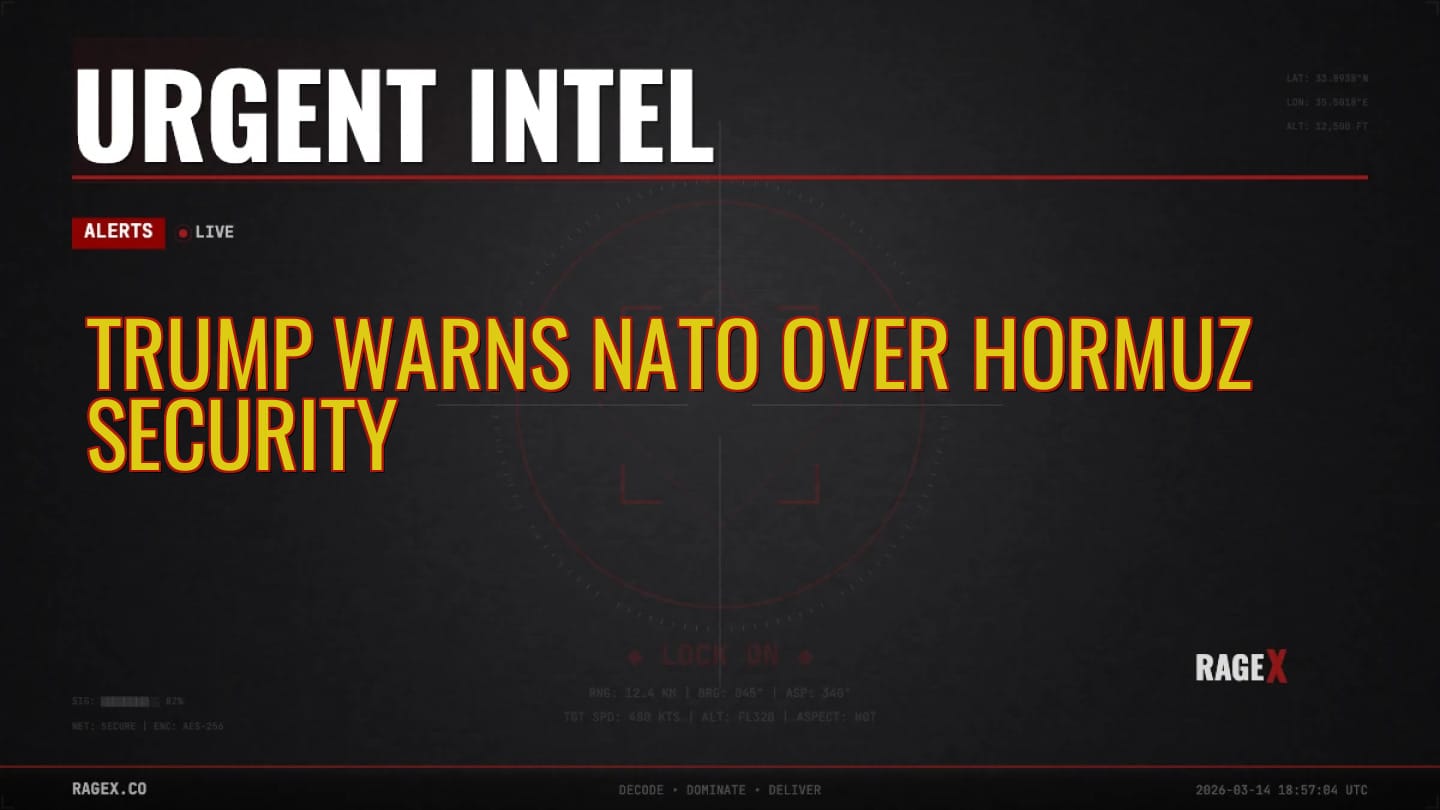

U.S. President Donald Trump warned that NATO could face a “very bad future” if the alliance fails to help ensure the reopening and security of the Strait of Hormuz, according to remarks reported by the Financial Times.
Trump said it is natural for countries that benefit from the strategic waterway to help guarantee its safety, emphasizing that many nations rely heavily on energy shipments passing through the strait.
“The beneficiaries of the Strait of Hormuz should help ensure that nothing happens to it,” Trump said.
The Strait of Hormuz is one of the most important maritime corridors for global oil transportation, with a large percentage of the world’s energy supplies passing through the narrow waterway connecting the Persian Gulf to international markets.
Trump also suggested that NATO allies should contribute more actively to securing the route, including deploying specialized naval capabilities such as mine-clearing vessels.
He noted that European countries possess significant mine-clearing capacity, calling on allies to send minesweepers and naval assets to support operations aimed at keeping the passage open.
“We didn’t have to help NATO in Ukraine, but we did,” Trump reportedly said, adding that the United States will now see whether allies are willing to assist Washington in ensuring maritime security in the Gulf.
The president also indicated that China should take part in efforts to safeguard the strait, arguing that Beijing has a strong economic incentive to do so because a large portion of its oil imports passes through the region.
According to Trump, China receives roughly 90% of its oil through routes connected to the Strait of Hormuz, making the stability of the waterway a major strategic interest for Beijing.
Trump further claimed that Iran’s military capabilities have been severely degraded, saying the country’s remaining options are limited primarily to actions such as deploying naval mines or launching small-scale attacks in the maritime domain.
He added that the United States has the capability to target key Iranian oil infrastructure if necessary, referencing facilities on Kharg Island, which serves as Iran’s primary oil export hub.
Trump said the U.S. could disable pipelines and infrastructure on the island quickly, while asserting that Iran would be unable to respond effectively.
Despite the tensions, Trump said threats to allies operating in the Gulf region would remain limited, arguing that Iran’s military capacity has been significantly weakened following recent strikes.
The comments come amid rising global concern over the security of the Strait of Hormuz, as military tensions and attacks on shipping have raised fears of disruptions to global energy supplies and international trade routes.