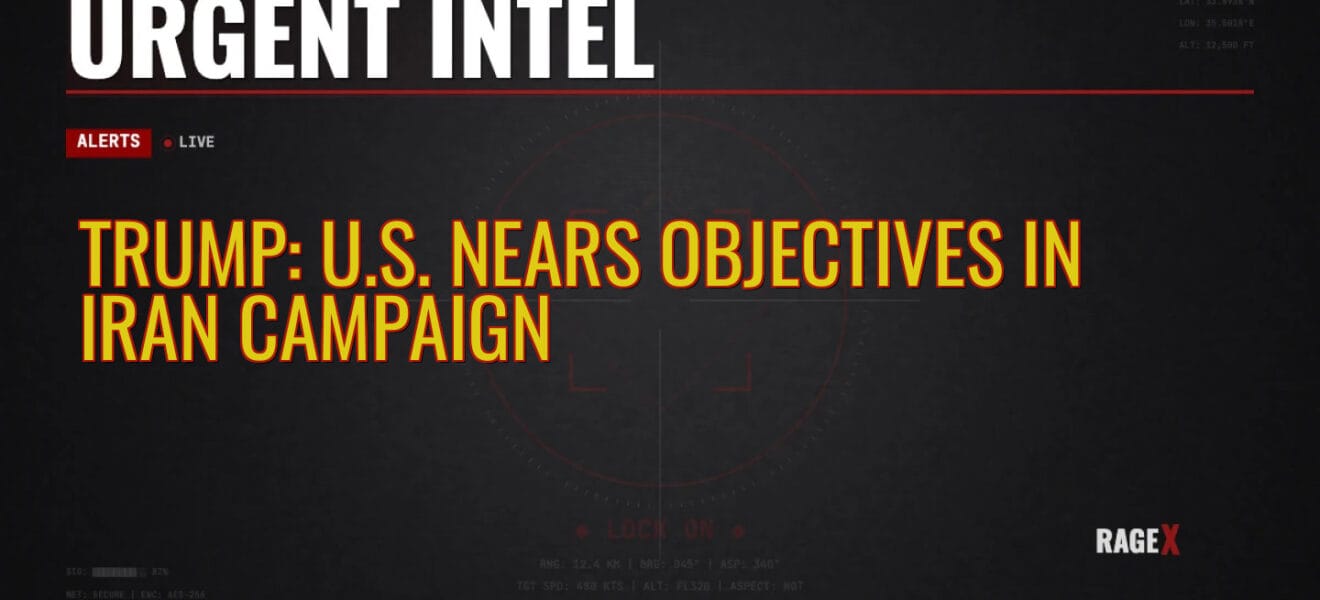

U.S. President Donald Trump stated that the United States is approaching its strategic objectives in the ongoing military campaign against Iran, signaling a potential transition toward winding down operations in the region.
⸻
Core U.S. Objectives
Trump outlined five key goals that have guided the military effort:
• Degrading Iran’s missile capabilities
▪️ Targeting launchers, stockpiles, and supporting infrastructure
• Destroying Iran’s defense industrial base
▪️ Limiting long-term military production capacity
• Neutralizing naval and air power
▪️ Including air defense systems and anti-aircraft capabilities
• Preventing nuclear capability
▪️ Ensuring Iran cannot develop or approach nuclear weapons
▪️ Maintaining readiness for rapid U.S. response if needed
• Protecting regional allies
▪️ Including Israel, Saudi Arabia, Qatar, the UAE, Bahrain, Kuwait, and others
⸻
Shift Toward De-escalation
The president indicated that with these objectives largely achieved or nearing completion, the U.S. is now considering scaling down its military engagement.
This suggests a potential shift from:
➡️ Active combat operations
➡️ Toward deterrence and containment posture
⸻
Hormuz Strategy
Trump emphasized that responsibility for securing the Strait of Hormuz should primarily fall on countries that depend on it for energy supplies.
• The U.S. does not rely heavily on the strait
• Other nations are expected to take the lead in securing maritime routes
• The U.S. remains willing to support allied efforts if requested
He described securing the strait as a manageable military task, particularly if Iran’s capabilities continue to decline.
⸻
Strategic Messaging
The statement reflects a broader narrative that:
• U.S. operations have achieved significant military success
• Iran’s ability to threaten the region has been substantially reduced
• The next phase may focus on stabilization and regional burden-sharing
⸻
Outlook
While no formal timeline for withdrawal has been announced, the remarks indicate that the U.S. is moving closer to a turning point in the conflict.
Future developments will likely depend on:
• Remaining Iranian capabilities
• Regional security dynamics
• The ability of allied nations to maintain maritime and territorial stability
⸻