
In an interview with NBC News, President Donald Trump sought to reframe the narrative surrounding the recent U.S. military intervention in Caracas, explicitly denying that the United States is engaged in a traditional conflict with the South American nation. Instead, he characterized the operation as a targeted campaign against criminal elements threatening U.S. domestic security.
“We’re not at war with Venezuela,” Trump stated, attempting to draw a distinction between the Venezuelan people and the deposed regime. “We’re at war with people that sell drugs.”
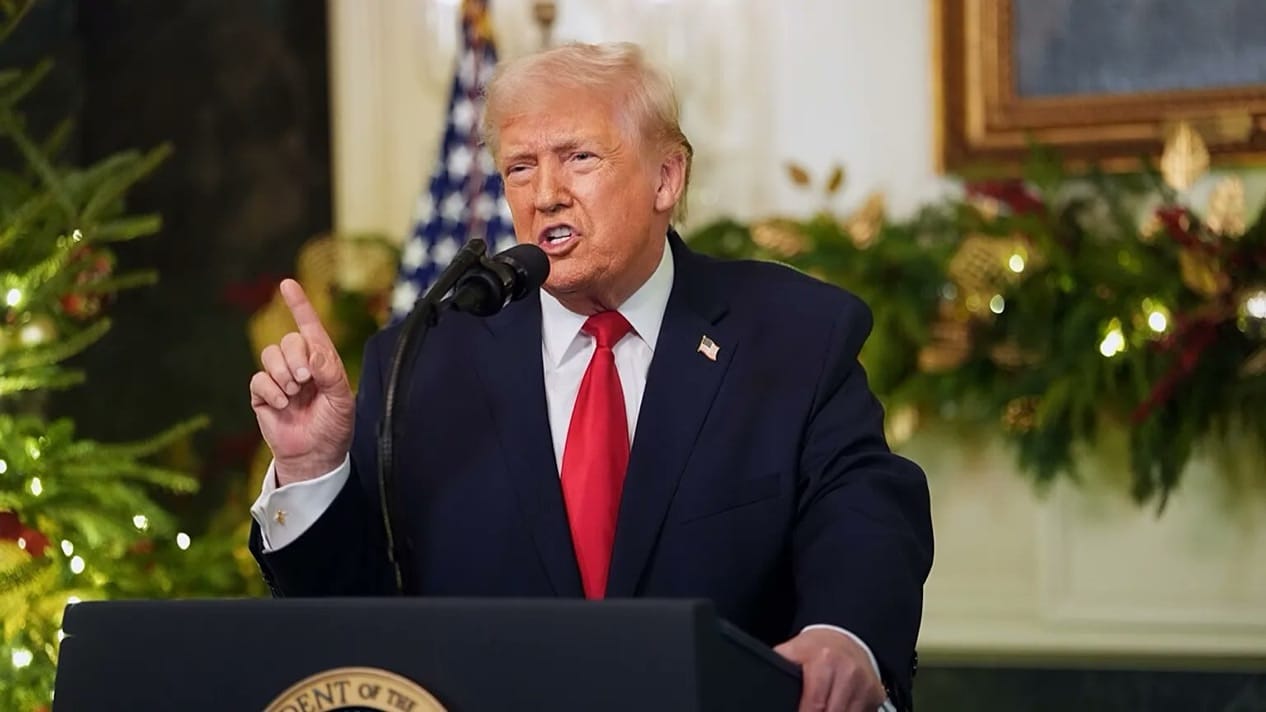
The comments align with the administration’s legal justification for the capture of Nicolás Maduro, which relied on unsealed indictments charging him with narco-terrorism rather than political crimes. However, Trump quickly pivoted to link the operation to his broader hardline immigration policies. He accused the former leadership of weaponizing migration, stating the U.S. is at war with “people that empty their prisons into our country and empty their drug addicts and empty their mental institutions into our country.”
This rhetoric mirrors claims Trump has made frequently regarding global migration flows, suggesting that the strike on Caracas is being viewed by the White House not just as foreign policy, but as a proactive measure to secure the U.S. border. By destroying the command structure he accuses of facilitating this exodus, Trump is framing the intervention as an act of national self-defense against “drug dealers” and exported instability, rather than a war of conquest.
The clarification comes as the international community debates the legality of the operation, with Trump’s comments likely aimed at reassuring the American public that this does not signal the start of a protracted nation-building war, despite his earlier comments about “running” the country.