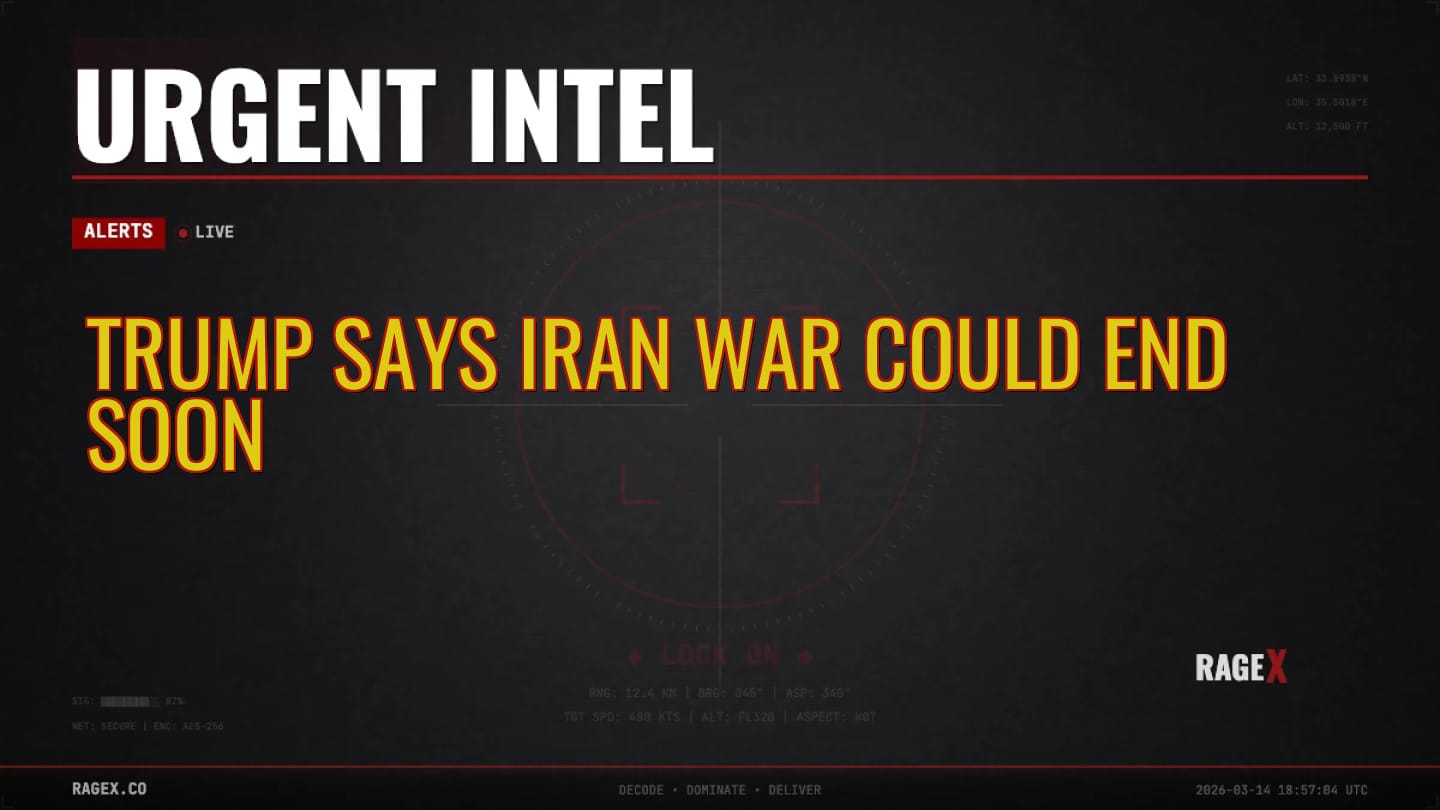

U.S. President Donald Trump said the war with Iran could end soon, while stressing that the main objective of the ongoing military campaign is to ensure that Iran never obtains a nuclear weapon.
Speaking to reporters, Trump described the conflict as a high-stakes geopolitical confrontation, calling it “a big chess game at a very high level.”
Trump argued that the U.S. military campaign against Iran has already significantly weakened Tehran’s military capabilities, claiming that thousands of targets have been struck during Operation Epic Fury, the ongoing U.S.-led operation.
According to the president, the strikes have severely reduced Iran’s ability to launch ballistic missiles and drones, which had previously been used to target Israel and several countries across the Middle East.
Trump said preventing Iran from developing nuclear weapons remains the central strategic goal of the operation.
“If you believe that Iran should have a nuclear weapon, then something is wrong with you,” Trump said. “They would use it.”
He added that failing to confront Iran’s nuclear ambitions could have triggered a much larger conflict in the region.
Trump also addressed tensions surrounding the Strait of Hormuz, a critical maritime corridor through which a significant portion of the world’s oil supply passes.
The president said the United States expects other countries to assist in protecting the waterway, particularly nations that depend heavily on energy shipments passing through the strait.
“They should be helping us,” Trump said, referring to international partners that rely on oil transported through the region.
Trump noted that the United States receives less than 1% of its oil through the Strait of Hormuz, while countries such as Japan, China and South Korea rely far more heavily on the route.
Because of that, he said it would be reasonable for those countries to contribute to maritime security efforts in the region.
The president also said that global shipping companies remain cautious about operating in the strait because of concerns about possible naval mines or attacks on commercial vessels.
“We don’t know that any mines have even been dropped,” Trump said, adding that the mere possibility is enough to disrupt shipping activity.
Trump also claimed that Iran’s mine-laying capabilities had been largely neutralized, saying several vessels previously associated with such operations had been destroyed during recent strikes.
During the discussion, Trump also referred to uncertainty surrounding Iran’s political leadership, suggesting that it remains unclear who currently holds authority inside the country.
“My biggest problem is that I have no idea who we’re talking to,” Trump said, referring to potential negotiations.
Despite that uncertainty, Trump acknowledged that contacts with Iranian representatives are ongoing, though he did not provide details about the nature of those discussions.
When asked whether the conflict could end within the coming days, Trump said he does not expect it to conclude immediately, but predicted the war would end relatively soon.
“It won’t be long,” he said. “And we’re going to have a much safer world when it’s wrapped up.”
Trump also said that several countries have already expressed support for efforts to secure the Strait of Hormuz, though he indicated that some allies have been more hesitant to become involved.
The president added that he plans to announce the names of countries participating in maritime security operations in the near future.
His comments come as military operations, diplomatic contacts and international security coordination continue across the region, with global attention focused on the conflict between Iran, the United States and Israel.