
Defense Secretary Pete Hegseth has launched Operation Southern Spear, a full-blown military offensive targeting “narco-terrorists” in the Western Hemisphere that may be positioning for strikes far beyond drug boats. Backed by the USS Gerald R. Ford—the world’s largest warship—plus destroyers, aircraft, and special forces, the U.S. has hit 21 vessels in two months, killing over 80 suspected traffickers. Just two survivors made it home. Now, senior military officials are presenting Trump with ground operation options in Venezuela, suggesting the USS Ford didn’t cross the Atlantic to merely police Caribbean waters.
“This mission defends our Homeland, removes narco-terrorists from our Hemisphere, and secures our Homeland from the drugs that are killing our people,” Hegseth declared. “The Western Hemisphere is America’s neighborhood – and we will protect it.”
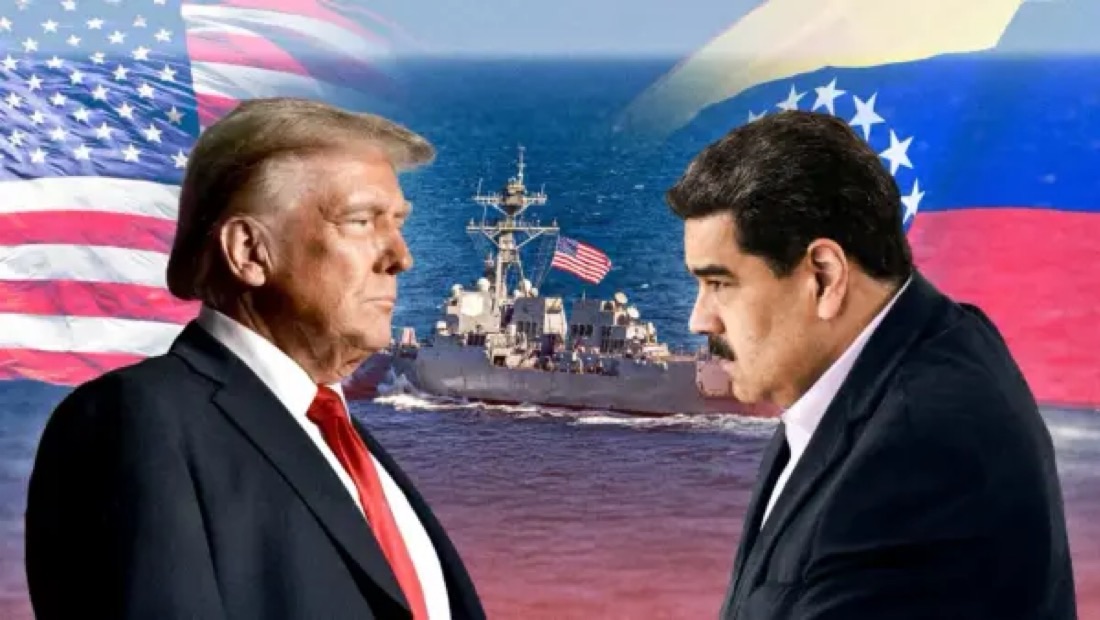
The operation, led by Joint Task Force Southern Spear and U.S. Southern Command, formalizes lethal strikes that began in September after Trump designated cartels as foreign terrorist organizations. Since then, U.S. forces have targeted around 20 vessels, killing at least 76 people with “no survivors” in many cases. The Pentagon claims the boats were linked to Venezuelan President Nicolás Maduro’s regime, though officials privately acknowledge they cannot confirm many victims were actual traffickers.
The USS Gerald R. Ford strike group, with over 4,000 sailors and dozens of combat aircraft, entered the Caribbean this week alongside eight other warships, F-35 stealth fighters, MQ-9 Reaper drones, and a nuclear-powered submarine. This represents the largest U.S. military buildup in Latin America in generations. While officially described as counter-narcotics, the deployment coincides with what officials call “intensifying deliberations” inside the White House over potential direct action against Maduro, including seizing oil fields, targeting elite guard units, or forcibly removing the Venezuelan leader.
Maduro, for his part, claims the U.S. is “fabricating a new war” to remove him, calling it “the greatest threat to our continent in 100 years.” Venezuela has mobilized 200,000 troops for nationwide exercises, with Defense Minister Vladimir Padrino López vowing an “armed struggle” if the U.S. attacks. “They are murdering defenseless people, whether or not they are drug traffickers, executing them without due process,” Padrino said, referencing the boat strikes.
International pushback is mounting. The United Kingdom has halted intelligence sharing, citing concerns about “extrajudicial killings” violating international law. Colombia’s President Gustavo Petro initially suspended intelligence cooperation but partially walked it back after U.S. pressure, now requiring guarantees the data won’t be used for human rights violations. UN human rights chief Volker Türk and multiple Latin American governments have condemned the strikes.
The operation’s legality remains murky. The White House claims authority under existing anti-drug statutes, arguing cartels are “enemy combatants” in an armed conflict. However, several targeted boats were stationary or fleeing, undermining claims of imminent threat. Pentagon lawyers have raised internal concerns, and Senate Democrats have questioned the legal justification.
The deployment of the Ford carrier, now just off Venezuela’s coast, signals this is about more than drugs. As International Crisis Group analyst Elizabeth Dickinson noted: “There’s nothing that an aircraft carrier brings that is useful for combating the drug trade… it’s clearly a message geared towards pressuring Caracas.” With Trump telling CBS that Maduro’s days are “numbered,” Operation Southern Spear appears to be setting the stage for potential regime change—by force if necessary.