
NORAD Intercepts Russian Bomber and Fighter Jets Near Alaska
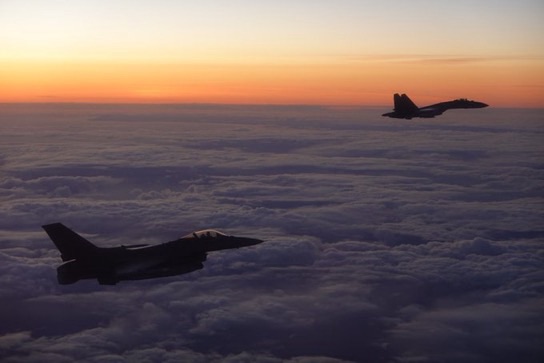
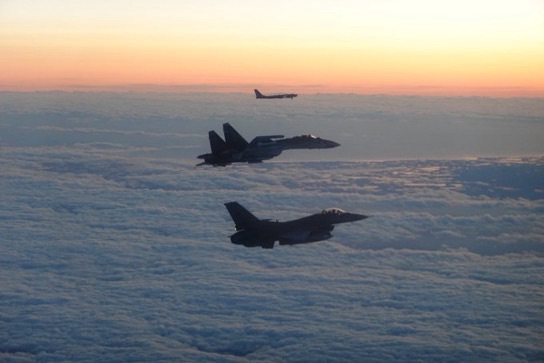
The North American Aerospace Defense Command (NORAD) has released striking imagery of a recent aerial encounter in the skies near Alaska, showing U.S. Air Force F-16C Fighting Falcon jets intercepting a Russian Tu-95MS strategic bomber and its Su-35 fighter escorts. The incident, which occurred in international airspace within the Alaskan Air Defense Identification Zone (ADIZ), highlights the persistent military watchfulness required in a region of increasing strategic importance.
In a statement released on Friday, September 26, 2025, NORAD confirmed that the Russian aircraft were detected, tracked, and positively identified as they entered the ADIZ. The command emphasized that the Russian planes remained in international airspace and did not enter sovereign American or Canadian territory. The interaction was described as “safe and professional.”
The released photos show the sleek, modern F-16Cs flying in close formation with the iconic, swept-wing Tu-95 bomber—a long-range, turboprop-powered aircraft that has been a staple of Russia’s strategic forces since the Cold War. Also pictured are the highly maneuverable Su-35 “Flanker-E” jets, which were escorting the bomber.
While such encounters can appear dramatic, NORAD officials stress that they are a relatively routine aspect of their mission. The ADIZ is a stretch of international airspace extending hundreds of miles from the coastline, where civilian aircraft are required to identify themselves for national security purposes. Foreign military aircraft are not bound by the same rules, but NORAD routinely scrambles fighter jets to intercept and monitor any that enter the zone.
These intercepts serve multiple purposes. Primarily, they are a clear demonstration of NORAD’s detection and tracking capabilities, signaling to potential adversaries that North American airspace is constantly monitored and defended. They also allow U.S. and Canadian pilots to collect visual intelligence on Russian aircraft and observe their flight patterns and tactics.
The frequency of these intercepts often fluctuates with the geopolitical climate. They are a regular feature of the strategic competition between Washington and Moscow, with Russia using flights by its long-range aviation to project power and probe U.S. air defenses. This latest incident comes amid a backdrop of continued tensions over a range of global issues.
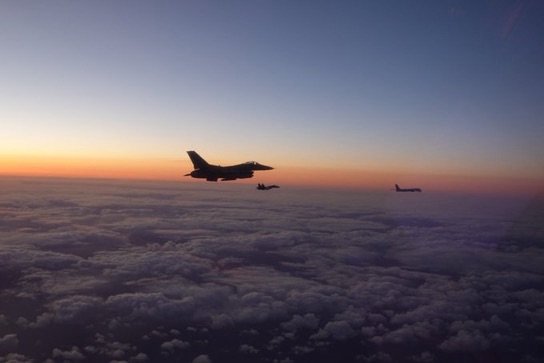
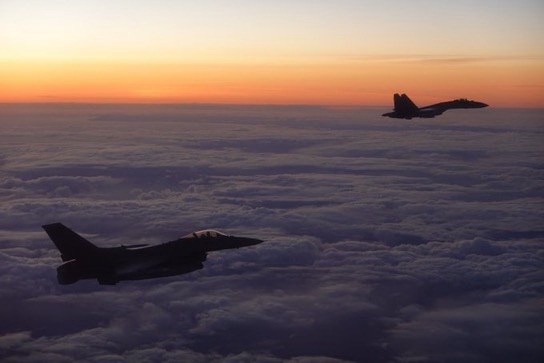
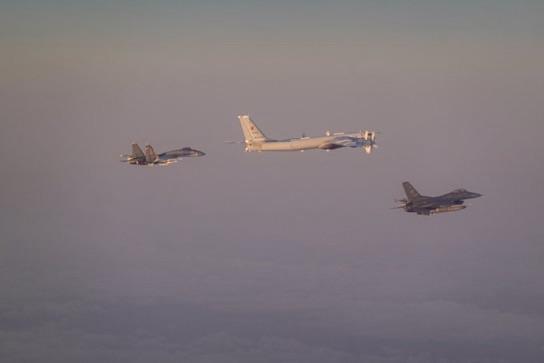
NORAD, a binational command between the United States and Canada, is responsible for the aerospace warning, aerospace control, and maritime warning for North America. Its layered defense network is designed to provide early warning of any potential air threats. The pilots and crews of NORAD remain on watch 24/7, ready to respond to any activity in their area of responsibility. This intercept, while routine from a military perspective, serves as a vivid public reminder of the ongoing, quiet vigilance that defines the defense of the continent.
RAGE X is your premier hub for Research Analysis in Global Events, delivering cutting-edge insights into military affairs, defense technology, intelligence briefings, and conflict reporting. With a sharp focus on global wars, strategic power shifts, and modern warfare analysis, RAGE X empowers readers, analysts, and professionals to stay ahead in an unpredictable world.
Our expertise extends across war reporting, nuclear strategy, military dominance indices, and real-time news alerts, making RAGE X a trusted resource for journalists, policymakers, and security experts worldwide.
From in-depth defense reports to timely breaking alerts, we combine accuracy, speed, and clarity to help you understand the true dynamics of global conflict. Trusted by audiences in the United States, Europe, the Middle East, and beyond, RAGE X continues to expand as a leading voice in intelligence-driven journalism.
Explore our comprehensive coverage, sharpen your knowledge, and join the growing network that turns to RAGE X for truth in conflict and clarity in chaos.
📌 Visit us at www.ragex.co and follow our intelligence updates across social platforms to never miss a critical development.
you can also visit CIS Security for security index in Lebanon