
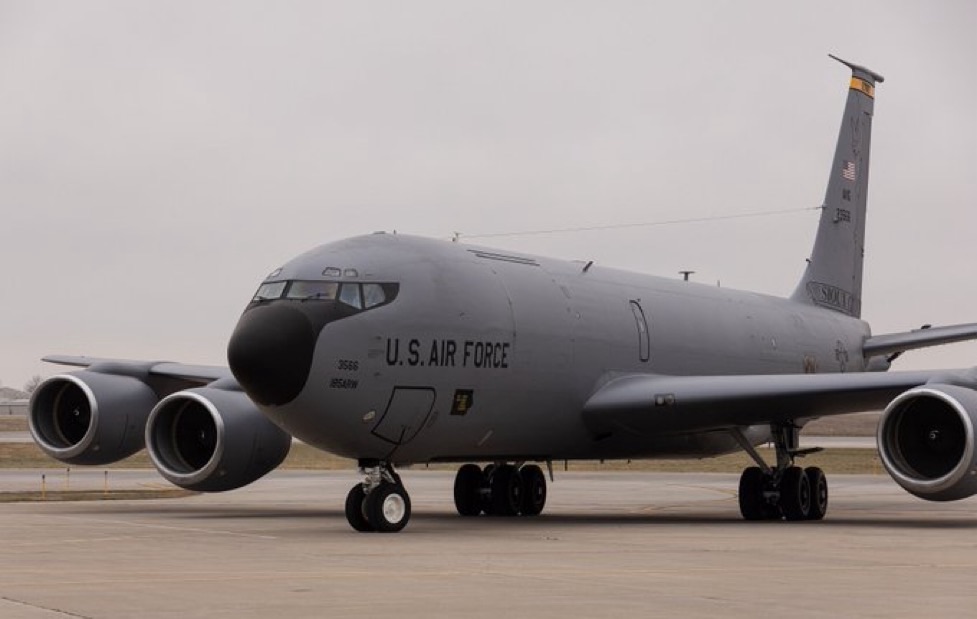

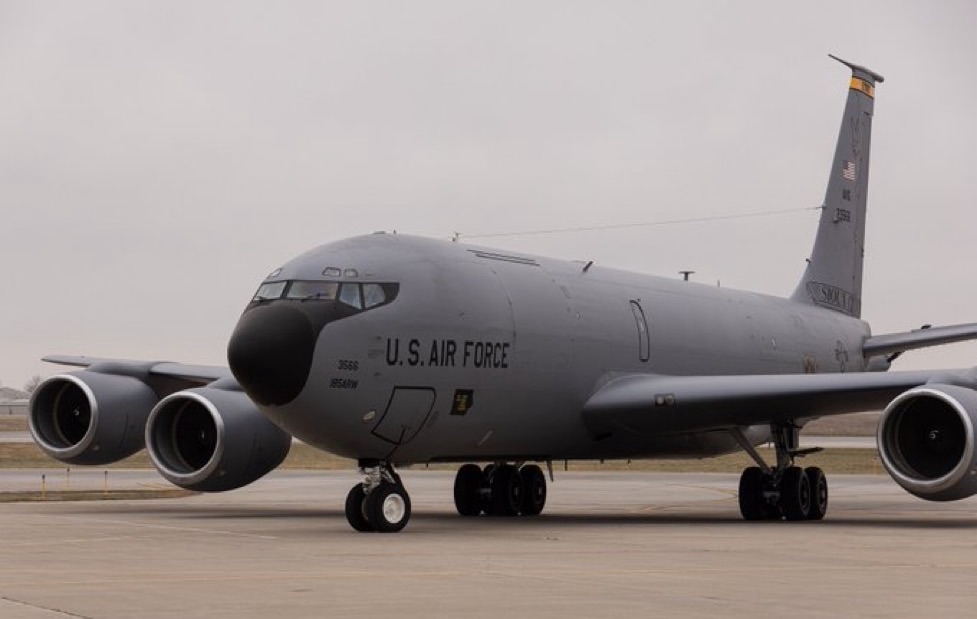
The United States Central Command has now formally confirmed a devastating loss of life following a major military aviation accident over the Middle East. At approximately two in the afternoon Eastern Time on Thursday, March twelfth, a United States military KC-135 Stratotanker went down over the remote deserts of western Iraq. This catastrophic event occurred while the massive refueling aircraft was actively supporting the intense and sprawling regional combat missions associated with Operation Epic Fury. Following hours of anxious uncertainty, military officials have devastatingly confirmed that four of the six crew members aboard the aircraft perished in the crash.
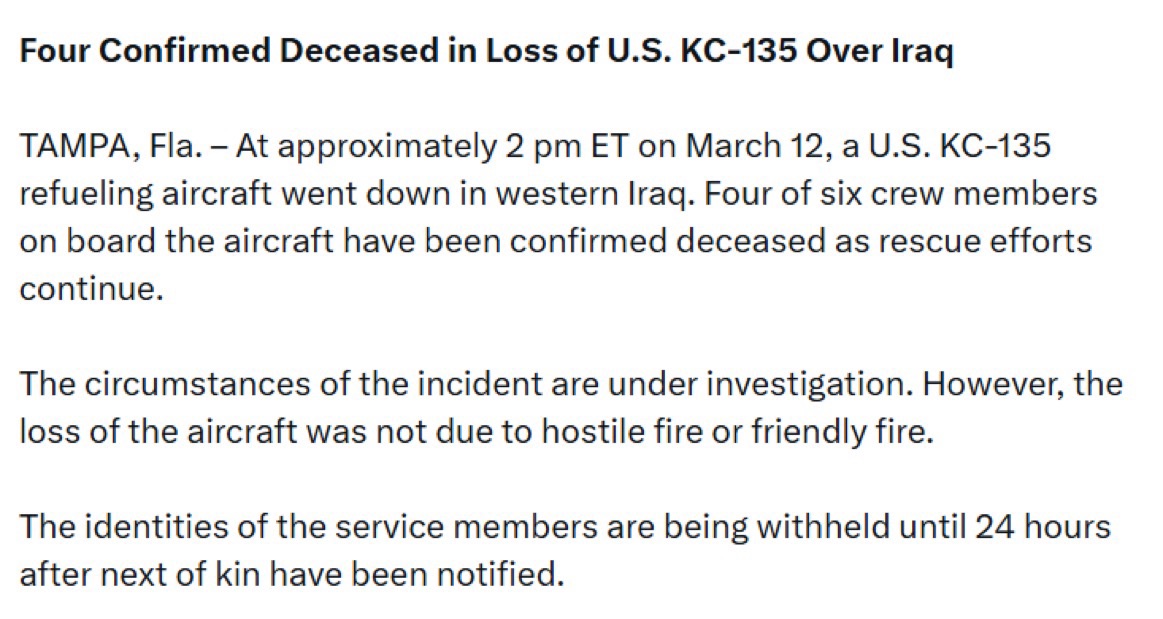
A massive and highly coordinated search and rescue operation was immediately launched and remains actively underway today as specialized extraction teams desperately scour the crash site to locate the two missing service members. Operating within an active and highly volatile combat zone adds immense logistical challenges and severe physical risks to these ongoing emergency recovery efforts. However, the military command has explicitly clarified the preliminary findings regarding the fundamental cause of the tragedy. According to the official press release issued from the Central Command headquarters in Tampa Florida, the total loss of the aircraft was not the result of hostile anti-aircraft fire from enemy forces, nor was it caused by an accidental friendly fire incident.
This tragic confirmation directly correlates with prior military reports detailing a severe midair collision involving two KC-135 Stratotankers operating within friendly Iraqi airspace. While the first heavily damaged aircraft managed to limp back to allied territory and execute a miraculous emergency landing in Tel Aviv Israel, the second aircraft suffered catastrophic structural failure and plummeted into the desert below. The sheer violence of a midair collision between two massive aircraft, each heavily laden with highly combustible aviation fuel, leaves an incredibly narrow margin for crew survival.
The loss of these four dedicated American service members underscores the profound and inherent dangers associated with conducting high-intensity military operations. These vital refueling tankers function as the absolute operational backbone of the entire allied offensive campaign. They continuously circle the highly contested region to transfer millions of pounds of aviation fuel to the massive armadas of stealth fighters and heavy bombers executing deep penetration strikes inside Iranian territory. Operating massive heavy aircraft in incredibly close proximity during nighttime refueling procedures is inherently perilous. When combined with the chaotic and heavily congested airspace generated by a massive regional war, the risk of a catastrophic aviation mishap increases exponentially.
In accordance with strict Department of Defense protocols, the identities of the fallen service members are currently being withheld from the general public. Their names will only be officially released twenty-four hours after all next of kin have been properly and respectfully notified. As the rigorous military investigation into this fatal disaster officially begins, the entire American nation deeply mourns the ultimate sacrifice made by these truly brave individuals. Their absolute dedication to duty highlights the severe human cost of projecting decisive American military power across a violently unstable global landscape today.