
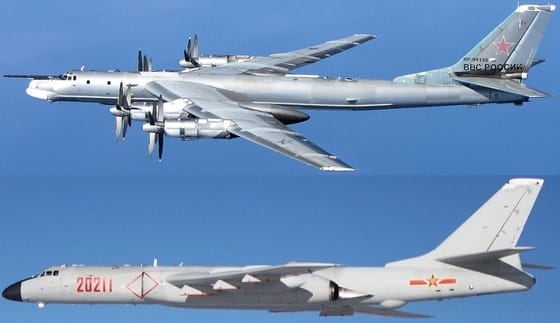

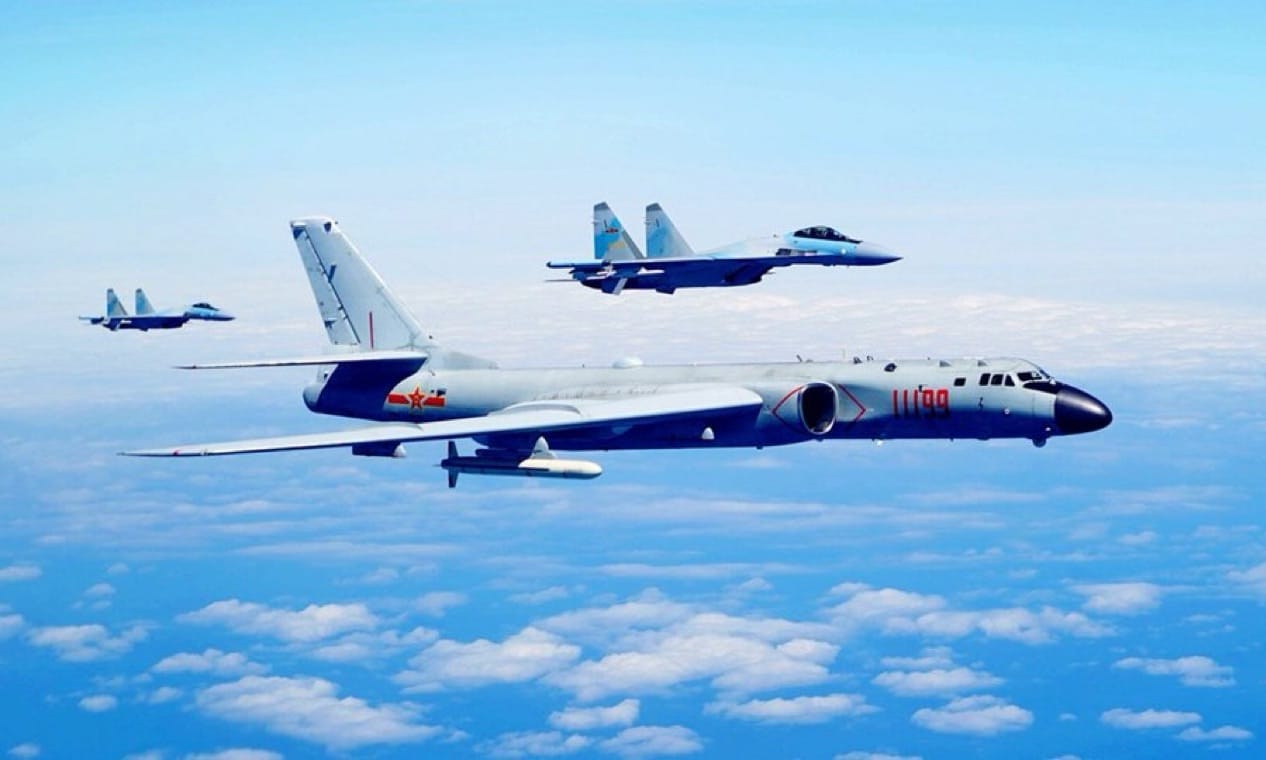
Tensions on the Korean Peninsula soared on Tuesday, December 9, 2025, after a coordinated formation of nine military aircraft from China and Russia entered South Korea’s Air Defense Identification Zone (KADIZ) without prior notification. This joint maneuver, which included both long-range bombers and fighter jets, forced the Republic of Korea Air Force (ROKAF) to scramble its fighter jets in a rapid response to prevent an “accidental situation.”
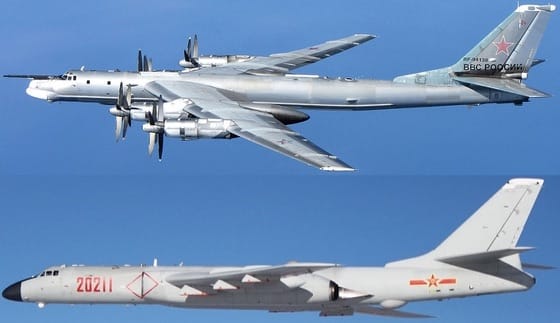
The Joint Air Patrol and Route According to South Korea’s Joint Chiefs of Staff (JCS), the intrusion occurred around 10:00 a.m. local time over the waters to the south and east of the Korean Peninsula, primarily operating over the Sea of Japan (known in Korea as the East Sea). The formation included two Chinese and seven Russian military aircraft, though other reports suggest the total may have been 11 aircraft (5 Chinese, 6 Russian) over an extended period.
The aircraft reportedly entered the KADIZ in succession, flying near highly sensitive areas, including the waters between South Korea and Japan, before retreating. Crucially, the JCS confirmed that none of the aircraft violated South Korea’s actual territorial airspace.
* KADIZ vs. Airspace: The KADIZ is an area established to require foreign aircraft to identify themselves to South Korean air traffic control to prevent accidental clashes. It is not considered sovereign airspace and is not governed by international law.
The South Korean military stated that the ROKAF detected the planes prior to their entry and deployed fighter jets as part of “tactical measures” in preparation for any contingency. This marks the first such joint intrusion reported since November 2024, highlighting the renewed frequency of these large-scale combined aerial exercises by Beijing and Moscow in Northeast Asia.
Strategic Implications and US Alliance
The coordinated incursion is widely interpreted as a political and military signal from the China-Russia quasi-alliance against the US-led security architecture in the Indo-Pacific. By operating jointly over the Sea of Japan, which is also claimed by Japan as the East China Sea, the two powers demonstrate their increasingly close military alignment and willingness to contest US influence in the region.
The timing of the maneuver is particularly sensitive, given the ongoing tensions between North and South Korea and the recent rhetoric from South Korea’s close ally, the United States. The flights near sensitive areas often serve the purpose of:
* Intelligence Gathering: Testing the response time and readiness of ROKAF and potentially US military assets in the region.
* Asserting Presence: Underscoring the shared goal of undermining the existing Western-dominated regional order.
* Exploiting Fissures: The intrusions often occur near the disputed Dokdo/Takeshima islets—claimed by both South Korea and Japan—thereby attempting to sow discord within the US-led trilateral alliance.
South Korea’s Foreign Ministry lodged a formal protest with the defense attachés of both Beijing and Moscow, urging them to prevent a recurrence of the unauthorized entry that unnecessarily raises tensions. While South Korea maintains a direct military hotline with China, it does not have one with Russia, complicating immediate communications during such high-stakes events. The US is closely monitoring the situation as its allies respond to the combined challenge.