
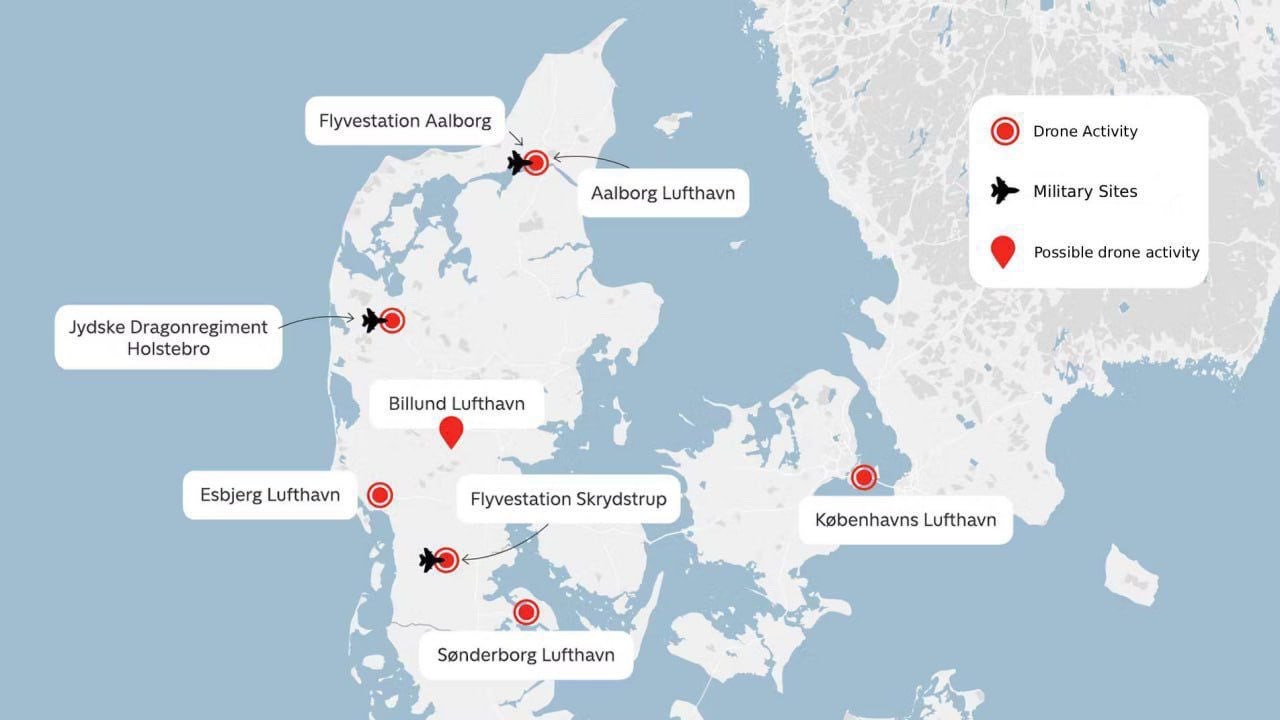

The campaign of aerial harassment against Denmark continues as Aalborg Airport, a key civil and military hub, was forced to shut down on Thursday following the sighting of a “drone-like” object in its airspace. The incident is the latest in a string of brazen incursions that has put the nation’s security apparatus on its highest alert and led the government to declare the country is facing a new form of “hybrid warfare.”
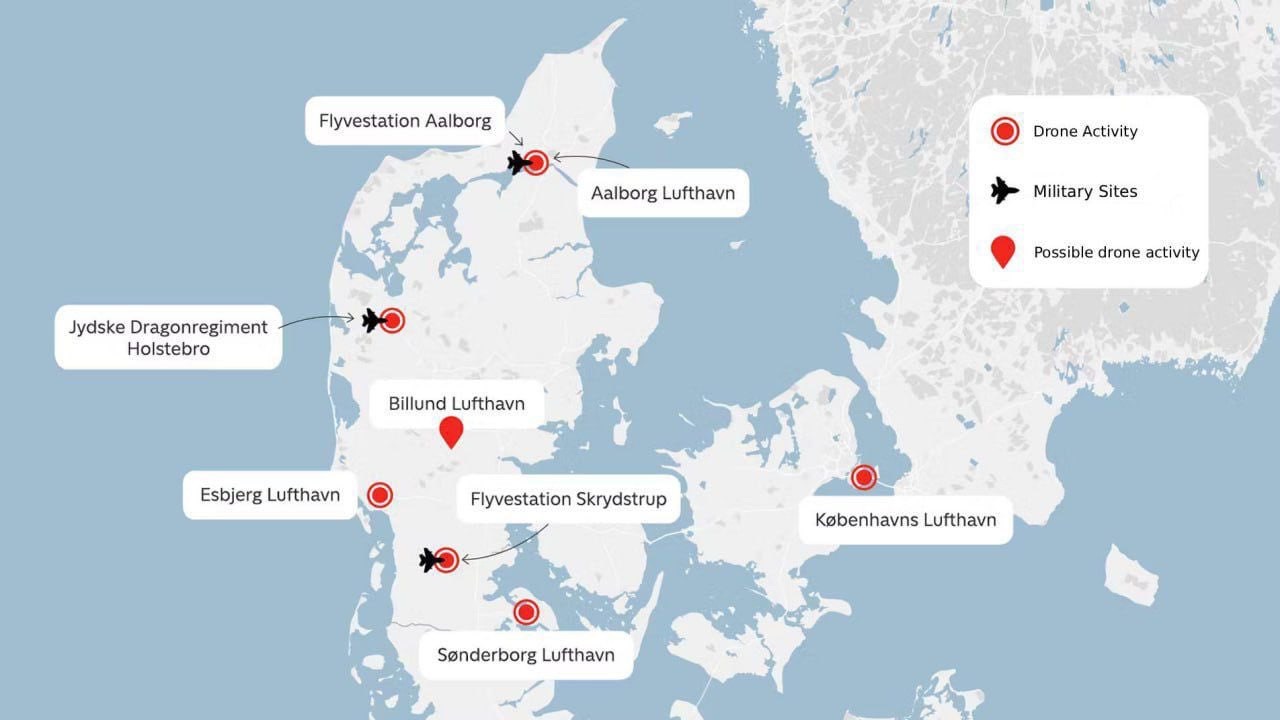
According to the North Jutland Police, who confirmed the closure to Danish newspaper Ekstrabladet, all air traffic at the airport was suspended as a precautionary measure. The immediate impact was significant, with an aircraft arriving from the Netherlands forced to divert to an alternate airport and at least two other flights being cancelled. The sighting has triggered a comprehensive search of the area by law enforcement and military units, but as of late Thursday, the object had not been located.
This latest event is not an isolated incident but a direct continuation of a coordinated and systematic series of provocations. It comes just one day after a widespread wave of drone activity targeted four separate airports on the Jutland peninsula, including Aalborg, and follows the initial attack on Monday that paralyzed Copenhagen Airport for hours.
The persistent and professional nature of the incursions has drawn a severe response from Danish leadership. Prime Minister Mette Frederiksen has stated that the country is witnessing a “hybrid war unfold on Danish soil” and warned that “we have only seen the beginning of the attacks.” Her stark assessment has been echoed by Defense Minister Troels Lund Poulsen, who labeled the events a “hybrid attack” designed to test NATO’s defenses and sow fear among the public.
The choice of Aalborg as a repeated target is particularly significant. The airport serves not only as a vital civilian travel link but is also home to the Aalborg Air Base, a critical installation for the Royal Danish Air Force. This dual-use nature makes any disruption there a matter of both economic and national security.
Hybrid warfare aims to destabilize an adversary through a combination of non-military and covert military tactics. By repeatedly grounding flights, probing defenses around critical infrastructure, and creating a climate of uncertainty, the unknown perpetrator is achieving a strategic objective without firing a single shot. While no state actor has been officially blamed, suspicion has fallen on Russia, which has a history of employing such tactics against its European neighbors.
As Danish authorities continue to grapple with this persistent threat, the government is reportedly fast-tracking legislation to counter hostile drones and is considering invoking NATO’s Article 4 to bring the matter before the entire alliance. For now, the repeated shutdowns and the looming aerial threat have left a palpable sense of tension across Denmark.