



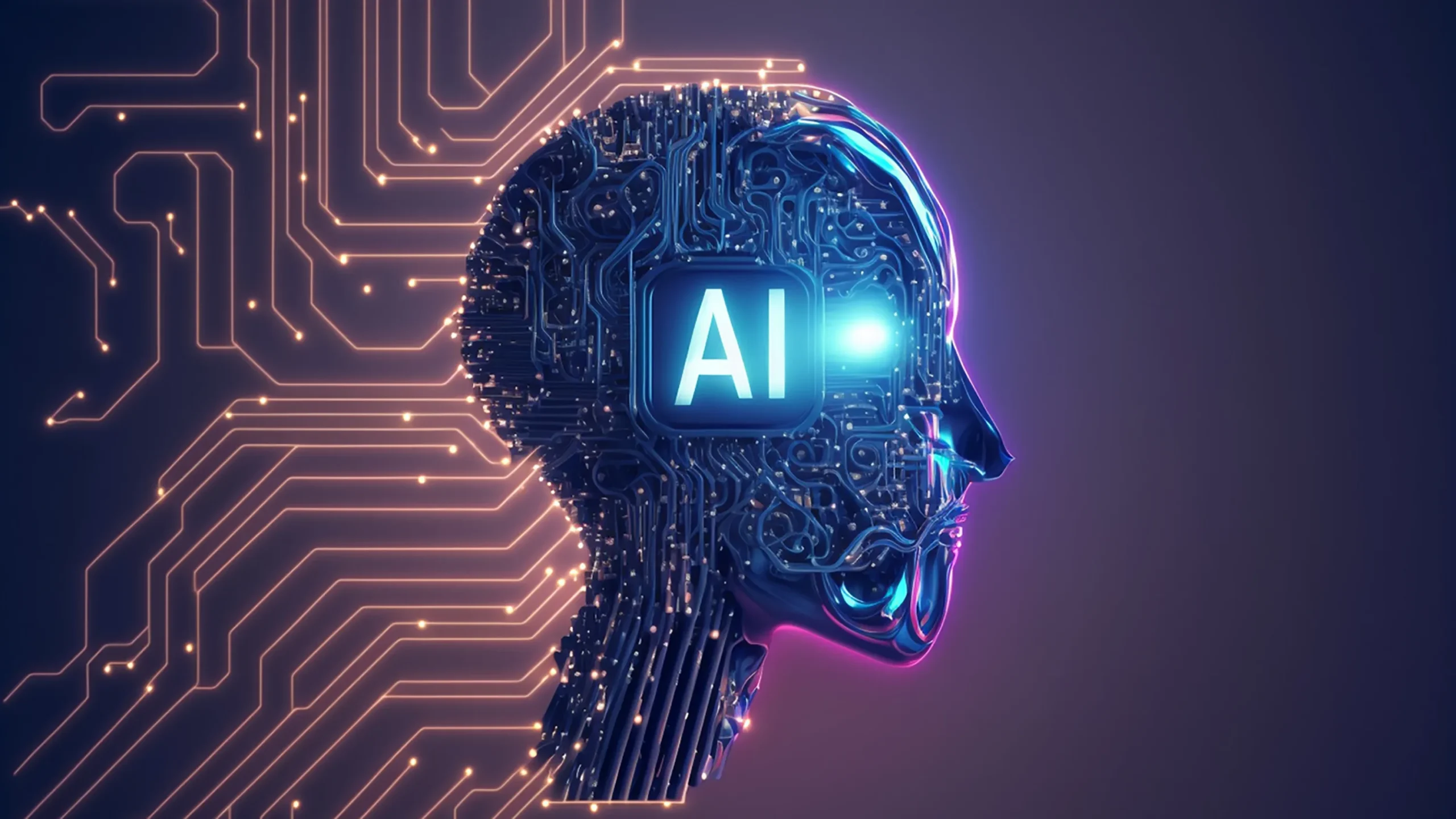
AI – The New Age of Cognition
For decades, Artificial Intelligence was a concept relegated to science fiction, a distant promise of sentient robots and digital brains. As of 2025, that future is no longer a distant promise; it is our daily reality. We are living through the most profound technological transformation since the dawn of the internet. The science of endowing machines with the ability to learn, reason, perceive, and act has broken free from research labs and is now the invisible engine reshaping every facet of human life, from global industry and scientific discovery to the very nature of our personal interactions.
At its core, AI is a broad field of computer science focused on simulating human intelligence. But “AI” is not a single entity. It is a vast ecosystem of technologies, the most powerful of which have driven the recent explosion in capability. We are not just witnessing faster computers; we are witnessing the dawn of machine-driven cognition. This revolution, driven by breakthroughs in “generative” models and the availability of massive data, is already unlocking trillions of dollars in economic value and forcing a global reckoning with its profound societal and ethical implications.
The Pillars of Modern AI: Understanding the Core Technologies
The term “AI” is an umbrella, and beneath it lie several key disciplines that function as the pillars of modern intelligence. Understanding these branches is critical to understanding the 2025 AI landscape.
- Machine Learning (ML): The Foundation This is the foundational concept that powers most modern AI. Instead of being explicitly programmed with every rule, an ML system is “trained.” It learns directly from vast amounts of data, identifying patterns and making decisions with minimal human intervention. It’s the algorithm that learns to flag spam in your email or recognize your face in a photo.
- Deep Learning (DL): The “Brain” Deep Learning is a more advanced, powerful subset of ML. It uses complex structures called artificial neural networks, which are inspired by the interconnected web of neurons in the human brain. These networks have many layers (hence “deep”), allowing them to find and process incredibly subtle and complex patterns. Deep Learning is the magic behind self-driving cars navigating a chaotic street, AI “seeing” tumors in a medical scan, and the sophisticated models that can understand and generate human language.
- Generative AI: The Creator This is arguably the most disruptive branch of AI in 2025. Generative AI, built on massive Deep Learning models called Large Language Models (LLMs) and diffusion models, doesn’t just analyze data—it creates new content. It generates coherent, context-rich text, composes music, designs software, and creates photorealistic images and videos from a simple text prompt. Tools from companies like OpenAI, Google (with its Project Suncatcher), and Anthropic are now functioning as creative partners and productivity-multipliers for millions.
- Natural Language Processing (NLP): The Communicator NLP is the branch of AI focused on giving machines the ability to understand, interpret, and generate human language. This is the technology behind your smart assistant (like Alexa or Siri), real-time language translation, and the “agentic” AI systems, like Anthropic’s recent Claude agent for Chrome, that can understand your goals and take actions on your behalf within your browser.
- Computer Vision (CV): The “Eyes” Computer Vision enables machines to “see” and interpret the visual world. It’s the core technology that allows an autonomous vehicle to identify a pedestrian, a factory robot to spot a microscopic defect, or an AI in healthcare to analyze an echocardiogram with superhuman accuracy, as seen in recent 2025 breakthroughs in cardiovascular diagnostics.
- Robotics: The “Body” Robotics is where AI gets a physical form. When AI’s “brain” is integrated with a “body”—a collection of sensors, motors, and actuators—you get autonomous systems. The most advanced example in 2025 is the rapid development of humanoid robots, such as Tesla’s Optimus, which is now demonstrating increasingly complex tasks, with the goal of one day handling labor in manufacturing, logistics, and beyond.
The 2025 AI Revolution: From Theory to Reality
Artificial Intelligence is no longer a “what if” technology; it is a “right now” technology with profound, real-world applications being deployed globally.
- In Healthcare and Science: This is where AI’s impact is most life-changing. In 2025, AI models are not just assisting doctors; they are making new discoveries. AI is now being used to predict flu vaccine strains more accurately than human experts. Groundbreaking new AI-powered imaging techniques are revealing hidden cardiac risks, and new non-invasive Brain-Computer Interfaces (BCIs) are using AI to translate thought into digital action, offering new hope for paralyzed individuals. In drug discovery, AI is simulating molecular interactions, dramatically accelerating the creation of new medicines.
- In Daily Life and Business: AI has become your personal assistant, your financial advisor, and your creative collaborator. Microsoft’s vision of AI “Companions” is a reality, with agents that help manage your schedule, summarize your emails, and automate your workflow. In e-commerce, AI provides hyper-personalized recommendations, while in finance, it detects fraudulent transactions in milliseconds.
- In Transportation and Logistics: The autonomous revolution is powered by AI. Self-driving cars and trucks, equipped with sophisticated sensor suites and deep learning “brains,” are navigating complex urban environments. In warehouses, autonomous mobile robots sort and move packages, optimizing a global supply chain that is now deeply reliant on AI-driven predictive analytics.
- In Space and Sustainability: The ambition of AI now extends beyond Earth. In 2025, Google announced Project Suncatcher, a research moonshot to scale machine learning computation in space, using an interconnected network of solar-powered satellites. On the ground, Microsoft and others are pioneering AI for sustainable infrastructure, using it to manage power grids, design more efficient data centers, and model climate change.
The Great Reckoning: A $13 Trillion Question
The benefits of AI are undeniable, but its power brings with it a set of formidable challenges. As a society, we have entered a period of “great reckoning” with this new intelligence. The investment bank Goldman Sachs has estimated that AI could deliver an additional $13 trillion in global economic activity by 2030, but this disruption comes at a cost.
- Job Displacement and Economic Shift: The most immediate fear is mass unemployment. AI is proving exceptionally capable at automating “knowledge work”—tasks performed by programmers, writers, analysts, and paralegals. While AI will certainly displace many jobs, the consensus is that it will more likely be a “job transformer.” The future will belong to those who can leverage AI as a tool to augment their skills, creating a new “prompt-driven” economy and a critical need for mass upskilling.
- Ethics, Bias, and “Black Box” Problem: AI models are trained on human-generated data, and as a result, they can inherit and amplify our worst biases. An AI used for loan applications or criminal justice could perpetuate systemic racism or sexism. Furthermore, the “black box” problem persists: the decisions made by complex deep-learning networks are often unexplainable, making it difficult to establish accountability when an AI makes a catastrophic error.
- Data Privacy and Surveillance: To learn, AI needs data—our data. The rise of “ambient intelligence,” like AI-powered lights that listen to plans, or AI companions that track our digital lives, creates an unprecedented potential for surveillance. This has triggered a necessary regulatory backlash, such as California’s 2025 legislation regulating AI “companion” apps to protect users, especially minors, from emotional manipulation and data exploitation.
- The Regulatory Race: Governments worldwide are now in a frantic race to regulate AI. The United States has established an AI Bill of Rights as a guiding framework, while the EU is implementing its own comprehensive “AI Act.” The challenge is to find a balance—to foster innovation while protecting citizens from the clear and present dangers of unchecked AI.
AI – The Collaborative Future
Artificial Intelligence (AI) is the single most powerful tool our species has ever created. It is a mirror reflecting our own intelligence, biases, and aspirations. The narrative of “man vs. machine” is a false dichotomy. The true path forward, as we are discovering in 2025, is “man with machine.”
AI is not a replacement for human cognition but an augmentation of it. It is a universal tool that can help a scientist cure a disease, an artist create a masterpiece, and an individual manage the overwhelming complexity of the modern world. We are in the first few minutes of this new era. The challenges are immense, but our potential to solve them, now amplified by AI, is greater than ever. The future will not be built by AI; it will be built with AI.