


Introduction: The Silent Guardians of Deterrence
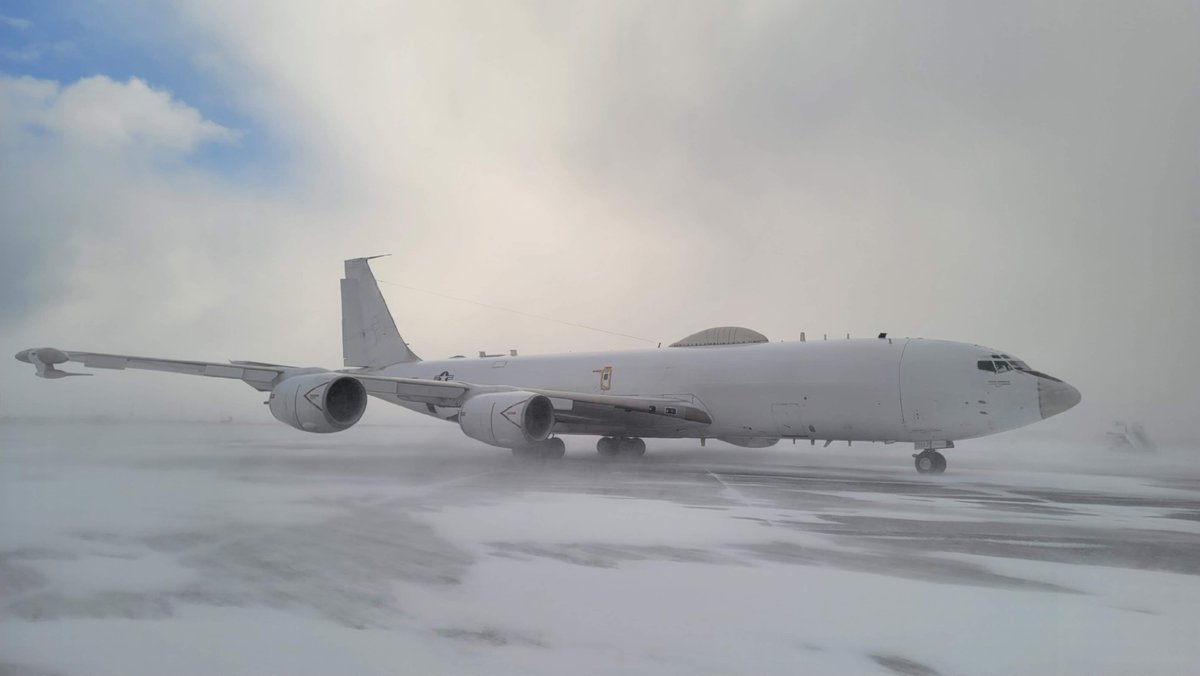
At any given moment, somewhere in the skies over the continental United States or surrounding waters, an E-6B Mercury aircraft circles silently, its crew maintaining constant vigilance as part of America’s nuclear triad. These unassuming aircraft, bearing superficial resemblance to commercial airliners from a bygone era, carry one of the most critical missions in the U.S. military arsenal—ensuring unbroken communication between civilian leadership and the nation’s nuclear forces during the ultimate crisis. The E-6B Mercury exists for a scenario everyone hopes will never occur: full-scale nuclear war.
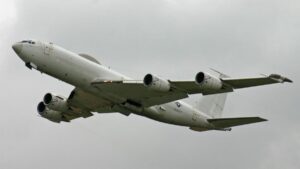
Developed during the Cold War’s waning years and continuously modernized to address evolving threats, the E-6B Mercury serves as the airborne nerve center for America’s strategic nuclear forces. While ballistic missile submarines patrol beneath the ocean’s surface and intercontinental ballistic missiles sit ready in hardened silos, the Mercury ensures that orders from the National Command Authority can reach these weapons regardless of what devastation has befallen ground-based command infrastructure. This capability forms the bedrock of nuclear deterrence—the assurance that no adversary can deliver a disarming first strike, because America’s nuclear forces will always receive retaliatory launch orders.
The Mercury’s mission combines two critical functions under the designation TACAMO (Take Charge And Move Out) and ABNCP (Airborne National Command Post). These acronyms represent capabilities that sound abstract until one considers their true meaning: ensuring that even after nuclear weapons have destroyed Washington D.C., the Pentagon, and every fixed command center, the United States retains the ability to launch a coordinated nuclear response. This survivable command and control capability stands as perhaps the single most important element preventing adversaries from contemplating nuclear aggression.
Heritage and Development: From Commercial Airliner to Doomsday Plane
The E-6 Mercury’s origins lie in the Boeing 707-320, the stretched intercontinental variant of the aircraft that revolutionized commercial aviation during the 1960s. By the 1980s, the Navy sought to replace its aging EC-130Q TACAMO aircraft with a more capable platform offering greater endurance, improved reliability, and accommodation for advancing communication technologies. The 707 airframe, though approaching obsolescence in commercial service, provided an ideal foundation—a proven design with excellent range, ample internal volume for equipment installation, and four-engine reliability essential for extended missions.
Boeing’s modification process transformed commercial 707-320 airframes into specialized command and control platforms bearing little resemblance to their airliner ancestors. The most visible external modification involves the trailing wire antenna system, a distinctive feature that enables very low frequency communication with submerged submarines. During TACAMO operations, the Mercury trails a wire antenna up to five miles long, flying in precise circular patterns to maintain the wire’s vertical orientation for optimal signal transmission. This surreal image—a large aircraft circling endlessly while dragging a miles-long wire—epitomizes the Mercury’s unique mission requirements.
The initial E-6A variant entered service in 1989, replacing the EC-130Q fleet and providing significantly enhanced capabilities. Sixteen aircraft were delivered, forming squadrons that maintain continuous airborne alert posture. The subsequent E-6B modification program, completed in the late 1990s and early 2000s, added Airborne Launch Control System capabilities, enabling Mercury aircraft to bypass submarine communication entirely and directly launch land-based intercontinental ballistic missiles if necessary. This upgrade transformed the Mercury from a communication relay into a genuine airborne command post capable of executing the entire nuclear war plan.
Technical Specifications and Performance
The E-6B Mercury measures 46.6 meters in length with a wingspan of 44.4 meters and stands 12.9 meters tall—dimensions nearly identical to the commercial 707 from which it derives. However, these familiar proportions conceal profound internal modifications. The aircraft’s empty weight of 60,780 kilograms increases to a maximum takeoff weight of 145,150 kilograms when fully loaded with fuel, equipment, crew, and provisions for extended missions. This substantial weight capacity proves essential for carrying the extensive communication equipment, crew accommodations, and fuel required for missions exceeding 24 hours.
Four CFM International CFM56-2A-2 turbofan engines power the Mercury, each generating approximately 24,000 pounds of thrust. These engines, representing a significant upgrade from the 707’s original Pratt & Whitney powerplants, provide improved fuel efficiency and reliability essential for extended endurance missions. The CFM56 engine family has accumulated billions of flight hours across commercial and military applications, offering proven dependability critical for aircraft that must remain airborne through scenarios where landing options may not exist.
Performance characteristics reflect the Mercury’s specialized mission requirements rather than speed or agility. Maximum speed reaches 980 kilometers per hour, though typical cruise operations occur around 800 kilometers per hour—velocities optimized for fuel efficiency rather than rapid transit. The aircraft’s unrefueled range of 12,200 kilometers provides impressive operational flexibility, though Mercury missions routinely exceed this through aerial refueling. The service ceiling of 12,500 meters enables operations above most weather systems while remaining well below the altitudes where specialized pressurization systems would become necessary.
The Mercury’s true performance metric is endurance rather than speed or altitude. With aerial refueling support, these aircraft can remain airborne for 72 hours or longer, limited ultimately by crew fatigue and mechanical reliability rather than fuel capacity. This extreme endurance capability ensures continuous airborne presence, with multiple Mercury aircraft maintaining overlapping orbits so that at least one remains aloft at all times, ready to assume command and control duties instantaneously if crisis erupts.
Mission Systems and Communication Capabilities
The E-6B Mercury’s raison d’être lies in its extraordinarily sophisticated communication systems, capable of linking the National Command Authority with nuclear forces across the electromagnetic spectrum. The aircraft functions as a flying telecommunications hub, receiving orders through secure satellite links, high-frequency radio, and other channels, then relaying these commands through systems specifically designed to penetrate the most challenging transmission environments imaginable.
The Very Low Frequency communication system represents the Mercury’s most distinctive capability, enabling contact with submerged ballistic missile submarines operating at depths where higher frequency signals cannot penetrate. VLF radio waves, operating between 3 and 30 kilohertz, can penetrate seawater to depths approaching 20 meters, allowing submarines to receive messages without approaching the surface and exposing themselves to detection. The trailing wire antenna system, deployed during TACAMO operations, functions as a massive vertical antenna transmitting VLF signals that submarines detect through their towed communication buoys.
Operating the VLF system requires the Mercury to fly in precise circular patterns, typically banking at 30-degree angles while maintaining specific airspeeds to keep the trailing wire antenna vertical. These “yo-yo” patterns continue for hours, with the aircraft circling endlessly while transmitting Emergency Action Messages—the coded orders that would authorize nuclear weapon launches. The physical demands on airframe and crew during these operations are substantial, requiring exceptional piloting precision and stamina from personnel who must maintain these patterns regardless of weather conditions or turbulence.
Beyond VLF capabilities, the Mercury carries an extensive suite of communication systems spanning virtually every frequency band and transmission method. Satellite communication systems provide high-bandwidth secure links with national command authorities and strategic forces worldwide. High-frequency radio systems enable long-range communication with bomber aircraft and other airborne assets. Ultra-high frequency and very-high frequency radios support tactical communication with escort fighters and aerial refueling tankers. This communication redundancy ensures that commands reach their intended recipients regardless of which systems survive hostile action or technical failure.
Airborne Launch Control System: The Ultimate Failsafe
The Airborne Launch Control System, integrated during the E-6B modification program, provides the Mercury with capabilities that transcend communication relay and elevate it to a true airborne command post. ALCS enables Mercury crews to directly launch Minuteman III intercontinental ballistic missiles from their hardened silos across the American heartland, bypassing normal launch control centers entirely. This capability serves as the ultimate failsafe, ensuring that land-based nuclear forces remain viable even if all ground-based command infrastructure has been destroyed.
ALCS operations require specialized training and multi-person authentication protocols similar to those employed by missile launch crews in underground control centers. Multiple crew members must independently verify launch orders, authenticate codes, and execute precise procedures before missiles can be released. These safeguards prevent unauthorized launches while ensuring that legitimate orders can be executed swiftly when authorized. The psychological weight of this responsibility—knowing one possesses the technical ability to initiate nuclear war—requires exceptional emotional stability and judgment from Mercury crew members.
The integration of ALCS transformed the Mercury’s strategic value, eliminating potential vulnerabilities in the nuclear command chain. Prior to ALCS, adversaries might theoretically target ground-based launch control centers, hoping to sever communication links between national leadership and land-based missiles. ALCS removes this vulnerability entirely—even if every fixed installation is destroyed, Mercury aircraft orbiting overhead retain the ability to execute the nuclear war plan. This capability strengthens deterrence by ensuring adversaries cannot achieve strategic advantage through decapitation strikes targeting leadership and command infrastructure.
Hardening and Survivability: Built for Doomsday
The E-6B Mercury incorporates extensive hardening measures designed to ensure survival in the electromagnetic hellscape created by nuclear weapons detonations. The aircraft features comprehensive electromagnetic pulse shielding, protecting sensitive electronics from the intense electromagnetic radiation generated when nuclear weapons detonate at high altitude. EMP effects can destroy unprotected electronics at continental distances, potentially rendering conventional aircraft completely inoperable. The Mercury’s shielding ensures its systems continue functioning regardless of EMP exposure, maintaining communication capabilities when needed most.
Structural hardening protects against blast effects and thermal radiation from nuclear detonations occurring at distances beyond the immediate fireball. While no aircraft could survive proximity to a nuclear explosion’s epicenter, the Mercury can operate relatively close to detonation sites, receiving and transmitting critical communications even as mushroom clouds rise on the horizon. Specialized coatings and materials reflect thermal radiation, while reinforced structures resist blast overpressure that would shred conventional aircraft. These survivability features carry weight and cost penalties but prove absolutely essential for the Mercury’s mission.
The aircraft’s thermal nuclear flash protection includes specialized window treatments and external coatings that reduce the risk of catastrophic damage from the intense light and heat generated by nuclear explosions. Crew members receive thermal flash goggles that automatically darken when exposed to the characteristic light spectrum of nuclear detonations, protecting their vision so they can continue operating the aircraft. Air filtration systems prevent radioactive fallout particles from entering the pressurized cabin, allowing operations in contaminated environments that would prove lethal to unprotected aircraft.
Multiple redundant systems provide backup capabilities if primary equipment suffers damage or fails. Critical systems feature dual or triple redundancy, ensuring single-point failures cannot compromise mission accomplishment. The aircraft can continue operating with significant systems damage, crew injuries, or other degradation that would force conventional aircraft to abort missions. This survivability emphasis reflects the reality that Mercury crews might be executing their mission while their home bases, their families, and much of civilization as they know it ceases to exist.
Crew Composition and Operations
The E-6B Mercury operates with a crew of 22 personnel, including 16 officers and 6 enlisted members—an extraordinarily large crew for an aircraft of this size, reflecting the complexity and criticality of its mission. The flight deck crew includes pilots, navigators, and flight engineers who manage aircraft operations during missions that may extend for days. Additional crew members operate communication systems, monitor strategic situation displays, manage the trailing wire antenna system, and serve as battle staff members capable of executing nuclear war plans if ordered.
Mercury crew members undergo intensive selection processes and specialized training far exceeding normal aviation requirements. Beyond standard flight qualifications, personnel must obtain Top Secret/Sensitive Compartmented Information security clearances, granting access to the nation’s most closely guarded military secrets. Psychological screening ensures emotional stability and sound judgment under extreme stress. The knowledge that one might be called upon to participate in nuclear weapon launches—potentially while aware that nuclear weapons have already destroyed American cities—requires exceptional mental resilience.
Training for Mercury crews encompasses not merely technical proficiency but also preparation for scenarios most people cannot imagine. Crews practice maintaining operations under simulated wartime conditions, including communication degradation, electromagnetic pulse effects, and knowledge that ground-based command centers have been destroyed. They rehearse Emergency Action Message procedures countless times, ensuring flawless execution during actual crises when time pressures and stress reach unimaginable levels. This training never truly prepares personnel for executing their mission during actual nuclear war, but it provides the procedural foundation necessary for disciplined response when instinct might otherwise fail.
The daily reality of Mercury operations involves continuous alert postures, with multiple aircraft aloft at all times. Crews rotate through alert duties, knowing that each mission might transition from routine training to the most consequential moments in human history with little or no warning. The psychological burden of this responsibility affects Mercury personnel profoundly, requiring strong support systems, peer relationships, and comprehensive mental health resources to maintain readiness over careers spanning decades.
Operational Posture and Alert Status
The E-6B Mercury force maintains continuous airborne presence through a demanding operational schedule that has persisted since the aircraft entered service. Under normal circumstances, at least one Mercury remains airborne at all times, ready to receive and relay Emergency Action Messages within seconds of receiving orders. During periods of heightened alert, such as international crises that raise nuclear tensions, additional aircraft deploy to ensure redundant coverage and increased responsiveness.
The operations tempo required to sustain continuous airborne alert proves enormously demanding on aircraft, crews, and support infrastructure. Each airborne mission requires extensive ground support, including mission planning, aircraft preparation, communication checks, and coordination with aerial refueling tankers. Maintenance personnel work ceaselessly to keep a fleet of aircraft originally designed in the 1960s mission-capable decades later, replacing aging components, updating systems, and ensuring reliability that could determine national survival.
Mercury operations follow carefully choreographed patterns designed to provide optimal communication coverage while remaining unpredictable to potential adversaries. Aircraft operate from Tinker Air Force Base in Oklahoma and Travis Air Force Base in California, deploying to patrol areas covering both the Atlantic and Pacific coasts, where they maintain communication with submarine forces and provide airborne command post capabilities. These patrol patterns vary continuously, preventing adversaries from predicting where Mercury aircraft will be at specific times, thus complicating any attempt to target them during hostilities.
The refueling requirements for extended missions necessitate close coordination with aerial refueling tanker aircraft. KC-135 and KC-46 tankers rendezvous with Mercury aircraft multiple times during extended missions, transferring thousands of pounds of fuel while both aircraft fly in formation. These refueling operations prove challenging even under optimal conditions, requiring exceptional piloting skill and coordination. Conducting refueling operations during severe weather, at night, or under simulated wartime conditions demands extraordinary professionalism from both tanker and receiver crews.
Strategic Importance and Deterrence Value
The E-6B Mercury’s true value lies not in missions flown but in missions that never become necessary. The aircraft’s existence, continuously orbiting over American territory and waters, sends an unmistakable message to potential adversaries: the United States nuclear deterrent cannot be neutralized through preemptive strikes against fixed command centers. Even if adversaries achieve complete surprise, destroying Washington D.C., military headquarters, and communication facilities, Mercury aircraft will receive launch orders and ensure coordinated nuclear retaliation. This guaranteed second-strike capability forms the foundation of deterrence theory—making nuclear war unwinnable and therefore preventing its occurrence.
Strategic planners recognize that deterrence depends upon adversary perception of capabilities rather than merely possessing those capabilities. The Mercury’s public profile, though limited for security reasons, ensures potential adversaries understand that America’s nuclear forces remain viable under any circumstance. This knowledge complicates enemy planning enormously, eliminating any hope of achieving strategic advantage through decapitation strikes. Adversaries contemplating nuclear aggression must confront the reality that Mercury aircraft will ensure their actions trigger overwhelming retaliation regardless of what they destroy in initial attacks.
The psychological dimension of deterrence cannot be overstated. Mercury operations represent American resolve to maintain strategic stability through assured retaliation capability. The continuous airborne presence, sustained through decades regardless of international tensions or defense budget pressures, demonstrates that the United States takes nuclear deterrence seriously and maintains readiness to execute national security strategy even under the most extreme circumstances imaginable. This demonstration of commitment proves as important as the technical capabilities themselves.
Modernization and Future Outlook
Despite its 1960s-era airframe heritage, the E-6B Mercury continues receiving modernization upgrades ensuring continued viability through the 2030s and potentially beyond. Communication systems undergo continuous updates, incorporating new technologies, enhanced security protocols, and improved reliability. Avionics modernization programs replace obsolete equipment with current-generation systems offering improved performance and reduced maintenance requirements. These ongoing improvements extend the platform’s service life while addressing emerging threats and technological opportunities.
The Navy and Air Force have initiated programs exploring eventual Mercury replacement, though timelines remain uncertain. Any successor platform must meet extraordinary requirements: extreme reliability, extensive endurance, comprehensive hardening against nuclear effects, and accommodation for communication systems spanning the entire electromagnetic spectrum. Few aircraft can satisfy these demands, particularly given budget constraints and competing modernization priorities. The Mercury may continue serving for decades simply because replacing it proves extraordinarily difficult and expensive.
Alternative concepts under consideration include distributed airborne command post capabilities using smaller, more numerous aircraft rather than a dedicated fleet of specialized platforms. Modern communication technologies, including satellite networks and advanced data links, might enable alternative architectures for ensuring survivable nuclear command and control. However, the Mercury’s proven capabilities, operational track record, and existing infrastructure argue for continued service until replacements demonstrate comparable reliability under the extreme conditions these aircraft must survive.
Conclusion: The Price of Peace
The E-6B Mercury represents one of the most critical yet least visible elements of American national defense. While aircraft carriers, stealth bombers, and advanced fighters capture public attention, the humble Mercury quietly maintains the capability that makes all other defense investments meaningful—the assurance that nuclear deterrence remains credible regardless of adversary actions. The continuous airborne presence of these aircraft, orbiting silently while crews maintain vigilance few can truly comprehend, prevents the nuclear war their mission exists to prosecute.
The Mercury embodies profound paradox: an aircraft designed for humanity’s darkest hour, whose greatest success lies in never fulfilling its ultimate purpose. Every mission that concludes with routine landing represents deterrence succeeding, crisis averted, civilization preserved. The crews who fly these aircraft carry extraordinary responsibility, knowing their actions during actual nuclear war would occur amidst devastation beyond imagination, yet maintaining professional readiness to execute those duties flawlessly should they ever be necessary.
As long as nuclear weapons exist, aircraft like the E-6B Mercury will remain essential. The alternative—vulnerable command and control systems that adversaries might target, creating incentives for preemptive strikes—proves unacceptable. The Mercury’s continuous presence in American and international waters sends the clearest possible message: nuclear war cannot be won and therefore must never be fought. This capability, maintained at substantial cost through decades of operations, represents not merely military spending but investment in the peace that deterrence preserves. In this light, the E-6B Mercury stands as one of the most successful military aircraft ever developed—not for wars it has fought, but for the war it helps prevent.