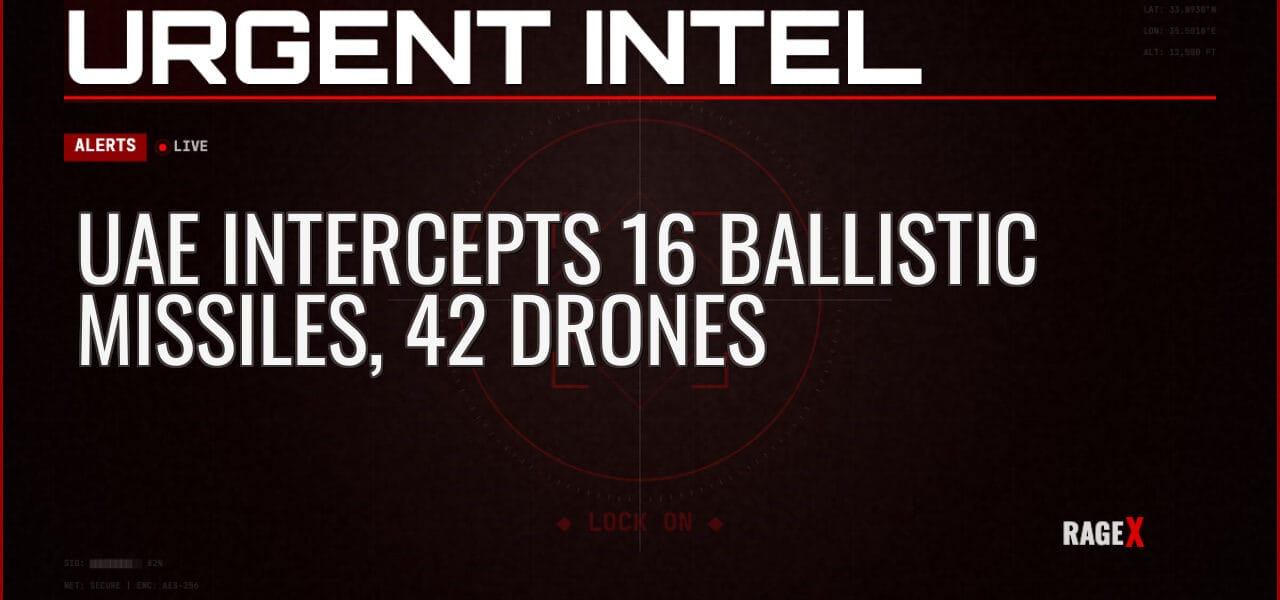

The UAE Ministry of Defence announced that its air defense systems successfully intercepted a new wave of Iranian attacks on March 29, 2026, marking one of the largest single-day engagements since the conflict began.
⸻
Latest Interception Figures
According to official data:
▪️ 16 ballistic missiles intercepted
▪️ 42 UAVs (drones) neutralized
▪️ All launched from Iran toward UAE territory
This reflects a continued high tempo of coordinated missile and drone attacks.
⸻
Cumulative Totals Since Start of Conflict
Since the onset of Iranian attacks:
▪️ 414 ballistic missiles intercepted
▪️ 15 cruise missiles engaged
▪️ 1,914 UAVs neutralized
These figures highlight the scale and persistence of the aerial threat facing the UAE.
⸻
Casualties and Impact
The attacks have resulted in:
▪️ 2 UAE Armed Forces personnel killed while on duty
▪️ 1 Moroccan civilian contractor killed
▪️ 8 civilian fatalities (Pakistani, Nepali, Bangladeshi, Palestinian, Indian nationals)
In addition:
▪️ 178 people injured
▪️ Injuries range from minor to severe
▪️ Victims include multiple nationalities across the UAE population
⸻
Operational Readiness
The Ministry of Defence emphasized:
▪️ Full operational readiness and high alert status
▪️ Commitment to neutralize any incoming threats
▪️ Continued protection of national sovereignty and stability
⸻
Strategic Implications
The sustained attacks indicate:
▪️ Iran’s continued reliance on missile and drone warfare
▪️ The UAE’s ability to maintain high interception success rates
▪️ Increasing pressure on regional air defense systems
⸻
Outlook
With attack waves continuing:
▪️ Further escalation remains possible
▪️ Air defense systems will remain under constant operational strain
▪️ Regional security dynamics are expected to stay highly volatile
The latest figures reinforce that the UAE remains a key frontline in the broader regional conflict.
⸻