

⚠ CONFLICT INTELLIGENCE REPORT ⚠
OPERATION EPIC FURY / OPERATION ROARING LION | DAY ONE | February 28, 2026
Compiled from open-source intelligence | As of ~18:00 Local Time, Tehran
EXECUTIVE SUMMARY
On the morning of Saturday, February 28, 2026, the United States and Israel launched a massive coordinated military assault on Iran codenamed Operation Epic Fury (US) and Operation Roaring Lion (Israel). The strikes, planned for months, targeted Iranian nuclear facilities, ballistic missile infrastructure, senior leadership compounds, air defenses, and naval assets. Iran retaliated within hours with ballistic missiles and drones, striking US military bases across the Gulf and targeting Israel directly. As of the evening of Day 1, more than 200 Iranians have been confirmed killed and over 700 injured. The principal strategic target — Supreme Leader Ali Khamenei — is reported killed, though this remains unconfirmed by Iran. The conflict has sent shockwaves through the Middle East and global markets.
CURRENT SITUATION AT A GLANCE
| Parameter | Status |
|---|---|
| Conflict Status | 🔴 ACTIVE — Exchanges of fire ongoing as of evening, Day 1 |
| US Codeword | Operation Epic Fury |
| Israeli Codeword | Operation Roaring Lion |
| Attack Start | Morning of Saturday, February 28, 2026 (Tehran local time) |
| Iranian Casualties | 201+ killed, 700+ wounded; 24 provinces struck (Iranian Red Crescent) |
| US Casualties | Zero reported; minimal infrastructure damage at US bases |
| Israeli Casualties | 89 lightly injured (Magen David Adom) |
| Khamenei Status | ⚠️ Trump says “that is a correct story” re: death; Iran FM denies, says “alive as far as I know” |
| Iranian Retaliation | Ballistic missiles & drones targeting: Israel, Bahrain, Qatar, UAE, Kuwait, Jordan, Saudi Arabia |
| Strait of Hormuz | 🟡 OPEN — but closure threat remains; oil markets bracing for major disruption |
| Regional Airspace | 🔴 CLOSED — Israel, UAE, Qatar, southern Syria |
| US Congress | War powers resolution vote being prepared to block continued strikes |
BACKGROUND & ROAD TO WAR
The strikes did not emerge in a vacuum. Tensions between the United States, Israel, and Iran had been escalating since the October 7, 2023 Hamas attacks. Israel systematically degraded Iran’s proxy network — Hamas in Gaza, Hezbollah in Lebanon — and exchanged direct strikes with Iran in April and October 2024. A critical inflection point came in June 2025, when the US directly bombed Iranian nuclear sites at Natanz, Fordow, and Isfahan in what it called Operation Midnight Hammer, setting back Iran’s nuclear program. Iran partially rebuilt elements of the program in the months that followed.
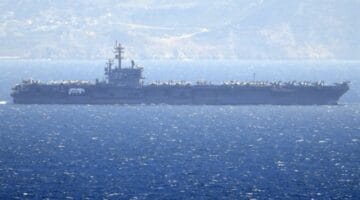
Beginning in late December 2025, massive anti-government protests swept more than 100 Iranian cities, driven by economic collapse, currency devaluation, and political repression. The regime responded with deadly force. President Trump signaled military support for protesters in January 2026 and assembled a naval armada — including carriers USS Abraham Lincoln and USS Gerald R. Ford — in the region.
Parallel diplomatic tracks continued even as the military buildup intensified. Three rounds of indirect US-Iran nuclear negotiations took place in Oman and Geneva through February 2026. Iran reportedly agreed on February 27 to degrade its nuclear stockpiles to their lowest possible levels. Despite this, Trump — citing Iran’s refusal to discuss its ballistic missile program and a claimed continued covert weapons effort — authorized the strikes the very next morning.
THE STRIKES — US & ISRAELI OFFENSIVE ACTION
The Israeli Air Force (IAF) confirmed it struck approximately 500 military targets. US forces attacked by air and sea. The strikes were coordinated: Israel was primarily tasked with targeting Iranian leadership while the US focused on nuclear and ballistic missile programs.
Cities and Sites Struck
- Tehran — Supreme Leader’s compound and residential district, Presidential Palace, National Security Council building, IRGC intelligence headquarters, multiple ministry buildings. Seven missiles struck the Khamenei compound area; satellite imagery shows it “heavily damaged or destroyed.”
- Isfahan — Nuclear-related facilities
- Qom — Nuclear and political/clerical sites
- Karaj — Military infrastructure
- Kermanshah — Military targets
- Bushehr — Port city struck; nuclear reactor damage status unclear
- Minab — Alleged strike on a girls’ elementary school; Iranian authorities claim 85 students killed (unconfirmed by independent sources; Iran’s foreign ministry called it a “crime”)
- Jurf al-Sakhar, Iraq — Two Iraqi Popular Mobilization Forces fighters killed in cross-border strikes
A total of 24 Iranian provinces were reported struck by Iran’s Red Crescent.
IRANIAN RETALIATION
Iran responded swiftly with a broad retaliatory salvo. The Islamic Revolutionary Guard Corps (IRGC) declared all American and Israeli assets in the Middle East “legitimate targets” with “no red lines.”
Iran fired ballistic missiles and drones at the following targets:
- Israel — Dozens of missiles fired; many intercepted by Israeli air defenses; 89 lightly injured
- Bahrain — US Navy 5th Fleet headquarters targeted; Bahrain called the attack “treacherous”
- Qatar — Al Udeid Air Base (hosts US troops) struck; Qatar condemned the “flagrant violation of sovereignty”
- UAE — Multiple sites struck; at least one person killed by falling debris in Abu Dhabi; UAE says it intercepted several missiles
- Kuwait — Iranian missiles hit Kuwaiti territory; Kuwait condemned a “flagrant violation of international law”
- Jordan — US military assets targeted
- Saudi Arabia — Riyadh and Eastern Region targeted; Saudi Arabia says the attack was repelled
Despite the breadth of the retaliation, US Central Command (CENTCOM) reported zero American casualties and described damage to US facilities as minimal, noting it had neutralized “several hundred” Iranian drone and missile strikes.
KEY LEADERSHIP STATEMENTS
President Donald Trump (US): Announced “major combat operations” via video, citing the goal to “defend the American people by eliminating imminent threats from the Iranian regime.” Called on IRGC members to surrender in exchange for immunity, warning refusal meant “certain death.” Told Iranians: “When we are finished, take over your government. It will be yours to take.” When asked about Khamenei’s reported death, said: “That is a correct story.”
Prime Minister Benjamin Netanyahu (Israel): Thanked Trump for “historic leadership.” Said the attacks aimed to remove an “existential threat” and would “create the conditions for the brave Iranian people to take their fate into their own hands.”
Iranian Foreign Minister Abbas Araghchi: Accused Israel and the US of violating the UN Charter. Stated Khamenei is “alive as far as I know.” Vowed a harsh response. Called any strike on a school “a crime.”
President Emmanuel Macron (France): Called the escalation “dangerous for everyone” and demanded an urgent UN Security Council meeting. Urged Iran to negotiate in good faith on nuclear and missile programs.
INTERNATIONAL REACTION
Condemning Iran’s retaliation / Silent on US-Israeli strikes
- Saudi Arabia — Condemned Iran’s strikes on Gulf states in the “strongest terms”; warned of “dire consequences”
- UAE — Called Iranian strikes a “dangerous escalation and a cowardly act”; reserved right to respond
- Qatar — Strongly condemned Iran for targeting Al Udeid; said Qatar “reserves the right to respond”
- Bahrain — Called Iranian strike on the 5th Fleet “treacherous”
- Kuwait — Denounced strikes as a “flagrant violation” of international law
- Ukraine — Blamed the Iranian regime’s repression of protesters for triggering the crisis
- Canada — Supported US action to prevent Iran’s nuclear program; called Iran “the principal source of instability”
Urging de-escalation / Concerned but not condemning
- European Union — Urged “maximum restraint”; called on all parties to respect international law and protect civilians
- France — Called for urgent UN Security Council session; said “it must stop”
- Belgium — Regretted diplomatic failure; said Iranian people “must not pay the price for their government’s choices”
- Red Cross — Warning of a “dangerous chain reaction” with “potentially devastating consequences for civilians”
Condemning US-Israeli strikes
- Russia — Accused the US of using nuclear talks as cover for military operations; called actions “irresponsible”
- Pakistan — “Strongly condemned” the attacks on Iran; called for immediate resumption of diplomacy
- Norway — Said Israeli strikes breach international law: “Preventive attacks require an immediately imminent threat”
- Oman — Expressed dismay; warned US “not to get sucked in further”; called for a UN Security Council meeting
Ambiguous / Watching
- Hezbollah — Condemned the attacks but stopped short of announcing direct retaliation; appears to be assessing whether to enter the conflict
- China — Called for restraint; expressed concern about regional stability and energy security
ECONOMIC & ENERGY IMPACT
Global markets are bracing for a major shock. Key concerns:
- Oil price spike — Analysts expect a significant surge in crude prices; Iran is a top-ten world producer with costs as low as $10/barrel
- Strait of Hormuz — Iran has threatened closure; approximately 20 million barrels of crude pass through daily (~20% of global liquid oil consumption). A closure would be economically catastrophic globally
- China energy exposure — Over 80% of Iran’s oil exports go to Chinese refineries; any disruption directly impacts Chinese energy supply chains
- Regional airspace — Israel, UAE, Qatar, and southern Syria all closed airspace on Day 1, causing widespread flight diversions
- Iranian civilian economy — Food shortages reported in northern Tehran within hours of the strikes beginning, with supermarkets running low on bread, eggs, water, and milk; long queues at gas stations
STRATEGIC ASSESSMENT — DAY 1
The scope of Day 1 is historically significant. The US and Israel have executed a coordinated, multi-city strike campaign against a major regional power, targeting simultaneously: its top leadership, its nuclear program, its ballistic missile infrastructure, its air defense network, and its navy. The stated US war aims — eliminating nuclear capability, destroying the missile industry, sinking the Iranian navy, and toppling the regime — are extraordinarily broad.
The most consequential unresolved question of Day 1 is the fate of Supreme Leader Ali Khamenei. If confirmed dead, it would represent a decapitation strike against a head of state and trigger a succession crisis within Iran’s clerical establishment, with deeply unpredictable consequences for the regime’s coherence and the conflict’s trajectory.
Iran’s Day 1 retaliation was broad in geography but measured in lethality — a deliberate choice, analysts suggest, aimed at managing escalation rather than maximizing damage. With zero US casualties reported and Iran’s retaliatory salvo largely intercepted, Iran may lack the capacity for a sustained full-scale ballistic missile campaign, particularly given prior degradation of its program in June 2025.
Hezbollah’s restraint on Day 1 is notable. Lebanon’s political leadership explicitly called for staying out of the conflict, and Hezbollah’s statement stopped short of announcing direct retaliation. Whether Hezbollah enters the war remains the most critical near-term escalation variable.
Domestically in the US, Congress is preparing a war powers resolution vote, potentially complicating the operation’s legal and political sustainability if strikes continue beyond 48–72 hours. Multiple international legal experts and governments have described the strikes as illegal under both domestic and international law.
KEY UNKNOWNS — WATCH LIST
| # | Question | Significance |
|---|---|---|
| 1 | Khamenei alive or dead? | Defines regime response capacity and succession |
| 2 | Hezbollah entry into conflict? | Would dramatically expand the war theater |
| 3 | Strait of Hormuz closure? | Would be the most severe economic escalation possible |
| 4 | Iranian regime cohesion | Will hardliners push for escalation or pragmatists seek an off-ramp? |
| 5 | Iranian civilian protests | Will existing unrest fracture the regime from within? |
| 6 | US congressional war powers vote | Could legally constrain continued operations |
| 7 | Nuclear program status | Actual remaining capacity after Day 1 strikes unclear |
| 8 | Iran’s missile stockpile | How depleted after “hundreds” of Day 1 launches? |
| 9 | Houthi / Iraqi militia response | Will Houthis resume Red Sea attacks? Will Shia militias escalate? |
| 10 | Russian / Chinese material support | Will either provide intelligence or material aid to Iran? |
SOURCES
This report is compiled from open-source media including Reuters, AP, Al Jazeera, NBC News, PBS NewsHour, CNN, CNBC, Times of Israel, CFR, and Wikipedia’s live-updated event coverage.
⚠️ DISCLAIMER: All casualty figures and leadership status reports are unverified and subject to rapid change. This is a rapidly evolving situation. Information accurate as of approximately 18:00 Tehran time, February 28, 2026.