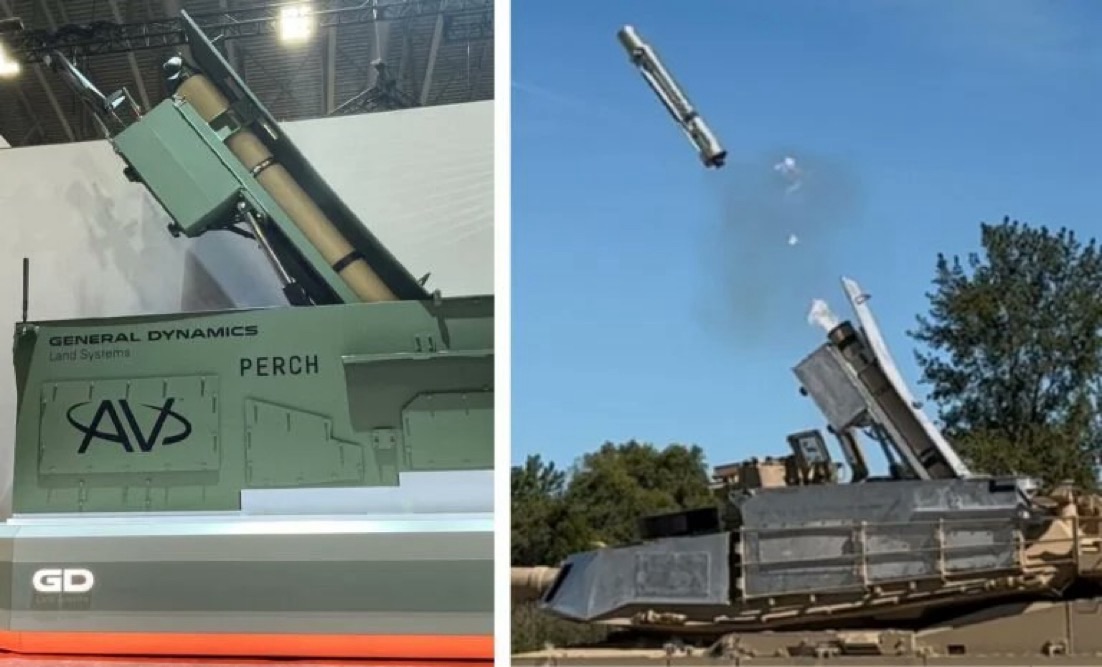

The US Army has successfully demonstrated a new and potentially revolutionary capability for its armored forces, successfully testing the Precision Effects & Reconnaissance, Canister-Housed (PERCH) modular launcher system on the M1A2 Abrams SEPv3 main battle tank. The PERCH system, codeveloped by General Dynamics Land Systems (GDLS) and AeroVironment (AV), enables the deployment of Switchblade loitering munitions (kamikaze drones) for enhanced reconnaissance and precision strikes, marking a major step forward in modern armored warfare doctrine.
Beyond-Line-of-Sight Lethality
The PERCH system provides the M1A2 Abrams and other combat vehicles with organic beyond-line-of-sight (BLoS) lethality. This capability allows armored units to identify, monitor, and eliminate threats that are hidden behind terrain features, in urban environments, or beyond the tank’s direct field of fire. Previously, tanks had to rely entirely on external assets (like artillery or air support) for BLoS effects.
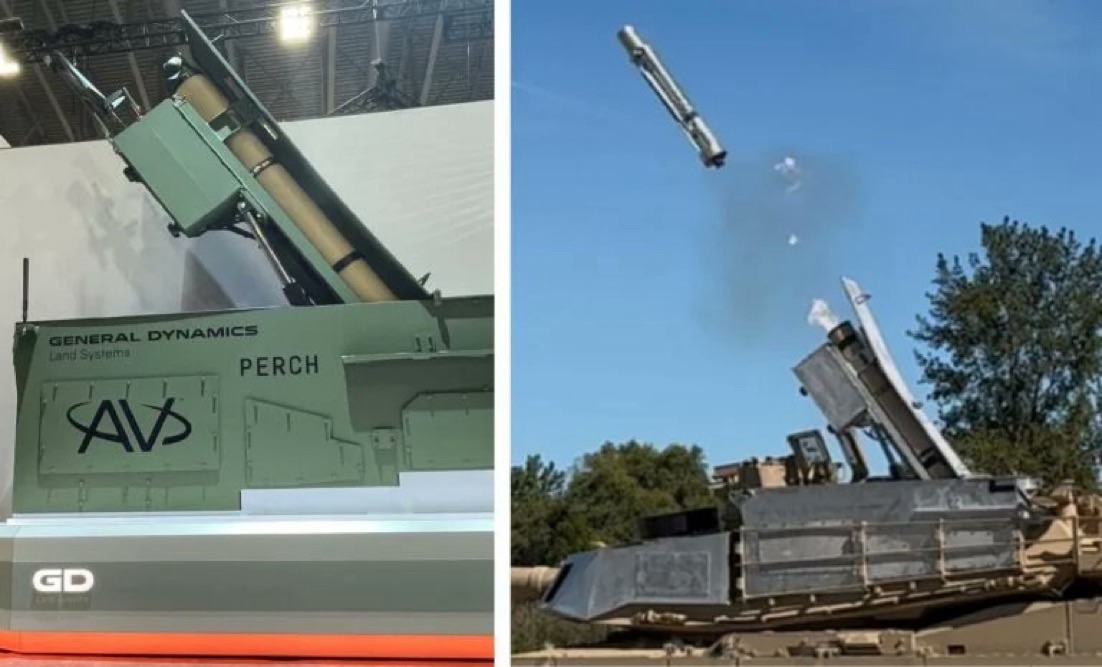
Key operational advantages demonstrated by the PERCH system include:
* Protected Launch: It allows tank crews to launch loitering munitions, such as the Switchblade 300 and Switchblade 600 variants, from a covered and concealed position. This protects the crew while extending the battlefield reach of the armored unit.
* Dual Mission Capability: The loitering munitions serve a dual purpose: providing high-resolution electro-optical/infrared (EO/IR) reconnaissance to scout enemy positions and delivering precision strikes on high-value targets, including enemy armor (Switchblade 600) and personnel (Switchblade 300).
* Rapid Integration: The system is designed as a modular kit that requires no structural modifications to the tank. For the Abrams, it replaces the loader’s sponson storage box and is simply bolted into place using existing attachment points, offering a low-risk, rapid integration path.
The Future of Armored Warfare
The successful demonstration of PERCH, which took place at the US Army’s Machine Assisted Rugged Sapper (MARS) event at Fort Hood, Texas, validates a growing military doctrine known as “distributed, networked fires.” This concept transforms the Abrams tank from a purely line-of-sight shooter into a sensor-shooter node capable of generating its own precision effects at extended ranges. The Switchblade 600, for instance, has a range of over 40 kilometers and can loiter for over 40 minutes, providing the tank commander with real-time video for positive identification before engaging a target with its anti-armor warhead.
While the US Army has not yet procured the PERCH module at scale, the system is viewed as a high-priority capability that could redefine how armored brigades conduct reconnaissance, breaching, and deep engagement missions in future high-threat environments. The modular design also hints at future integration onto other combat platforms, including Stryker infantry carrier vehicles, to rapidly enhance the BLoS strike capabilities across the US mechanized fleet.