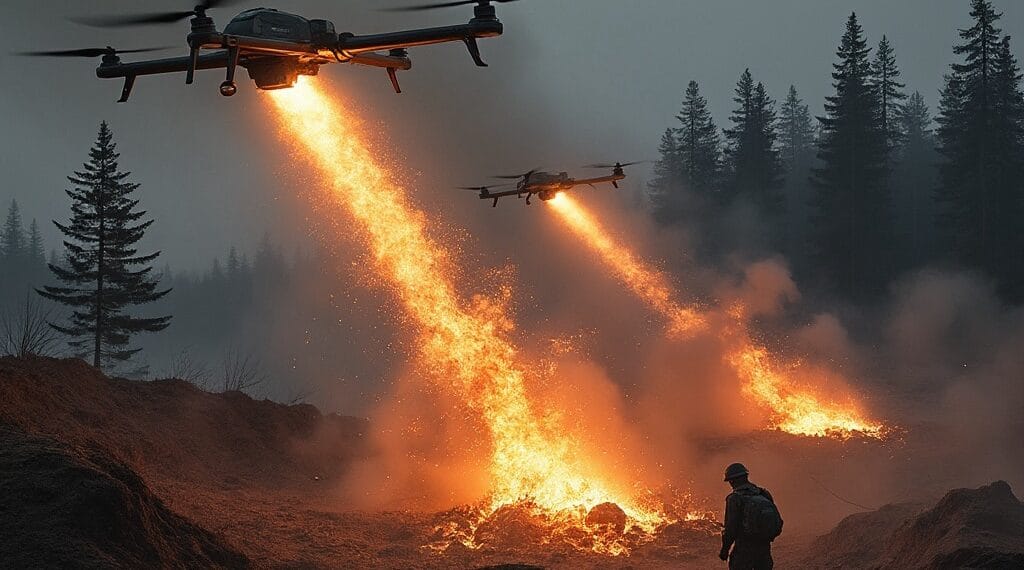



Artificial intelligence is no longer a concept of science fiction; it is an active and decisive combatant on the modern battlefield. From the skies over Ukraine to the deserts of the Middle East, AI-driven systems are fundamentally reshaping military operations, enabling a speed, scale, and precision of warfare that was unimaginable just a decade ago. This technological revolution is forcing a complete rethink of military doctrine, strategy, and ethics.
The most visible impact of AI is in the realm of autonomous and semi-autonomous systems. The war in Ukraine has become a vast laboratory for AI-powered drones and loitering munitions. These systems can now use machine learning algorithms to identify and track targets without constant human supervision. An operator might task a drone to find “enemy tanks” in a specific area, and the AI will then independently scan the terrain, distinguish a T-90 from a tractor, and either alert the operator or, in some cases, engage the target on its own. This capability dramatically compresses the “sensor-to-shooter” timeline, turning battlefield opportunities into kills in a matter of seconds.
Beyond the front lines, AI’s most profound impact is in intelligence, surveillance, and reconnaissance (ISR). Modern militaries are flooded with an overwhelming torrent of data from satellites, drones, electronic sensors, and open-source intelligence. It is impossible for human analysts to process this information in real time. AI algorithms, however, can sift through petabytes of data instantaneously, detecting patterns, identifying hidden enemy positions, tracking logistical movements, and predicting adversary actions. This is the new high ground of warfare: achieving information dominance through superior data processing.
AI is also revolutionizing command and control (C2). Military planners are now using sophisticated AI-powered software to wargame potential scenarios, manage complex logistical chains, and provide real-time decision support to commanders. These systems can analyze a fluid battle, calculate probabilities of success for different courses of action, and recommend the optimal deployment of forces, all faster than a human staff could ever hope to.
However, this rapid integration of AI comes with profound risks and ethical dilemmas. The primary concern is the development of Lethal Autonomous Weapons Systems (LAWS)—or “slaughterbots”—that could make life-or-death decisions entirely without human intervention. The international community remains deeply divided on the issue, with many fearing a future where wars are fought at machine speed, leading to rapid, uncontrollable escalation. The “black box” problem, where it’s impossible to know exactly why an AI made a particular decision, also raises serious questions of accountability and control on the battlefield. The AI arms race is on, and the nations that master this technology will hold a decisive advantage in the conflicts of the 21st century.

Military Technology 2025: The Revolution Transforming Modern Warfare
Military Technology: The Revolution Transforming Modern Warfare Military technology stands at the precipice of revolutionary transformation in 2025, fundamentally reshaping...