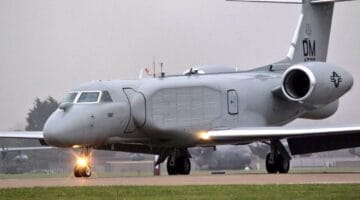


The United States is executing a large and rapid deployment of its aerial refueling fleet to the Middle East, a significant military movement that has historically served as a prelude to major air campaigns in the region. According to open-source flight tracking data and defense sources, dozens of KC-135 Stratotanker and KC-46 Pegasus aircraft, accompanied by fighter jets, are currently en route to the Persian Gulf, dramatically increasing U.S. offensive air power in Iran’s backyard.
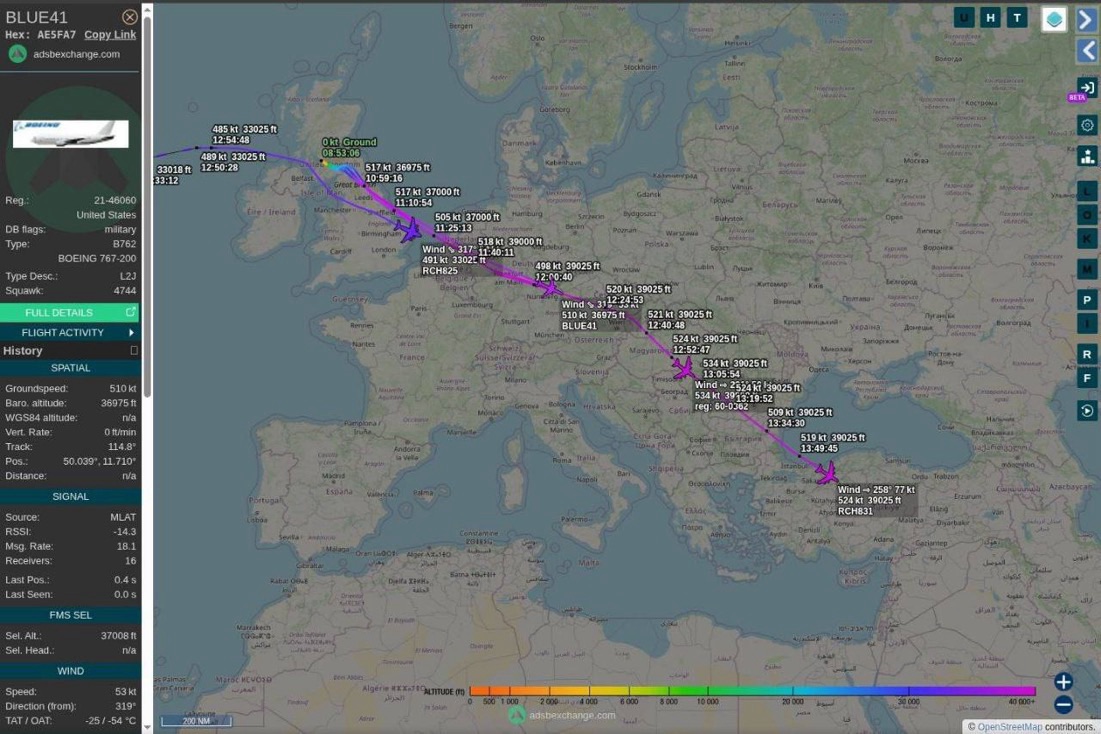
Several of these crucial tanker aircraft have already landed at the massive Al Udeid Air Base in Qatar, the forward headquarters of U.S. Central Command. Others are reportedly being staged at U.S. and Royal Air Force bases in the United Kingdom, a common stopover point for forces flowing into the CENTCOM area of responsibility.
This surge of tanker aircraft is a critical indicator of military planning. Aerial refueling tankers are the lifeblood of any large-scale air operation, allowing fighter jets, bombers, and surveillance aircraft to travel long distances and remain on station for extended periods. A massive buildup of these assets is not required for defensive patrols; it is essential for sustaining a major offensive air campaign. Their arrival in such numbers is a clear and ominous signal that the Pentagon is positioning its forces for potential strike operations.
The deployment comes at a moment of extreme tension across the Middle East. The region is still reeling from the recent, brief but intense war between Israel and Iran, and the subsequent Israeli assassination of Hezbollah leader Hassan Nasrallah in Beirut just three days ago. Furthermore, the past 48 hours have seen the formal “snapback” of sweeping UN and EU sanctions against Tehran over its nuclear program.
This convergence of events has created one of the most volatile and dangerous standoffs with Iran in years. The last time a similar, rapid buildup of U.S. tanker and strike aircraft was observed in the region, it preceded major U.S. airstrikes against Iranian-backed targets.
While the Pentagon has not officially commented on the deployments, citing operational security, the movements are visible for the world—and Tehran—to see. The buildup could be intended as a powerful deterrent, signaling to Iran that the U.S. is prepared to respond with overwhelming force to any further aggression. Alternatively, it could be the final staging move before the execution of pre-planned strikes against Iran’s nuclear facilities, ballistic missile sites, or other strategic targets.
Whatever the intent, the message is unambiguous: the United States has placed its air power on a war footing in the Middle East.