
Estonia has escalated its response to a recent airspace violation by Russian military aircraft by publicly releasing a map detailing the jets’ flight path. The Estonian Defense Ministry published the map showing the approximate route of three Russian MiG-31 fighter jets that breached the country’s airspace over the Gulf of Finland on Friday. The move underscores Tallinn’s resolve to not let the incident be quietly dismissed as an accident, instead framing it as a deliberate act of aggression.
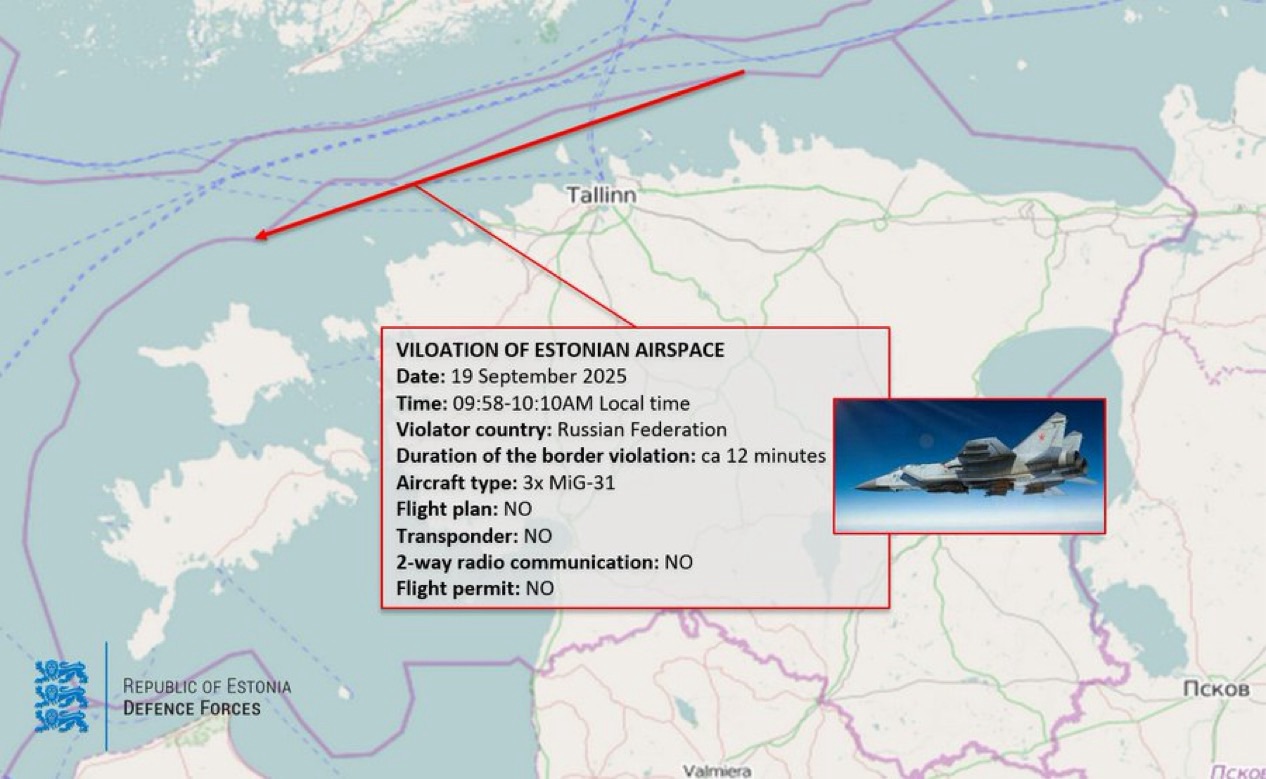
According to Estonian officials, the three supersonic interceptor aircraft, which are capable of carrying hypersonic missiles, entered Estonian airspace without clearance or prior communication. They remained in the country’s sovereign territory for approximately 12 minutes. The jets did not have flight plans, had their transponders switched off, and made no attempt at two-way radio communication with Estonian air traffic control. This combination of factors has led Estonia and its NATO allies to interpret the incursion not as a navigational error but as a “brazen” and “unprecedented” provocation.
The incident occurred in the area of Vaindloo Island in the Gulf of Finland, a sensitive strategic location. The Estonian Foreign Ministry immediately summoned the Russian chargé d’affaires to deliver a protest note. Estonian Foreign Minister Margus Tsahkna stated that this was the fourth time Russia had violated Estonian airspace this year, but the first time a group of three fighter jets had done so. He called for a swift and robust response from the international community, including increased political and economic pressure on Moscow.
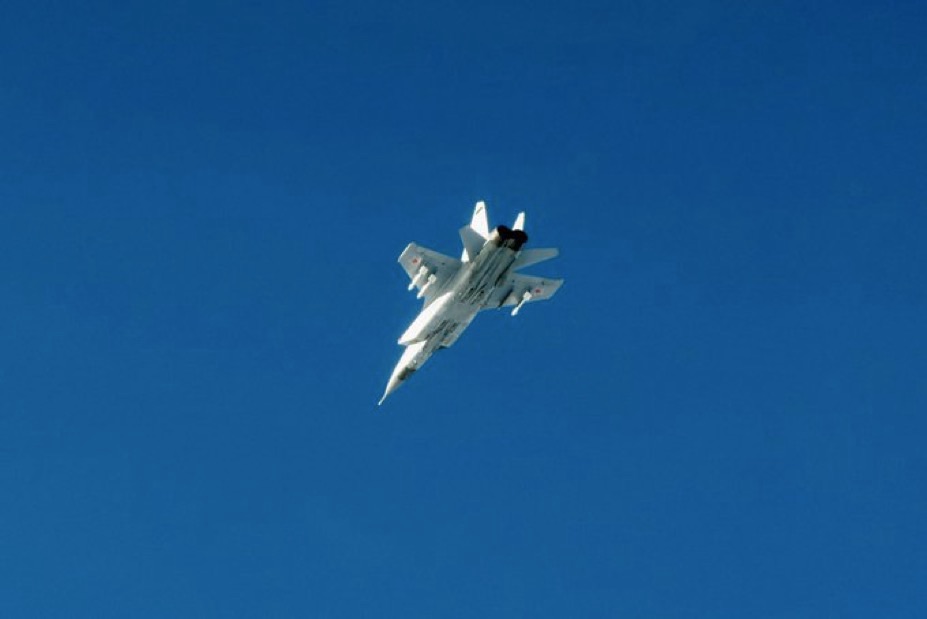
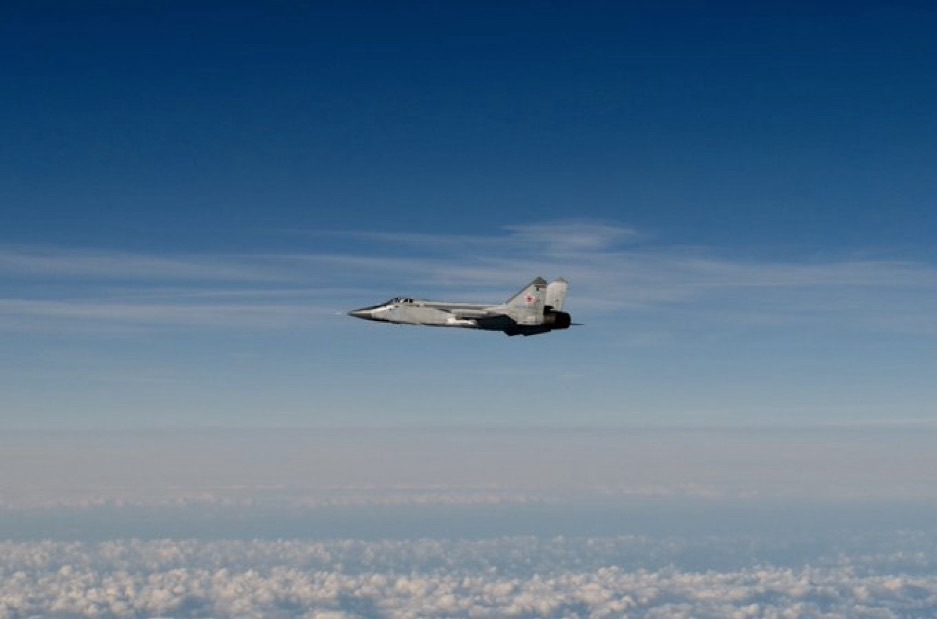
In response to the violation, NATO’s Italian F-35 fighter jets, which are part of the Baltic Air Policing mission stationed at Ämari Airbase in Estonia, were scrambled to intercept the Russian aircraft. NATO has confirmed that the alliance “responded immediately and intercepted the Russian aircraft,” and a spokesperson described the incident as “yet another example of reckless Russian behaviour.” The quick response demonstrates the operational readiness of NATO’s air policing mission in the region.
The event has also prompted Estonia to request consultations under Article 4 of the NATO Treaty. This provision allows any member to call for urgent talks if they feel their territorial integrity, political independence, or security is at risk. By invoking Article 4, Estonia is signaling the seriousness of the violation and pushing for a coordinated, collective response from the alliance. This follows a similar recent incident in which more than 20 Russian drones entered Polish airspace.
The public release of the map by the Estonian Defense Ministry is a powerful tool in the information war, providing a visual representation of the incursion and strengthening their case to the international community. It directly counters Moscow’s claims that its jets were on a “scheduled flight” over “neutral waters” and did not violate Estonian airspace. The map serves as a tangible piece of evidence of Russia’s aggressive behavior and its continued willingness to test the resolve of NATO’s eastern flank. The incident is a clear reminder of the fragile security situation in the Baltic region and the ongoing need for vigilance and a unified front against Russian aggression.