

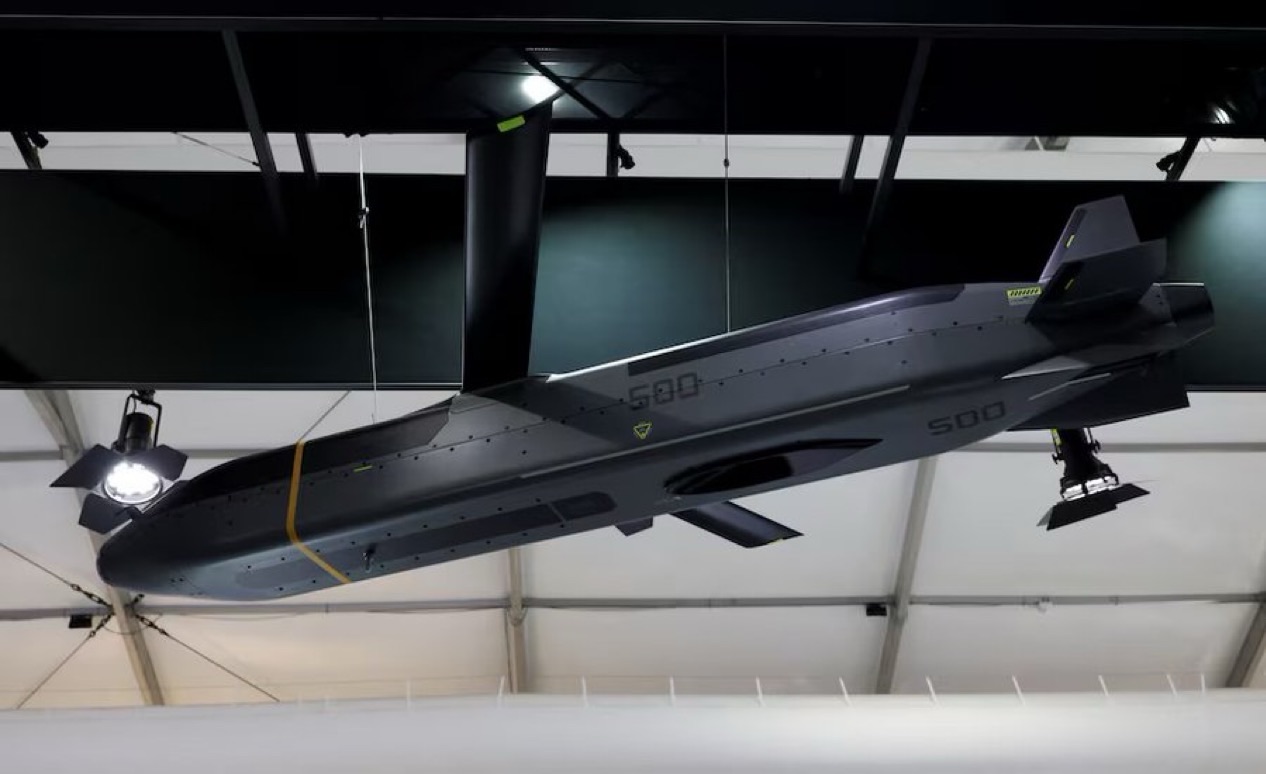
Taiwan has unveiled the Barracuda-500, its first missile co-developed with a U.S. defense company, signaling a new phase in Taipei–Washington military cooperation. Developed in partnership with Anduril Industries, the missile represents a significant step toward bolstering Taiwan’s deterrence strategy amid mounting Chinese pressure.
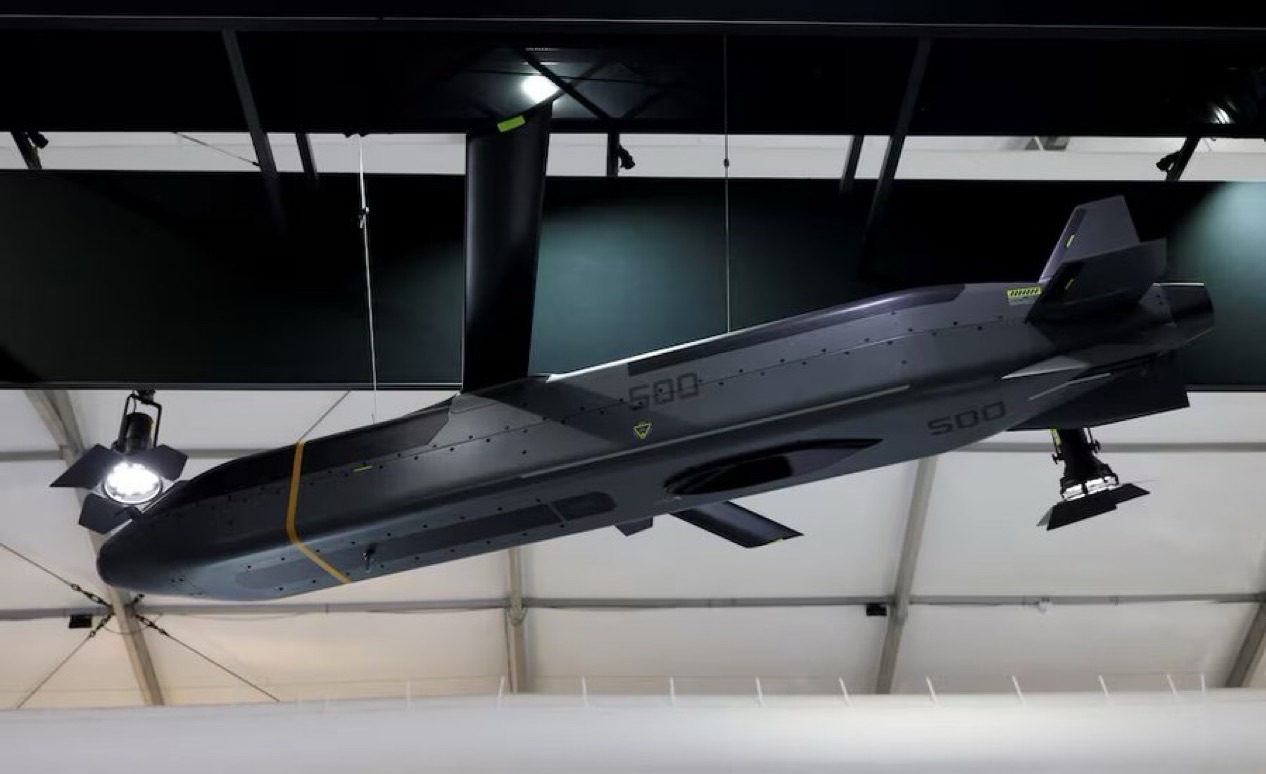
The Barracuda-500 is designed as a low-cost, autonomous cruise missile capable of executing swarming attacks against warships, a capability intended to offset China’s growing naval dominance. The system emphasizes affordability and mass deployment, allowing Taiwan to build a layered defense network designed to overwhelm adversary strike groups in the Taiwan Strait.
Taiwan’s National Chung-Shan Institute of Science and Technology (NCSIST), the state-run defense body, confirmed that the island aims to mass-produce the missile domestically to ensure supply-chain independence. “All our resilience must be built upon this island,” said NCSIST’s Li Shih-chiang, underlining Taiwan’s commitment to building indigenous capabilities rather than relying exclusively on foreign arms deliveries.
The missile program is part of Taiwan’s broader plan to expand defense spending to 5% of GDP by 2030, a historic increase that reflects the urgency of preparing for possible conflict scenarios. The focus of this modernization push includes asymmetric warfare assets, such as drones, missile swarms, and cyber defense, all aimed at complicating China’s invasion planning.
Defense analysts note that the Barracuda-500’s swarming concept aligns with U.S. military doctrine emphasizing distributed, autonomous systems capable of saturating defenses. If deployed in large numbers, the system could force China’s People’s Liberation Army Navy (PLAN) to divert significant resources to missile defense, reducing its ability to project power offensively.
The unveiling also carries a political message. By working hand-in-hand with an American firm, Taipei is making clear that its defense industry is directly linked to U.S. innovation and production. This deeper integration could provide a stronger deterrent by signaling that any attack on Taiwan’s defense infrastructure also undermines U.S. interests.
With tensions already high, Taiwan’s new missile system is expected to feature prominently in its annual Han Kuang exercises and may soon be fielded along coastal batteries to reinforce anti-access and area-denial strategies. The Barracuda-500, both symbolic and practical, highlights how Taiwan is preparing for a future where quantity, speed, and innovation may prove decisive.