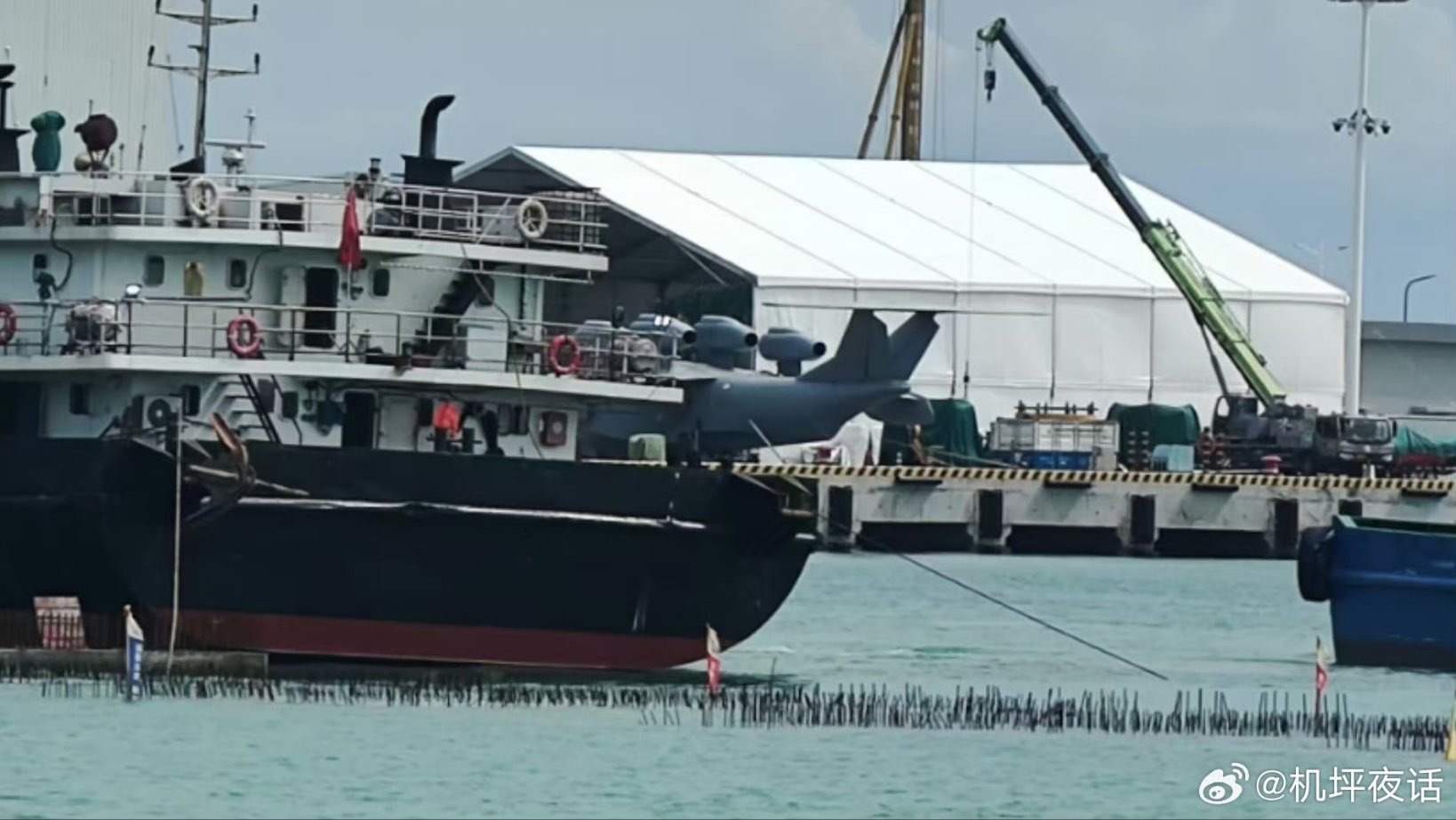

🇨🇳✈️ In a major leap back to Cold War innovation, China has unveiled a large 4-engine jet-powered Ekranoplan, dubbed the “Bohai Sea Monster”, captured in rare images circulating on Chinese social media. The craft appears to be the largest ground-effect vehicle built globally in decades, and likely signals a new military transport capability being developed by Beijing.
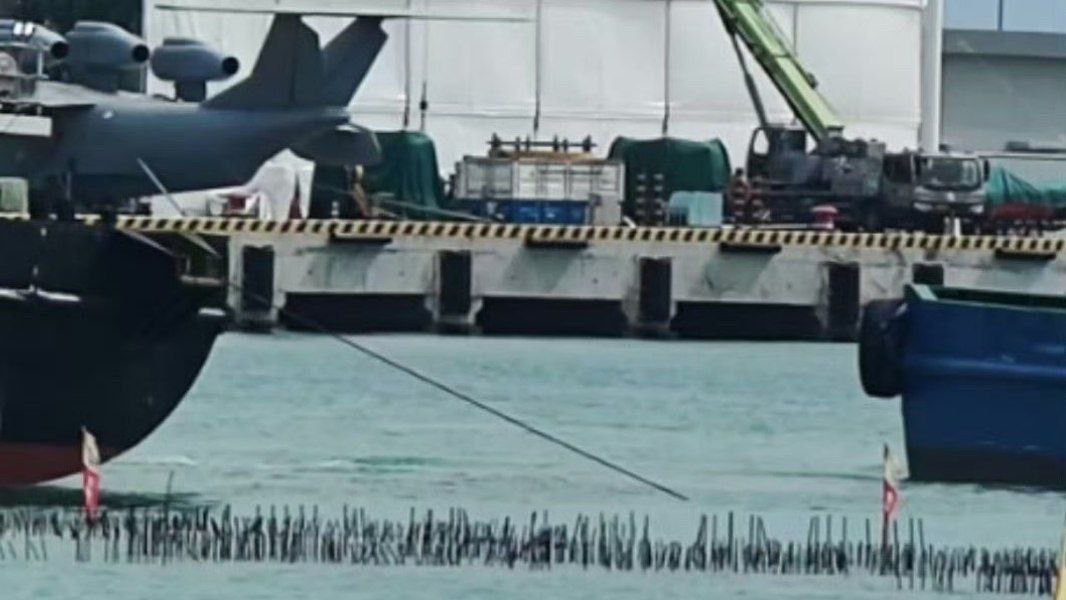
Ekranoplans—Wing-in-Ground Effect (WIG) vehicles—skim low over water surfaces by leveraging aerodynamic lift from ground effect. They combine the speed of aircraft with the efficiency and stealth of low-altitude sea-skimming, often flying below radar detection levels. Originally pioneered by the Soviet Union with monstrous platforms like the Caspian Sea Monster and Lun-class missile carriers, the technology faded post-Cold War. This Chinese revival marks its most serious comeback to date.
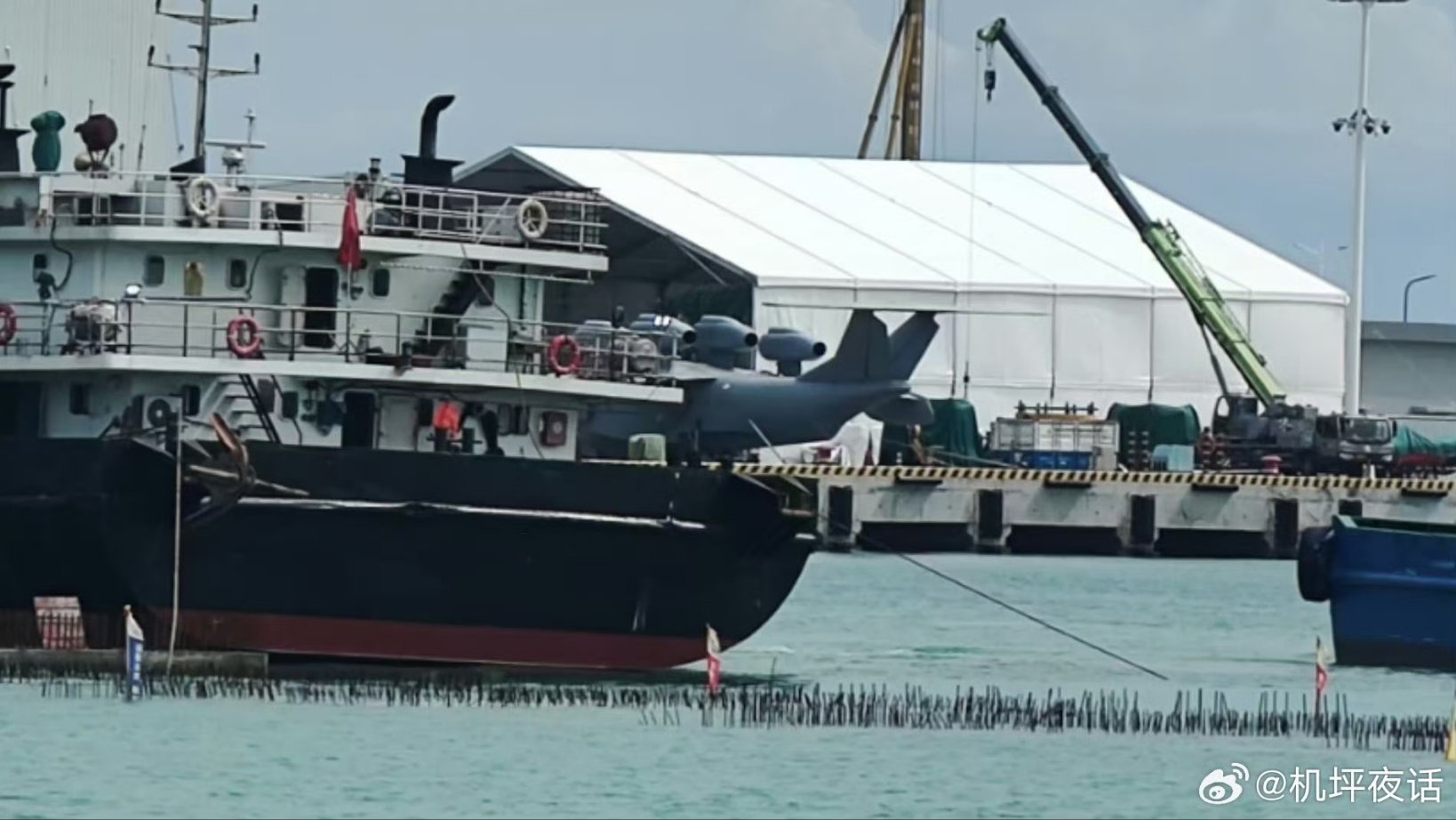
The Bohai Sea Monster sports a T-tail with twin vertical stabilizers, a flying boat-style hull, and four large jet engines mounted above the short wingspan. The flattened nozzles suggest downward thrust—essential for staying close to the water. Its matte grey paint scheme hints at military use, likely designed for amphibious assault, troop transport, or rapid island resupply, especially in contested waters like the South China Sea.
This project adds to China’s growing portfolio of seaplanes and unmanned aerial systems, including the AG600 flying boat and various stealth drones. Analysts speculate the ekranoplan could function as a low-profile logistics solution, capable of supplying coastal outposts or artificial islands under radar cover.
Though no official designation or manufacturer has been announced, the design stands out as the most ambitious ekranoplan since the Cold War—more than just a concept, it’s now a flying reality.