


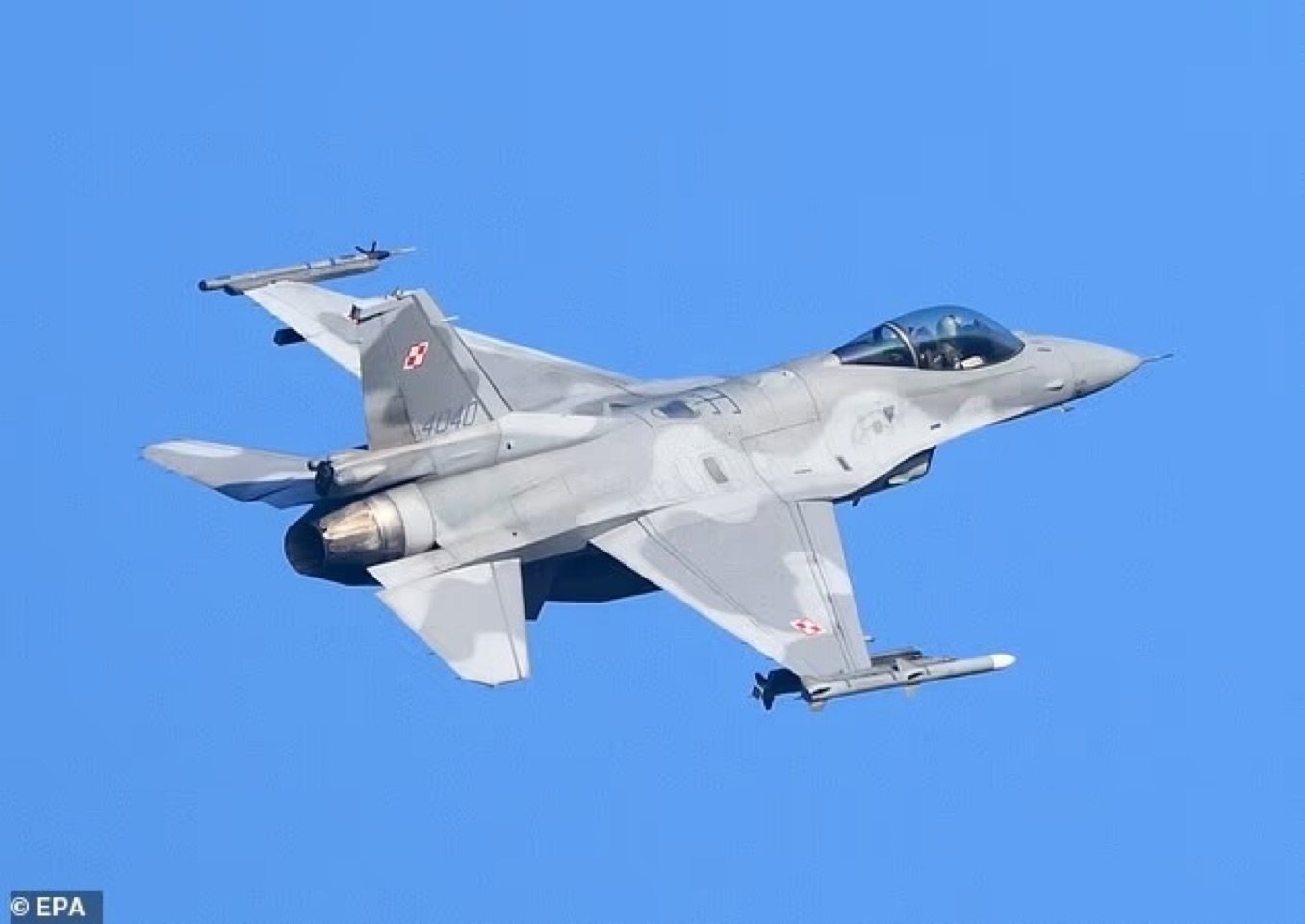
Poland scrambled fighter jets and activated air defense systems early Monday after Russia launched its most extensive air assault yet against western Ukraine. The Polish Armed Forces confirmed a full alert status was enacted near the border, though no violations of Polish airspace occurred.
The alert came in response to an overnight attack by Russia involving 479 drones and missiles, including Tu-95MS bombers, MiG-31-launched Kinzhal hypersonic missiles, and Kh-22 strikes that reached Rivne and Snake Island, prompting alarms in NATO territory.

Poland Responds with Full Readiness
“Due to the intensive air attack by the Russian Federation on the territory of Ukraine, Polish and allied aircraft began to operate in Polish airspace in the morning,” said Poland’s Operational Command.
Although the threat level later decreased, Poland’s rapid deployment reflected its frontline position on NATO’s eastern flank, reinforcing its role as a logistical hub and security anchor in the alliance.
Defense expert Tomasz Kowalski emphasized:
“Poland’s readiness sends a message that any spillover from the war into NATO territory will meet immediate resistance.”
Russia’s Record Strike & Ukraine’s Retaliation
Russia’s attack, described as the largest on Rivne to date, marked a significant escalation. The Ukrainian Air Force confirmed missiles were launched from strategic bombers stationed in Russia, including the same Tu-95s recently targeted in Ukraine’s Operation Spiderweb.
Ukrainian retaliation included a successful strike on Russia’s Savasleyka airfield in Nizhny Novgorod, destroying two aircraft: a MiG-31 interceptor and a Su-34 bomber. Simultaneously, a Ukrainian drone strike ignited a fire at the VNIIR military electronics plant in Cheboksary, a critical site for drone and cruise missile components.
In another retaliation, Ukrainian drones damaged a gas pipeline in Voronezh, affecting 22 clients, according to regional authorities.
NATO’s Strategic Pivot
NATO Secretary General Mark Rutte is expected to call for a 400% increase in the alliance’s air and missile defense capabilities during a speech at Chatham House in London, stating:
“Russia delivers terror from above. We will strengthen the shield that protects our skies.”
This comes ahead of a NATO summit in the Netherlands, where President Trump is pushing for a 5% GDP defense spending target—more than double the current standard.
U.S. Secretary of Defense Pete Hegseth confirmed member states are nearing consensus, marking a historic shift in transatlantic defense posture since the war’s onset.
UK, France, and Regional Militarization
The UK recently announced plans to build 12 nuclear-powered submarines and 6 new munitions factories, while France is partnering with Renault to produce military drones inside Ukraine. These developments show NATO’s growing strategic shift toward long-term conflict readiness.
Meanwhile, scenes from Kharkiv and Druzhkivka depict widespread destruction from Russia’s ongoing raids—highlighting the war’s persistent toll on Ukrainian civilians.